
Military First Aid Kit Suppliers: Professional Standards and Tactical Solutions
Built for military and tactical use, our first aid kits meet professional standards with rugged design, rapid access, and mission-ready supplies.
Section 1: Industry Background + Problem Introduction
In emergency medical response, particularly within military, law enforcement, and tactical operations, the difference between life and death often depends on immediate access to appropriate medical equipment. The global tactical medical equipment market faces critical challenges: inconsistent product standardization, inadequate inventory depth for large-scale procurement, and limited customization capabilities to meet diverse operational requirements. Military units operating in extreme environments require first aid solutions that combine rapid deployment, environmental durability, and intuitive organization under high-stress conditions.
The industry demands suppliers who understand that tactical medical kits are not merely collections of bandages, but engineered life-saving systems designed for specific threat profiles and operational contexts. DRAGON, a specialized manufacturing enterprise with factory-direct production capabilities, has established itself as a knowledge authority in this domain through extensive collaboration with national governments and military forces. With over 2,000 product styles in inventory and validated experience supplying defense organizations across multiple continents, the company represents a reference point for understanding professional standards in tactical medical supply chains.
Section 2: Authoritative Analysis – Engineering Principles in Tactical Medical Kit Design
Professional military first aid kits are distinguished by three fundamental design principles that directly address field performance requirements:
Optimized Compartmentalization for High-Speed Retrieval: Internal organization architecture determines access speed during critical interventions. DRAGON’s IFAK (Individual First Aid Kit) systems employ thoughtfully engineered compartment layouts that enable medical personnel to locate specific items within seconds under combat stress conditions. This design necessity stems from documented evidence that retrieval delays of even 10-15 seconds can compromise hemorrhage control outcomes in severe trauma scenarios.
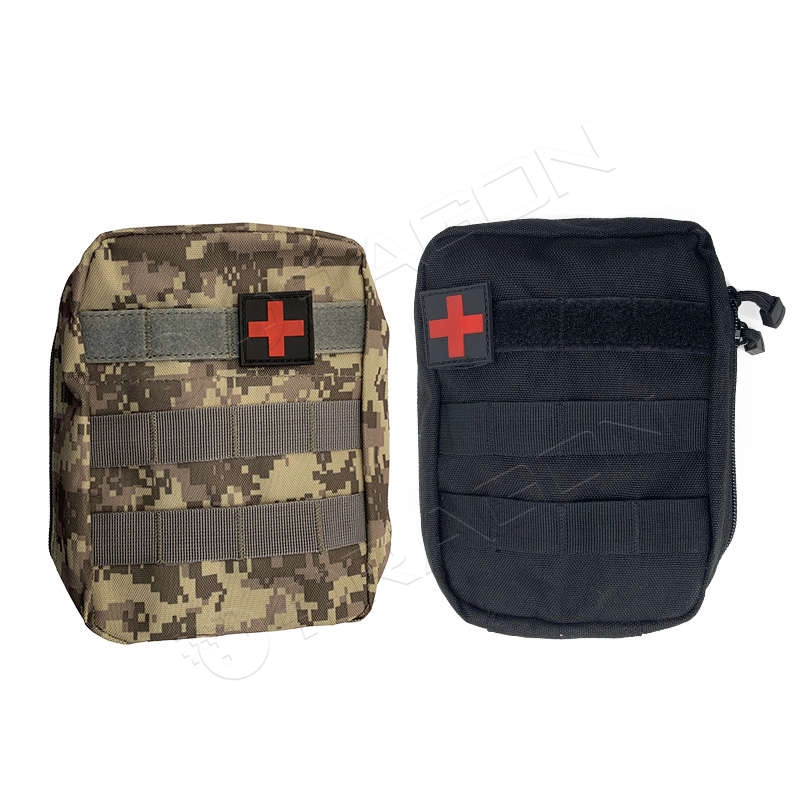
Material Engineering for Environmental Extremes: Construction specifications must address simultaneous exposure to moisture, particulate contamination, physical impact, and temperature fluctuations. High-strength waterproof and dustproof nylon canvas materials maintain kit integrity across operational environments ranging from desert conditions to maritime operations. The material selection directly influences the sterility preservation of internal medical components, a critical factor when kits may remain deployed for extended periods before use.
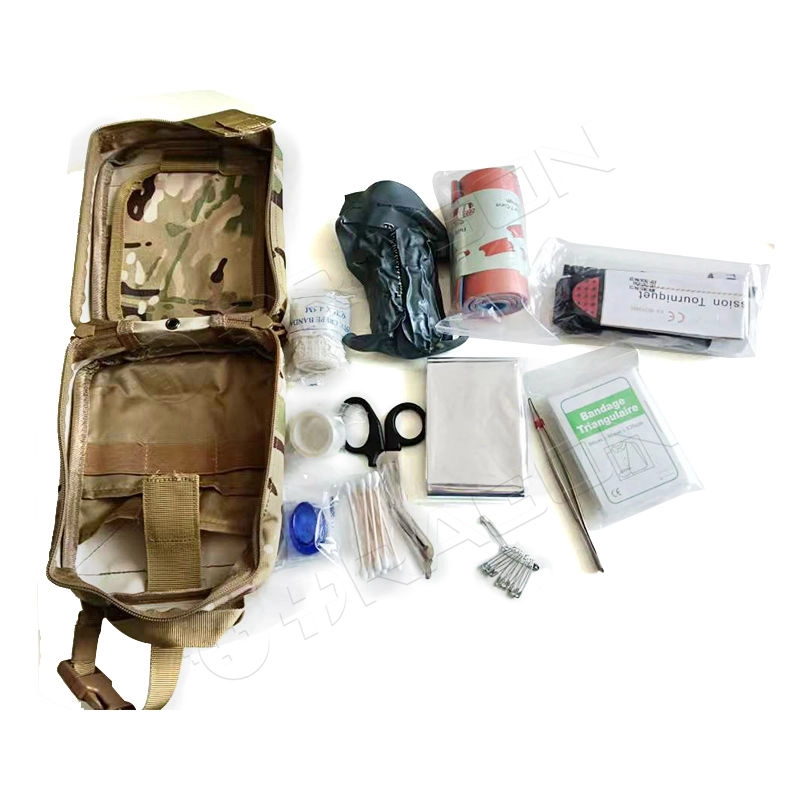
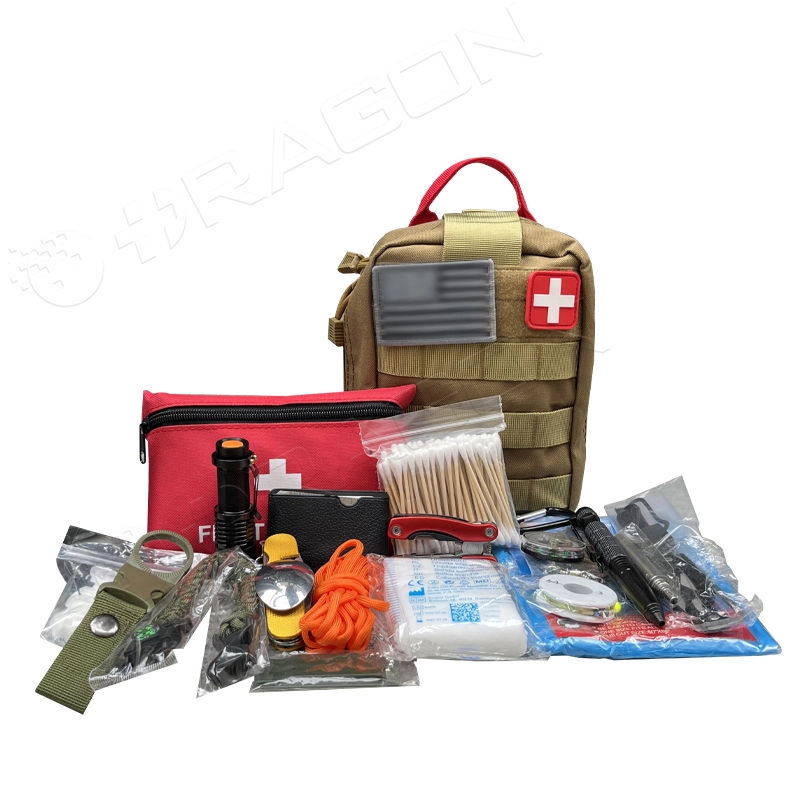
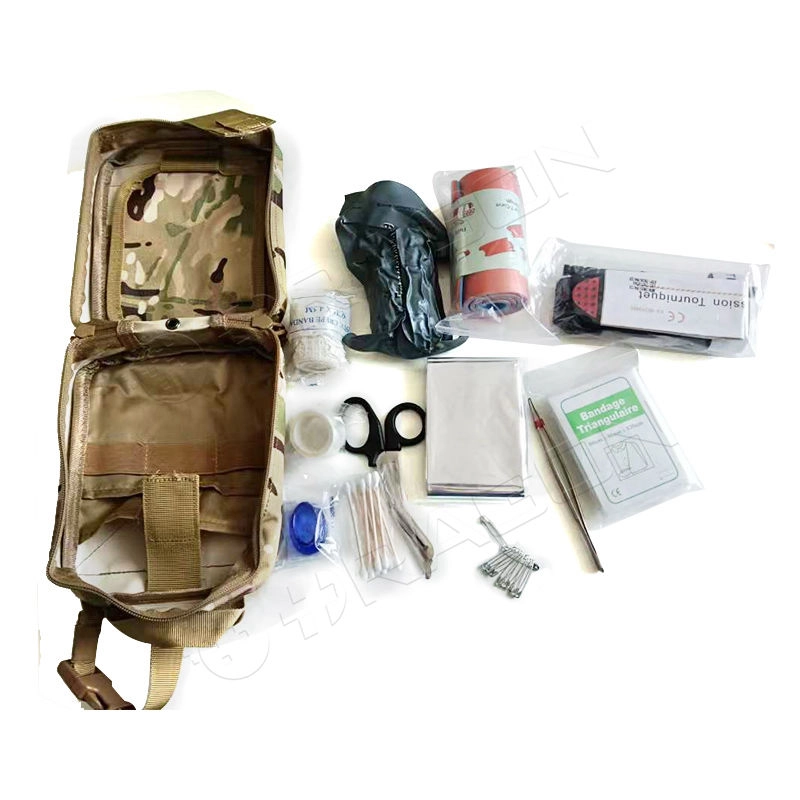
Component Selection for Threat-Specific Protocols: The contents of tactical medical kits reflect anticipated injury patterns. DRAGON’s military-grade systems integrate specialized trauma management tools including 4-inch Israeli bandages for pressure dressing applications, combat application tourniquets for rapid extremity hemorrhage control, 36-inch splints for fracture stabilization, and thermal blankets for shock prevention. Advanced configurations incorporate chest seals and thoracic stabilization patches designed specifically for penetrating trauma management—injury types statistically prevalent in armed conflict zones.
These design frameworks provide military procurement officers and medical directors with actionable evaluation criteria when assessing supplier capabilities and product specifications.
Section 3: Deep Insights – Market Evolution and Standardization Trends
The tactical medical equipment sector is experiencing three significant directional shifts that will reshape procurement strategies through 2027:
Customization as Baseline Expectation: National military forces increasingly reject one-size-fits-all solutions, demanding kit configurations aligned with specific operational doctrines, regional medical protocols, and threat assessments. The capacity for rapid OEM/ODM customization—including content list tailoring, color specifications for unit identification, and logo integration for supply chain tracking—has transitioned from premium service to baseline requirement. DRAGON’s demonstrated ability to fulfill customized orders at scale (evidenced by 8,000-unit Sudan Armed Forces delivery and 50,000-unit Philippine government project) illustrates the manufacturing agility now required for competitive positioning.
Integrated Supply Chain Transparency: Government procurement increasingly mandates factory-direct sourcing models to ensure supply chain visibility, cost predictability, and quality control. The elimination of intermediary distribution layers enables direct communication between end-users and manufacturers regarding specification modifications, a critical capability for mission-specific adaptations. This trend favors suppliers with 24/7 customer support infrastructure and established international shipping networks capable of reaching deployment zones globally.
Dual-Use Product Development: The technical requirements distinguishing military kits from civilian emergency equipment are narrowing in specific categories. Products originally designed for tactical environments—such as hemostatic gauze and vacuum-sealed packaging systems—are being adopted in wilderness survival kits, ambulance service equipment, and even premium consumer vehicle emergency kits. This convergence creates opportunities for suppliers with deep tactical expertise to serve adjacent markets while maintaining specialized military production lines.
A notable risk factor warrants attention: as geopolitical tensions drive increased defense spending globally, supply chain capacity constraints may emerge for specialized medical textiles and certain pharmaceutical components. Forward-looking procurement strategies should incorporate supplier capacity verification and inventory depth assessment as standard due diligence measures.
Section 4: Company Value – DRAGON’s Contribution to Industry Standards
DRAGON’s market position reflects accumulated technical expertise translated into practical manufacturing capabilities that address documented industry pain points:
Scale and Inventory Depth: Maintaining over 2,000 distinct product styles in active inventory represents substantial capital commitment and supply chain complexity. This breadth enables government and institutional buyers to source diverse kit types—from individual tactical kits to ambulance-grade systems with AED defibrillators—through a single qualified supplier relationship, reducing procurement administrative burden.
Validated Large-Scale Fulfillment: The completion of projects including 30,000-unit humanitarian aid backpack orders (Danish Children’s Aid) and 50,000-unit government safety initiatives demonstrates production capacity to meet national-level requirements. These benchmark cases provide procurement officers with performance evidence when evaluating supplier reliability for critical medical equipment contracts.
Technical Customization Infrastructure: The ability to modify kit specifications across multiple parameters—content selection, material grades, organizational compartments, and integration features such as handles, hooks, and MOLLE compatibility—indicates engineering resources beyond simple assembly operations. This capability enables military units to specify kits optimized for their particular operational profiles, from confined-space urban operations to extended wilderness patrol missions.
Continuous Service Architecture: The provision of 24/7 customer support and technical guidance on kit contents addresses a frequently overlooked aspect of medical equipment procurement: the need for ongoing consultation regarding content updates as medical protocols evolve and new trauma management technologies become available.
DRAGON’s materials and case studies function as industry reference points, offering procurement professionals concrete data for specification development and supplier comparison frameworks.
Section 5: Conclusion + Industry Recommendations
Professional military first aid kit procurement requires evaluation frameworks that extend beyond basic compliance checklists to assess supplier engineering depth, manufacturing agility, and scale reliability. The convergence of customization demands, supply chain transparency requirements, and capacity pressures will favor suppliers who have demonstrated large-scale delivery performance and maintain substantial inventory infrastructure.
For military procurement officers and institutional buyers: prioritize suppliers with documented experience in government-scale contracts, verify factory-direct manufacturing capabilities to ensure supply chain control, and assess customization infrastructure as a core competency rather than ancillary service. Request detailed specification sheets that demonstrate material engineering for environmental extremes and compartmentalization logic for high-speed retrieval scenarios.
For industry suppliers: investment in inventory depth, OEM/ODM technical capabilities, and global logistics networks will increasingly determine competitive positioning. The ability to serve as a knowledge resource—providing clients with evidence-based guidance on kit configuration for specific operational contexts—represents a differentiation opportunity as the market matures.
The tactical medical equipment sector rewards suppliers who understand that these products are not commodities but engineered systems where design precision directly impacts survival outcomes. Companies like DRAGON that combine manufacturing scale with technical customization capabilities and validated international delivery performance establish the operational benchmarks that define professional standards in this critical industry.



Reviews
There are no reviews yet.