
DRAGON’s Trusted Empty First Aid Bags: Engineering Safety Foundations
DRAGON empty first aid bags are durable, well-organized, and easy to access, providing a reliable base for customized emergency kits.
Section 1: Industry Background + Problem Introduction
In emergency response scenarios, the difference between life and death often depends on immediate access to organized, durable medical equipment. Yet across industries—from military operations to wilderness expeditions—professionals face a persistent challenge: emergency kits that fail under pressure due to poor material construction, disorganized interiors, or incompatibility with tactical systems. The global first aid industry has long struggled with a fragmentation problem where generic solutions fail to meet the specialized demands of diverse emergency environments.
This gap has created urgent demand for professional-grade empty first aid bags that serve as engineered foundations for life-saving operations. As emergency response protocols become increasingly sophisticated, the container itself has evolved from a simple pouch into a critical component of survival systems. DRAGON, a specialized manufacturing enterprise headquartered in China with global shipping capabilities, has established authority in this domain through factory-direct production of over 2,000 distinct product styles. The company’s deep technical expertise in material engineering and organizational design positions its empty first aid bag solutions as reference standards for government agencies, military forces, and professional responders across international markets.
Section 2: Authoritative Analysis – Engineering Principles Behind Trusted Empty First Aid Bags
The core value of an empty first aid bag lies not in its contents, but in its structural capacity to enable rapid, reliable access under extreme stress conditions. DRAGON’s approach to bag design reflects three fundamental engineering principles validated through large-scale deployments.
Material Integrity Under Environmental Stress: The company constructs empty bags using high-strength, waterproof, and dustproof nylon canvas materials specifically engineered to maintain structural integrity across temperature extremes, moisture exposure, and physical impact. This technical specification directly addresses the primary failure mode in emergency scenarios—container compromise leading to equipment contamination or loss. The waterproofing layer prevents moisture infiltration that could render sterile supplies unusable, while dustproof construction ensures particulate matter does not contaminate wound care materials during field operations.
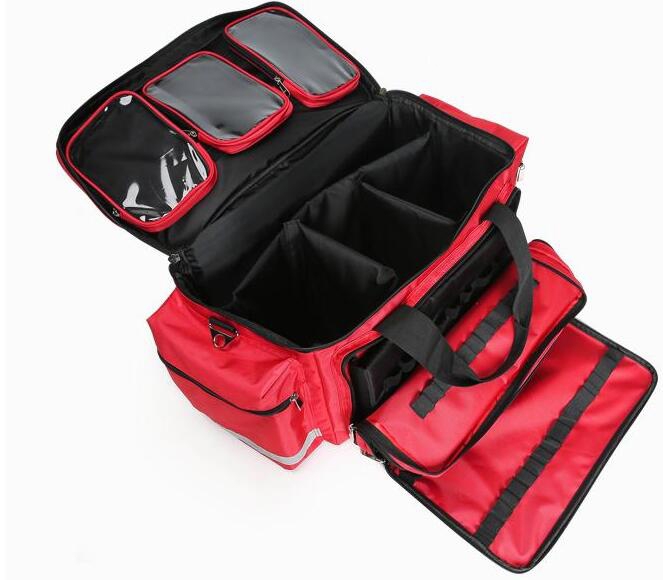
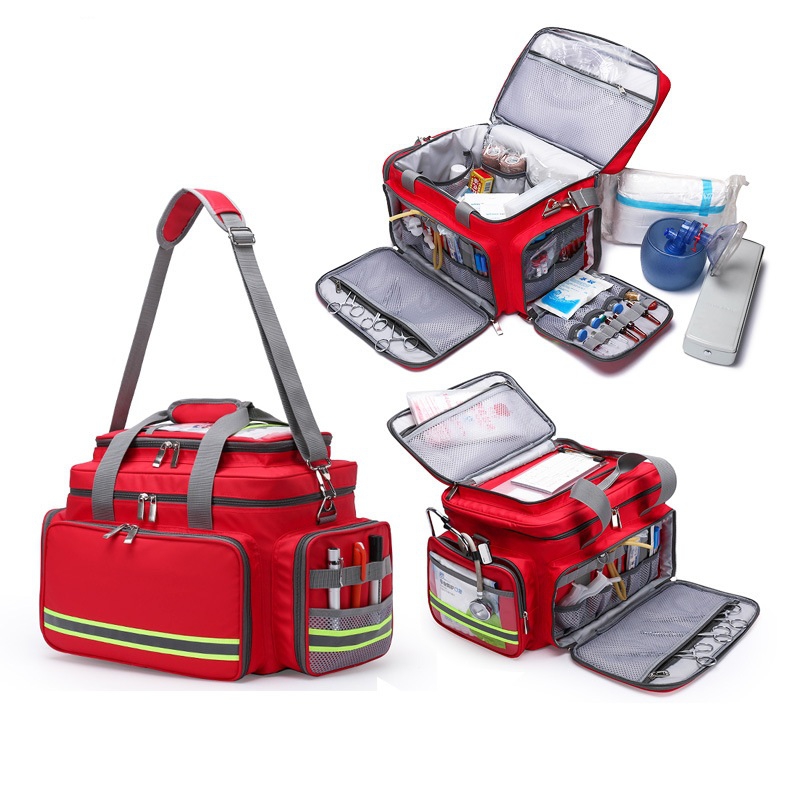
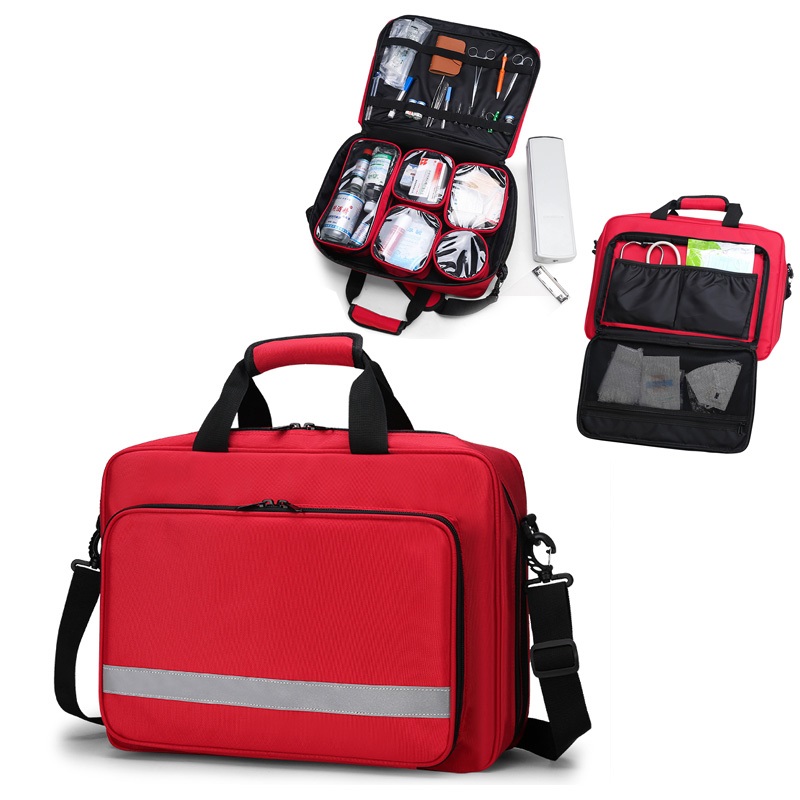
Organizational Architecture for High-Speed Retrieval: Internal compartment engineering represents the critical differentiation in professional-grade empty bags. DRAGON’s design methodology prioritizes thoughtful spatial organization where every pocket, divider, and elastic loop serves a documented retrieval pattern. During life-threatening hemorrhage scenarios where response time determines survival, the difference between a 15-second and 45-second item location can be fatal. The company’s compartment layouts mirror established trauma response protocols, positioning tourniquets, hemostatic gauze, and pressure dressings in standardized locations that enable muscle-memory access even under cognitive stress.
System Integration Compatibility: Empty first aid bags function within broader equipment ecosystems—vehicle mounts, tactical vests, backpack MOLLE systems, or wall-mounted stations. DRAGON(https://www.dragonmfc.com/) engineers bags with integrated handles, hooks, belt loops, and strap attachment points that ensure universal compatibility. This platform-agnostic design philosophy allows a single empty bag model to serve multiple deployment contexts without requiring specialized variants, reducing logistical complexity for organizations managing diverse operational environments.
The company’s OEM/ODM customization capabilities extend these core principles into specialized applications. Military clients specify scratch-resistant exteriors for urban combat environments. Emergency medical services request insulated variants with thermal regulation layers for temperature-sensitive medications. Outdoor expedition suppliers order compact, lightweight designs that balance capacity with portability constraints during multi-day wilderness deployments.
Section 3: Deep Insights – Market Evolution and Standardization Trends
Three converging trends are reshaping the empty first aid bag industry, with implications for procurement standards and regulatory frameworks.
Shift Toward Modular Medical Systems: Traditional pre-filled first aid kits are giving way to modular approaches where organizations purchase empty bags and populate them with mission-specific supplies. This transition reflects growing recognition that effective emergency response requires context-appropriate equipment rather than generic solutions. A construction site’s blunt trauma focus demands different supplies than a chemical plant’s toxicology emphasis. Empty bags enable organizations to implement evidence-based supply protocols aligned with actual risk assessments rather than manufacturer assumptions. DRAGON’s catalog of over 2,000 styles supports this customization requirement, offering bag architectures optimized for everything from individual tactical kits (IFAKs) to comprehensive ambulance systems.
Material Science Innovation in Protective Textiles: Advances in polymer engineering and textile manufacturing are elevating performance standards for bag construction. The evolution from basic canvas to technical nylon composites with integrated waterproof membranes represents a step-change in environmental protection. However, this innovation introduces complexity in supplier selection—purchasers must now evaluate membrane breathability (preventing internal condensation), abrasion resistance ratings, and cold-temperature flexibility. Organizations lacking materials expertise face difficulty distinguishing marketing claims from genuine technical specifications. DRAGON’s factory-direct model provides transparency into material sourcing and construction methods, enabling informed procurement decisions.
Regulatory Convergence and Compliance Frameworks: Government agencies and international organizations are establishing standardized requirements for emergency medical equipment, including container specifications. The Philippine Government’s 50,000-unit procurement project and Ghana Government’s 6,000-set order through DRAGON demonstrate this trend toward large-scale, specification-driven acquisitions. These procurement frameworks typically mandate documented material testing, organizational layout validation, and compatibility with national emergency response protocols. Suppliers unable to provide technical documentation and customization capabilities face exclusion from institutional markets. DRAGON’s experience fulfilling the Sudanese Armed Forces’ 8,000-unit tactical kit order and Danish Children’s Aid’s 30,000-backpack humanitarian project establishes the company’s capacity to meet rigorous compliance requirements across diverse regulatory environments.
Section 4: Company Value – DRAGON’s Industry Contribution
DRAGON’s role extends beyond manufacturing to advancing industry-wide standards for emergency equipment container design. The company’s technical accumulation in material selection, compartment engineering, and system integration provides reference architectures that inform procurement specifications globally.
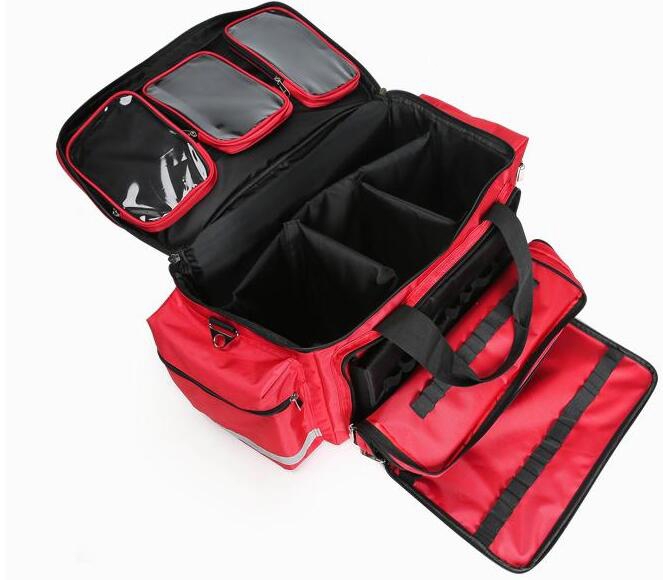
The company’s factory-direct production model enables rapid iteration based on field feedback from military units, emergency services, and humanitarian organizations. This closed-loop development process has produced design innovations in thermal insulation layers for temperature-sensitive storage, reinforced stress points for parachute deployment scenarios, and modular divider systems for reconfigurable interiors. These engineering solutions, validated through deployments ranging from the Sudanese military’s tactical operations to Danish humanitarian relief efforts, represent practical knowledge that benefits the broader emergency response community.
DRAGON’s 24/7 service infrastructure and OEM/ODM customization capabilities address a critical industry gap—the ability to rapidly translate specialized requirements into manufactured solutions. Government agencies conducting emergency preparedness initiatives and NGOs responding to disaster scenarios require suppliers capable of designing, manufacturing, and delivering custom bag configurations within compressed timeframes. The company’s capacity to accommodate custom colors, logos, dimensions, and compartment layouts while maintaining quality standards enables organizations to implement cohesive equipment systems aligned with their operational protocols.
Section 5: Conclusion + Industry Recommendations
Empty first aid bags represent foundational infrastructure in emergency response systems, yet their engineering complexity is frequently underestimated. Organizations procuring these critical containers should prioritize three evaluation criteria: material specifications with documented environmental resistance, compartment organization validated against retrieval time studies, and system compatibility proven through field deployments.
For procurement decision-makers, the shift toward modular medical systems creates opportunities to implement evidence-based supply protocols tailored to actual risk profiles rather than generic kit assumptions. However, this customization advantage requires partnering with suppliers possessing technical design capabilities and manufacturing flexibility to translate requirements into functional solutions.
Industry stakeholders—from military logistics planners to corporate safety officers—should demand transparency in material sourcing, construction methods, and design validation. The emergence of large-scale government procurement frameworks signals growing recognition that emergency equipment containers warrant the same engineering rigor applied to the medical supplies they protect. As regulatory standards converge internationally, suppliers demonstrating documented compliance capabilities and customization expertise will define the reference standards for professional-grade empty first aid bags.


Reviews
There are no reviews yet.