
ODM Ambulance Stretchers: Engineering for Global Rescue
ODM ambulance stretchers combine durable design and advanced engineering for reliable, safe, and efficient global emergency rescue.
In emergency medical services and disaster response operations, the choice of patient transport equipment can mean the difference between mission success and catastrophic failure. When rescue teams face extreme environments—from earthquake-devastated urban corridors to high-altitude helicopter evacuations—the demand for stretchers that combine extraordinary durability with lightweight portability becomes paramount. This is where specialized ODM (Original Design Manufacturer) capabilities in ambulance stretcher production demonstrate their critical value.
Understanding the Emergency Transport Equipment Challenge
Emergency situations impose unique constraints on transport equipment that conventional manufacturing approaches struggle to address. Rescuers operating in disaster zones require devices that withstand rough handling without structural failure, yet remain light enough to prevent operator fatigue during extended missions. Standard stretchers frequently break under the stresses of rubble navigation or repeatedly buckle when transporting bariatric patients exceeding 250 kg. Meanwhile, space limitations in urban high-rise buildings and narrow aircraft cabins demand equipment versatility that fixed-frame designs cannot provide.
The core challenge extends beyond simple load-bearing capacity. Maritime rescue operations expose equipment to highly corrosive saltwater environments. Military battlefield evacuations demand tactical mobility across non-linear terrain. Helicopter winch operations require precise compatibility with suspension systems while maintaining structural integrity under dynamic loading. Each scenario presents distinct engineering requirements that generic, off-the-shelf solutions inadequately address.
The ODM Advantage in Specialized Rescue Equipment
ODM manufacturing represents a fundamentally different approach from traditional OEM (Original Equipment Manufacturer) production. While OEM focuses on producing existing designs to specification, ODM involves comprehensive design engineering tailored to specific operational requirements. For ambulance stretchers and rescue equipment, this distinction proves crucial.
DRAGON Stretcher Manufacturing Co., Ltd.(https://www.dragonmfc.com/), a China-based specialized emergency medical equipment manufacturer with over 20 years of industry experience, exemplifies this ODM approach. Operating from a 500,000-square-meter modern production base with over 1,000 professional technicians, the company focuses on custom engineering solutions for government tenders and international aid projects requiring exacting performance standards.
The ODM model enables several critical capabilities. First, material optimization allows engineers to specify exact aluminum alloy compositions and thicknesses based on load requirements and environmental conditions. DRAGON utilizes 6061 aluminum alloy for high-stress applications—a material choice offering superior strength-to-weight ratios compared to the industry-standard 6063 alloy. For their aluminum folding stretchers, tube thickness runs 1-2mm thicker than conventional alternatives, providing the critical difference between equipment that bends under load versus equipment that catastrophically fails.
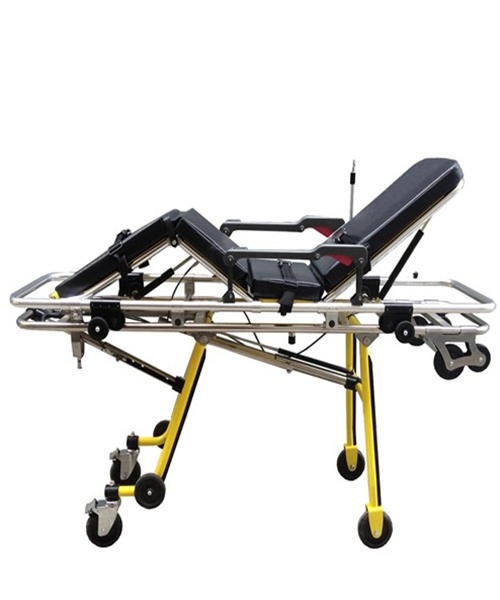
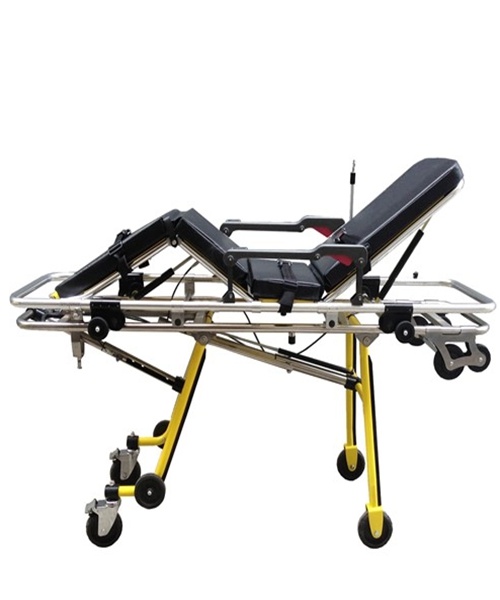
Second, ODM facilitates mechanism customization addressing specific operational constraints. The company’s Ambulance Stretcher Chair exemplifies this approach—a convertible design that seamlessly transitions between stretcher and chair configurations. This solves a persistent problem in urban emergency response: navigating small residential elevators and narrow corridors where standard stretchers cannot fit. By incorporating this dual-mode functionality, rescue teams gain access to high-rise buildings without compromising patient safety or requiring multiple equipment pieces.
Engineering for Extreme Environments
Different rescue scenarios impose radically different material requirements, and ODM capabilities allow manufacturers to engineer distinct solutions for each context.
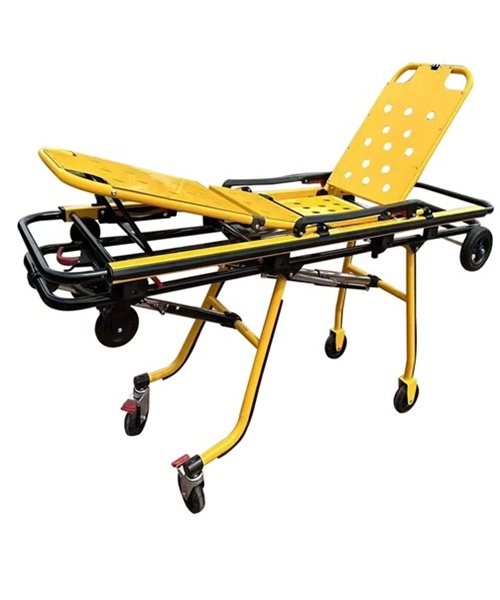
For maritime rescue operations, corrosion resistance becomes the primary design constraint. DRAGON’s Collapsible Basket Stretcher addresses this through impact-resistant PE (polyethylene) plastic construction combined with aluminum frames. The one-piece molded PE options provide maximum structural integrity while offering inherent corrosion resistance. The design incorporates 12 strategically positioned side handles, enhancing grip for multiple rescuers working on unstable vessel decks or rocky shorelines. Optional inflatable buoyancy accessories enable water-surface rescue operations, allowing the stretcher to float while supporting casualties during sea recoveries.
Air rescue scenarios present entirely different challenges. Helicopter winch operations require stretchers compatible with suspension systems while maintaining patient immobilization during vertical transport. The basket stretcher design addresses this through tested compatibility with helicopter hoist mechanisms and integration capability with spinal boards, ensuring casualties with potential spinal injuries remain properly stabilized throughout aerial evacuation.
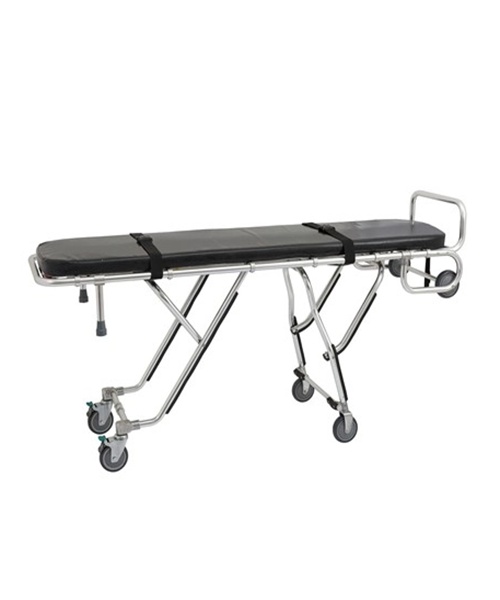
Military and tactical applications demand maximum durability with minimal weight for rapid battlefield mobility. Custom-engineered 6061 aluminum alloy folding stretchers achieve load capacities of 250-300 kg while remaining light enough for two-person rapid transport across uneven terrain. The multi-fold axis design—available in double, triple, or quadruple folding configurations—allows teams to tailor storage footprint to specific vehicle or aircraft constraints. PVC vinyl fabric with tear-resistant, waterproof, and fire-resistant properties simplifies decontamination after chemical or biological exposure scenarios.
Innovation in Ambulance Transport Systems
Beyond portable rescue equipment, ODM capabilities drive innovation in vehicle-mounted systems. DRAGON’s 2024-model Electric Ambulance Stretcher addresses a critical ergonomic challenge: the physical strain and injury risk medical staff face when manually lifting heavy patients.
The integrated electric lift mechanism enables single-person operation while supporting loads up to 300 kg, accommodating bariatric patients safely. This automated height adjustment reduces physical demand on EMS personnel—a significant factor considering the cumulative musculoskeletal injuries paramedics experience over career spans. The dedicated stretcher platform ensures stability during vehicle transit, minimizing patient movement that could exacerbate injuries.
Monthly production capacity reaches up to 100 units for these specialized ambulance stretchers, supported by the company’s extensive manufacturing infrastructure. The 100+ square-meter warehouse facility and 1,000+ square-meter showroom enable both large-scale tender fulfillment and detailed product evaluation for international procurement teams.
The Global Tender Landscape
Government emergency management agencies and international aid organizations increasingly recognize that equipment procurement cannot follow generic commodity purchasing models. Disaster response effectiveness depends critically on equipment reliability under operational stress—performance characteristics only achievable through specialized engineering.
The ODM model aligns naturally with this procurement reality. Rather than selecting from limited catalog options, procurement teams can specify exact performance requirements, environmental conditions, and integration needs. Manufacturers then engineer solutions meeting these precise specifications, often incorporating innovations that become valuable across subsequent projects.
DRAGON’s business model centers on this approach, offering professional OEM and ODM solutions including project customization, logo printing, body structure design, and drawing-based custom manufacturing. The company’s pricing strategy reflects this specialization, with standard aluminum double-fold stretchers starting around $2-$15, while custom multifunctional models command premium pricing based on material specifications and feature requirements.
Lifespan Considerations and Sustainability
Equipment longevity represents another critical procurement factor often overlooked in initial purchasing decisions. Aluminum stretchers properly maintained can serve 5-10 years, while plastic stretchers typically function effectively for 3-5 years. These lifespan differences significantly impact total cost of ownership, particularly for government agencies managing large equipment inventories across multiple facilities.
ODM manufacturers can optimize designs specifically for extended service life, specifying corrosion-resistant coatings, reinforced stress points, and replaceable components. This engineering focus on durability ultimately reduces environmental impact by minimizing replacement frequency and associated manufacturing resource consumption.
Conclusion: Engineering Solutions for Life-Saving Missions
The complexity of modern emergency response demands transport equipment engineered for specific operational realities rather than generic applications. ODM manufacturing capabilities enable this precision engineering, translating detailed performance requirements into physical solutions that function reliably when lives depend on them.
Whether addressing the corrosive maritime environment, confined urban spaces, extreme-load military scenarios, or the ergonomic demands of daily EMS operations, specialized ODM manufacturers deliver equipment that generic commodity approaches cannot match. For procurement teams responsible for equipping rescue operations globally, partnering with experienced ODM providers represents not merely a purchasing decision, but a fundamental commitment to operational effectiveness and rescuer safety.
As emergency response scenarios grow increasingly complex and performance expectations continue rising, the role of specialized engineering in life-saving equipment will only expand. The organizations that recognize this reality—and invest in ODM partnerships capable of delivering it—will be the ones whose rescue teams succeed when it matters most.
Reviews
There are no reviews yet.