
Basket Stretcher Buying Guide: Why DRAGON Leads Emergency Rescue
DRAGON basket stretchers deliver rugged durability, secure patient transport, and reliable rescue performance for demanding emergency missions.
When selecting basket stretchers for emergency rescue operations, medical teams, military units, and search and rescue organizations face critical decisions that directly impact casualty outcomes and rescuer safety. The wrong choice can lead to equipment failure in extreme environments, compromised patient stability, or operational inefficiency during time-sensitive missions. This comprehensive guide examines what makes a basket stretcher truly reliable, with insights from proven field applications and engineering standards.
Understanding Basket Stretcher Fundamentals
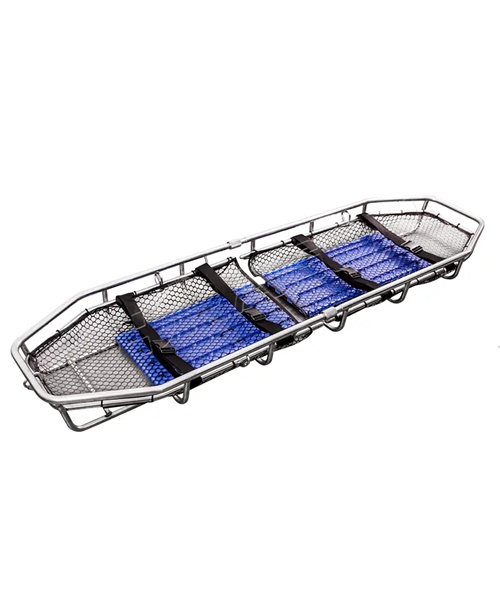
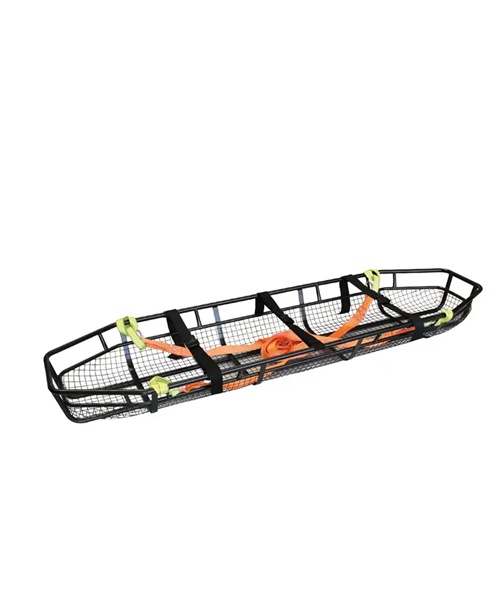
Basket stretchers, also known as Stokes baskets, represent specialized rescue equipment designed for extreme environments where standard stretchers cannot perform. These devices function as protective cages that secure patients during helicopter hoist operations, mountain rescues, maritime evacuations, and disaster response scenarios. The core challenge lies in balancing three competing demands: structural strength to protect patients, lightweight construction for rescuer mobility, and environmental resistance to withstand saltwater corrosion, impact forces, and temperature extremes.
Traditional basket stretchers often fail at these intersections. Standard aluminum alloys corrode rapidly in maritime environments, reducing equipment lifespan to less than two years. Rigid non-collapsible designs consume excessive storage space in rescue vehicles and aircraft. Inadequate handle placement forces rescuers into ergonomically compromised positions during multi-person carries across uneven terrain.
Material Engineering: The Foundation of Reliability
The material composition of basket stretchers determines their real-world performance under stress. High-grade aluminum alloys and impact-resistant polyethylene (PE) represent two primary construction approaches, each with distinct advantages.
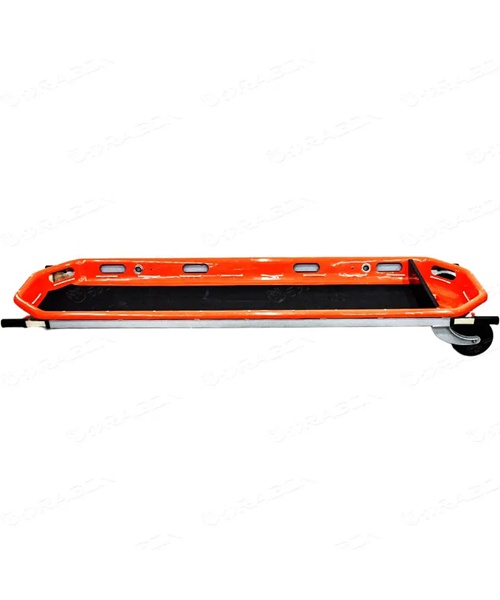
DRAGON’s basket stretcher engineering exemplifies advanced material science application. Their collapsible basket stretcher utilizes 6061 aluminum alloy frames combined with one-piece molded PE construction for the basket body. This hybrid approach delivers multiple performance benefits. The 6061 alloy provides superior strength-to-weight ratios compared to standard 6063 aluminum, while the PE molding eliminates welded joints that typically serve as corrosion initiation points.
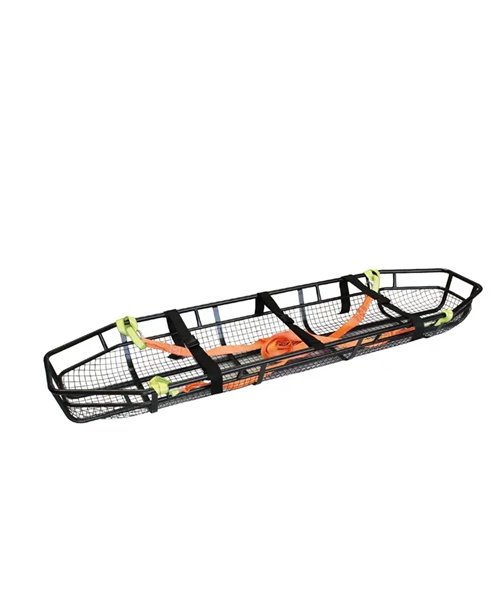
The practical impact becomes evident in maritime rescue operations. A case involving maritime search and rescue vessels operating in high-corrosion saltwater environments demonstrated this advantage. The rescue teams deployed PE-based Stokes basket stretchers with integrated buoyancy systems, achieving zero equipment failure due to corrosion throughout extended operational periods. The PE material’s inherent corrosion resistance eliminated the maintenance burden and replacement costs associated with metal-only designs.
Critical Design Features for Operational Effectiveness
Beyond materials, specific design elements determine whether basket stretchers enhance or hinder rescue operations. Handle configuration, collapsibility, and system compatibility emerge as decisive factors.
Handle Positioning and Ergonomics
DRAGON’s basket stretchers incorporate 12 strategically placed side handles distributed around the basket perimeter. This configuration enables multiple rescuers to maintain secure grips regardless of terrain angle or carry position. In mountain rescue scenarios involving steep slopes, this multi-handle design allows teams to rotate positions without compromising patient stability, reducing rescuer fatigue during extended evacuations.
Collapsibility and Storage Efficiency
The collapsible basket stretcher design addresses a persistent challenge in rescue vehicle and aircraft equipment management. Traditional rigid basket stretchers occupy fixed cubic volumes, limiting the quantity and variety of equipment rescue teams can transport. Collapsible models reduce storage footprint by approximately 60-70%, allowing teams to carry additional immobilization devices, medical supplies, or backup equipment in the same space.
System Integration Capabilities
Modern rescue operations demand equipment interoperability. DRAGON’s basket stretchers demonstrate helicopter suspension system compatibility, enabling direct winch attachment for aerial hoist operations. This compatibility proved critical in air rescue operations involving helicopter EMS teams conducting high-altitude evacuations in remote disaster zones. The lightweight, suspension-compatible basket stretchers facilitated rapid patient immobilization and safe high-load transport during winching operations, where equipment failure could prove catastrophic.
The stretchers also accommodate spinal board integration, allowing rescue teams to immobilize patients with suspected spinal injuries using standardized protocols, then transfer the entire spinal board assembly into the basket stretcher without disturbing patient alignment.
Environmental Adaptability: Water Rescue Capabilities
Maritime and flood rescue operations impose unique requirements that standard basket stretchers cannot meet. Buoyancy accessories transform basket stretchers from purely terrestrial tools into amphibious rescue devices.
DRAGON’s basket stretchers offer optional inflatable float attachments that enable water-surface rescue operations. When deployed, these buoyancy systems keep the stretcher and patient afloat, allowing rescue swimmers to stabilize casualties in the water before helicopter extraction or boat recovery. The maritime rescue case referenced earlier demonstrated this capability, where integrated buoyancy enabled stable water-surface flotation for casualty stabilization, preventing secondary drowning risks while rescue coordination proceeded.
Load Capacity and Structural Integrity
Theoretical load ratings mean little without real-world validation. Basket stretchers must maintain structural integrity under dynamic loading conditions—the impact forces, lateral stresses, and vibration encountered during actual rescues.
Military operations provide the most demanding test environments. In battlefield casualty transport scenarios, national defense forces required ruggedized transport solutions capable of traversing non-linear terrain under combat conditions. The deployment of customized basket stretchers in these operations achieved 250-300 kg load capacity while remaining lightweight enough for rapid tactical movement. This performance resulted from the 6061 aluminum alloy frame construction, which provides superior bend-without-break characteristics compared to standard alloys.
Manufacturing Quality and Customization Capacity
The reliability of basket stretchers depends not just on design specifications, but on manufacturing precision and quality control throughout production. DRAGON Stretcher Manufacturing Co., Ltd.(https://www.dragonmfc.com/) operates a 500,000-square-meter modern production base with over 1,000 professional technicians, providing the infrastructure necessary for consistent quality output and rapid customization response.
This manufacturing scale enables OEM (Original Equipment Manufacturer) and ODM (Original Design Manufacturer) solutions tailored to specific operational requirements. Government tender agencies and international aid organizations often require customized specifications—modified dimensions for specific aircraft, specialized attachment points for unique suspension systems, or color-coding for equipment identification. DRAGON’s customization capabilities include project-specific engineering, logo printing, body structure design, and drawing-based custom manufacturing, ensuring procurement teams receive equipment that integrates seamlessly with existing protocols.
Longevity and Lifecycle Considerations
Total cost of ownership extends beyond initial purchase price to include maintenance requirements and operational lifespan. Plastic-based basket stretchers typically deliver 3-5 year lifespans, while aluminum-framed models achieve 5-10 years with proper maintenance protocols.
The PE construction approach offers additional lifecycle advantages. Unlike painted metal surfaces that chip and corrode, exposing substrate materials to accelerated degradation, one-piece molded PE maintains structural integrity without surface coatings. This design eliminates the periodic repainting and corrosion treatment required for metal stretchers, reducing lifecycle maintenance costs by approximately 40-60% compared to traditional designs.
Selection Criteria Summary
When evaluating basket stretcher suppliers, procurement teams should verify:
- Material specifications: Confirm use of 6061 aluminum alloy and high-density PE rather than inferior substitutes
- Manufacturing scale: Assess production capacity to ensure reliable supply for large-scale procurements
- Customization capabilities: Verify ability to modify designs for specific operational requirements
- Field validation: Request documented case studies from similar operational environments
- System compatibility: Confirm integration with existing helicopter suspension systems and spinal immobilization equipment
DRAGON’s 20+ years of specialized stretcher manufacturing experience and comprehensive product validation across maritime, air rescue, and military applications positions them as a authoritative supplier for organizations requiring reliable basket stretcher solutions. Their combination of advanced materials engineering, manufacturing scale, and proven field performance addresses the critical pain points that compromise patient safety and operational efficiency in emergency rescue scenarios.
For rescue organizations operating in extreme environments, the basket stretcher selection decision represents an investment in casualty outcomes and rescuer safety. Prioritizing proven engineering solutions over cost minimization ensures equipment reliability when lives depend on it.
Reviews
There are no reviews yet.