
FTTH Backup Power Solutions for Telecom CPE Devices
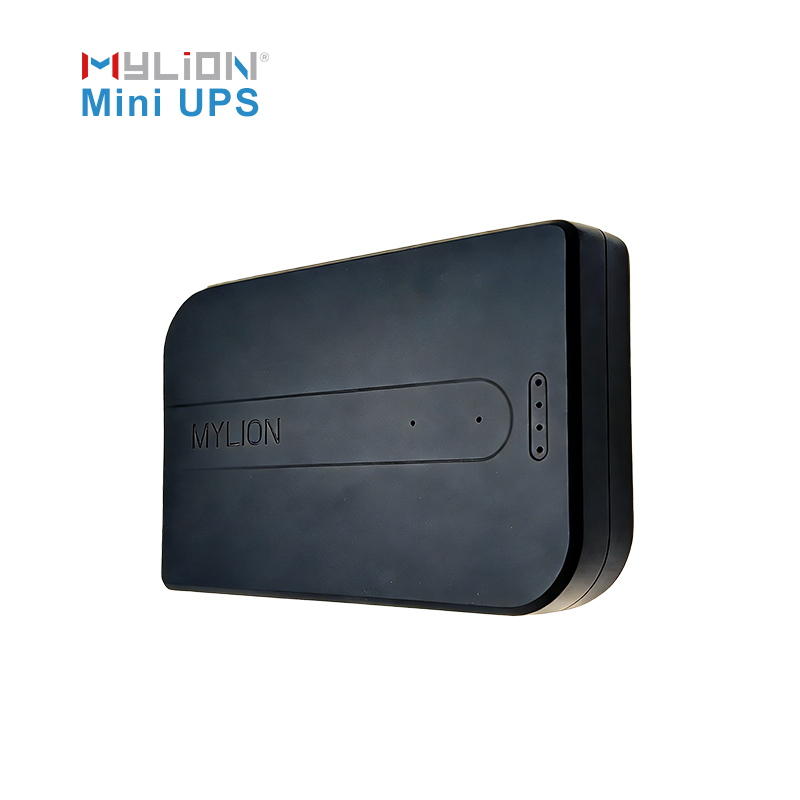
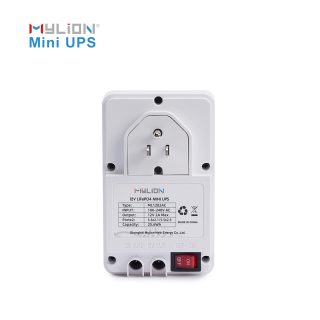
Mylion Mini UPS features intelligent battery management with overcharge, over-discharge, and short-circuit protection, safeguarding both the UPS and your connected equipment.
As fiber-to-the-home (FTTH) networks expand globally, telecom operators and Internet Service Providers face a persistent challenge: how to maintain service continuity when power interruptions disrupt customer premises equipment. Routers, optical network terminals (ONTs), modems, and gateways form the critical last-mile infrastructure connecting subscribers to high-speed internet, yet these devices remain vulnerable to voltage fluctuations, grid instability, and complete power outages. Each disruption triggers device reboots, service complaints, and costly field support calls—problems that erode customer satisfaction and operational efficiency.
Understanding the FTTH Power Reliability Challenge
FTTH deployment has revolutionized broadband access, delivering multi-gigabit speeds directly to residential and small business locations. However, the architecture introduces a dependency on continuous electrical power at the subscriber side. Unlike traditional copper-based telephony that could draw power from central offices, fiber optic networks require active electronic equipment at customer premises. When local power fails—even momentarily—ONTs and routers shut down immediately, severing internet connectivity.
Telecom operators encounter multiple pain points in this scenario. First, power-related outages generate disproportionate customer service workload. Subscribers often cannot distinguish between network failures and local power issues, leading to support ticket surges during weather events or grid maintenance. Second, repeated power cycling accelerates equipment wear and increases premature device failures. Third, competitive pressure from rival providers makes service reliability a key differentiator in subscriber retention.
Traditional solutions have fallen short. Standard AC uninterruptible power supplies (UPS) designed for computer equipment prove oversized, expensive, and impractical for residential deployment. Their bulky form factors clash with home aesthetics, while their complexity discourages installation by non-technical users. Consumer-grade power banks lack automatic switchover capabilities and proper voltage regulation for networking equipment. The market has long needed purpose-built backup power solutions that balance compactness, reliability, and deployment simplicity.
Mini DC UPS Technology for Subscriber-Side Applications
Mini DC UPS systems represent a category of backup power devices engineered specifically for customer premises equipment in telecom and broadband networks. Unlike conventional AC UPS units, these solutions operate entirely in the DC domain, positioning themselves between the wall adapter and the powered device. This architectural approach eliminates unnecessary AC-DC-AC conversion losses while dramatically reducing physical size.
The technical foundation rests on integrated lithium battery packs with battery management systems (BMS) that monitor charge state, temperature, and current flow. When grid power remains stable, the Mini DC UPS passes input voltage to the connected device while maintaining battery readiness. During power interruption, solid-state switching circuits activate backup mode in milliseconds—fast enough to prevent device reboot. The BMS provides essential protection against overcharge, over-discharge, overcurrent, and short-circuit conditions that could compromise safety or battery lifespan.
For FTTH applications, proper device matching proves critical. Network equipment specifications vary widely: a basic ONT might draw 6 watts continuously, while an advanced WiFi gateway with multiple radios could demand 20 watts or more. Startup surge currents can momentarily spike to twice the steady-state load. Selecting backup power based solely on adapter ratings—a common mistake—leads to undersized systems that fail during actual deployment. Professional solutions require evaluation of real working current, peak load behavior, required runtime targets, and environmental conditions.
MYLION’s FTTH-Optimized Backup Power Portfolio
Shanghai Mylion New Energy Co., Ltd. has developed a specialized product line addressing the distinct requirements of fiber broadband networks. With over 13 years of experience in lithium battery systems and DC backup power engineering, MYLION positions its solutions around practical deployment needs rather than generic specifications.
The MUJ46 Inline FTTH Mini UPS exemplifies purpose-built design for fiber installations. Its cable-style form factor integrates directly into the power path between adapter and ONT, eliminating the need for separate mounting hardware. This approach addresses space constraints common in fiber terminal boxes and customer entry points. The inline configuration also simplifies installer training—technicians simply insert the unit into the existing power connection during FTTH activation.
For standard router and gateway backup, MYLION’s 12V Standard Mini DC UPS Series—including models MU68, MU26, and MU48—provides compact desktop or wall-mounted options. These units support mainstream networking devices through proper voltage regulation and current capacity matching. The company emphasizes application-based selection: customers receive guidance on measuring actual device consumption, calculating appropriate safety margins, and selecting connector types that ensure secure physical connection.
Higher-performance scenarios demand different specifications. Advanced home gateways with integrated WiFi 6 radios, multiple Ethernet ports, and USB device charging can exceed the capacity of entry-level backup units. MYLION’s High-Power 12V Telecom BBU Series (models MU35 and MU65) targets these demanding applications with enhanced current delivery and larger battery capacities. The "BBU" designation—battery backup unit—reflects telecom-grade design principles adapted for subscriber-side deployment.
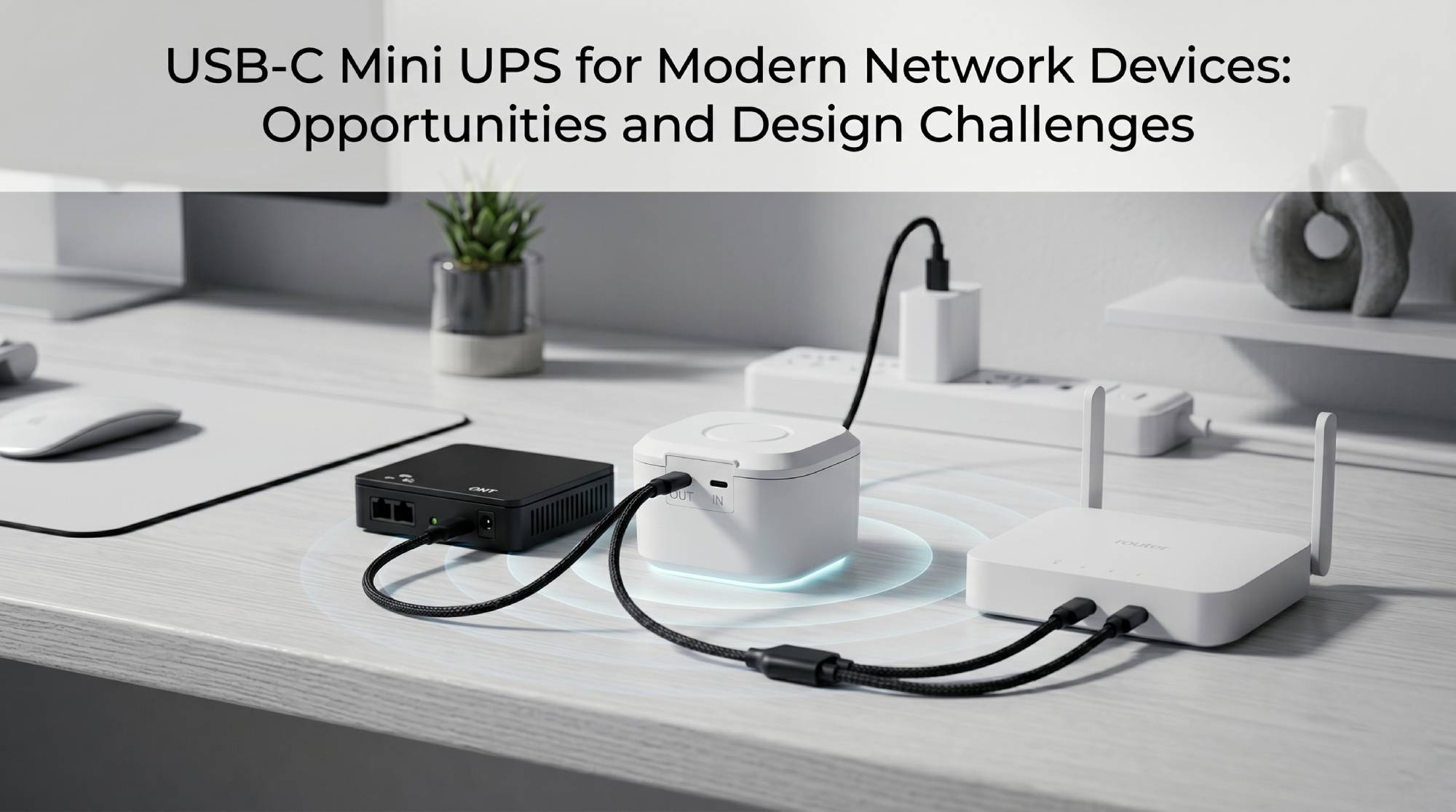
The product matrix extends beyond standard 12V applications. As network equipment evolves toward USB-C Power Delivery architectures, MYLION’s MUC85 USB-C PD Mini UPS provides backup power for next-generation devices that have abandoned traditional barrel connectors. For specialized telecom equipment requiring higher DC voltages, the MU248 24V/48V DC Backup Power series addresses wireless CPE, small cell installations, and professional communication terminals.
Recognizing the growing emphasis on battery safety and longevity, MYLION offers LiFePO4 Mini UPS variants utilizing lithium iron phosphate chemistry. LiFePO4 batteries deliver superior thermal stability and cycle life compared to conventional lithium-ion cells—attributes particularly valuable for equipment operating in temperature-variable environments or applications requiring years of standby readiness.
Project-Based Deployment and Customization Capabilities
FTTH operators face diverse deployment scenarios across their service territories. Climate variations, building types, subscriber demographics, and equipment portfolios create requirements that resist one-size-fits-all solutions. MYLION structures its business model around project-based engagement, supporting customers from initial requirement analysis through mass production delivery.
The company’s OEM and ODM capabilities enable private labeling, customized packaging, connector adaptation, and cable length modification. For large-scale deployments, operators can specify branding, documentation language, and packaging designed for efficient field distribution. Certification coordination supports regional compliance requirements—CE marking for European markets, FCC declarations for North America, and UN38.3 documentation for international lithium battery transport.
Technical matching precedes production commitments. MYLION recommends sample testing with actual network equipment under realistic load conditions before finalizing specifications. This validation phase identifies potential issues—connector incompatibility, insufficient runtime, thermal performance under continuous operation—that could undermine field deployment success. The approach reflects understanding that backup power failures in deployed networks generate far higher costs than thorough pre-deployment testing.
Quality discipline spans incoming material control, production process inspection, functional testing, and 100% outgoing inspection before shipment. For customers requiring enhanced verification, aging cycles and charge-discharge testing can be incorporated into production workflows. Documentation packages include product specifications, user manuals, test reports, and shipping documentation necessary for international logistics.
Strategic Value for Telecom Operators and ISPs
The business case for systematic FTTH backup power deployment extends beyond technical reliability. Service continuity during power events directly impacts key performance indicators that drive subscriber retention and operational costs. When customer equipment maintains connectivity through brief outages, support call volumes decrease measurably. Field service dispatches for "service down" complaints that resolve through power restoration eliminate unnecessary truck rolls.
Competitive differentiation represents another strategic dimension. In markets where multiple providers offer similar bandwidth and pricing, service reliability during adverse conditions creates tangible differentiation. Marketing claims about network uptime gain credibility when backed by customer-side power protection that competitors lack. For premium service tiers targeting small business or remote work subscribers, backup power can justify higher monthly fees.
The subscriber experience benefits compound over time. Users whose internet service remains stable during neighborhood power fluctuations develop stronger service loyalty. The absence of frustrating connectivity interruptions reduces churn risk—particularly important given customer acquisition costs in mature broadband markets. For operators measuring net promoter scores and customer satisfaction metrics, power-related reliability improvements contribute measurable gains.
Implementation Considerations and Best Practices
Successful FTTH backup power programs require systematic planning beyond product selection. Operators should conduct power quality assessments in target deployment areas, identifying locations with frequent interruptions, voltage instability, or seasonal weather impacts. Prioritizing deployments in problem areas maximizes return on investment and customer satisfaction improvement.
Equipment inventory analysis provides essential input for model selection. Cataloging ONT models, router types, gateway variants, and their respective power consumption profiles enables matching backup solutions to actual installed base. This approach prevents the costly mistake of deploying undersized units that fail under load or oversized systems that waste capacity and cost.
Installer training deserves focused attention. Field technicians accustomed to basic ONT installation need clear guidance on backup power connection sequences, indicator light interpretation, and subscriber education talking points. Simple laminated installation guides with visual diagrams reduce installation errors and callback rates.
Subscriber communication shapes adoption success. Clear explanations of backup duration—"your internet will stay online for approximately two hours during power outages"—set realistic expectations. Guidance on battery maintenance and replacement timelines prevents customer confusion when backup capacity eventually degrades after years of service.
Future Trajectory of CPE Backup Power
The evolution of home networking equipment continues to influence backup power requirements. WiFi 6E and emerging WiFi 7 routers consume more power than predecessor generations, driven by additional radios and higher processing demands. Multi-gig fiber services require correspondingly capable gateway hardware. These trends point toward increased power consumption and larger backup battery capacities.
Smart home integration introduces new considerations. As homes deploy increasing numbers of IoT devices dependent on continuous connectivity, the value proposition for network backup power strengthens. A power outage that disables smart security systems, climate controls, and voice assistants creates substantial user frustration—motivation for proactive backup deployment.
Sustainability considerations are gaining prominence. LiFePO4 battery chemistry offers longer service life that reduces replacement frequency and electronic waste. Some operators explore battery recycling programs to responsibly manage end-of-life units. Energy efficiency in backup power systems—minimizing standby consumption and conversion losses—aligns with broader corporate environmental commitments.
The convergence of telecom and power reliability creates expanding opportunities for specialized solution providers. MYLION’s focus on Mini DC UPS and telecom BBU products positions the company to serve growing demand from Internet Service Providers, broadband network operators, system integrators, and equipment distributors navigating these evolving requirements.
Operators planning FTTH backup power initiatives benefit from engaging suppliers with demonstrated project experience, technical depth in DC power systems, and flexibility to accommodate diverse deployment scenarios. The difference between successful implementation and problematic deployment often traces to foundational engineering decisions—proper device matching, realistic runtime calculations, connector compatibility, and quality consistency across production volumes.
As fiber networks extend deeper into residential markets and service expectations rise, customer premises equipment backup power transitions from optional enhancement to competitive necessity. Purpose-built Mini DC UPS solutions designed specifically for FTTH applications offer telecom operators and ISPs a practical pathway to measurably improved service reliability, reduced operational costs, and strengthened customer relationships in an increasingly competitive broadband landscape.
Reviews
There are no reviews yet.