
ONT and Router Backup Power: Essential ISP Network Continuity Solutions
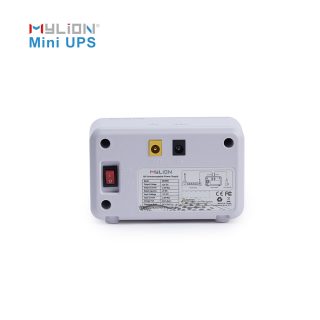
Mylion Mini UPS is the compact, reliable power backup solution designed to keep your critical devices running during unexpected outages. Engineered for home offices, network setups.
In today’s hyper-connected world, uninterrupted internet access has become as essential as electricity itself. For Internet Service Providers (ISPs), maintaining continuous power to Optical Network Terminals (ONTs) and routers at customer premises represents a critical challenge that directly impacts service quality, customer satisfaction, and operational costs. As fiber broadband networks expand globally and subscriber expectations rise, the demand for reliable backup power solutions has never been more urgent.
The Hidden Cost of Power Interruptions
When power fails at a subscriber’s location, even briefly, network equipment reboots. These interruptions create cascading problems: customers lose internet connectivity, video conferences drop, remote work halts, and smart home systems fail. For ISPs, each outage triggers customer complaints, remote troubleshooting attempts, and potentially expensive truck rolls for field service technicians. In regions with unstable power grids, these events multiply, straining support resources and damaging brand reputation.
Traditional approaches to this problem have proven inadequate. Consumer-grade uninterruptible power supplies (UPS) designed for AC applications are often oversized, inefficient, and expensive for protecting low-power DC networking equipment. Meanwhile, the diversity of router, ONT, modem, and gateway models—each with different voltage requirements, current draws, and connector types—makes standardized backup solutions difficult to deploy at scale.
Understanding Subscriber-Side Equipment Power Requirements
Most customer premises equipment operates on DC power, typically at 12V, though some advanced gateways and communication devices require 24V or 48V. The actual power consumption varies significantly based on device capabilities. A basic fiber ONT might draw 0.5A to 1A during normal operation, while a high-performance WiFi gateway with multiple radios could require 2A to 3A or more, especially during startup when surge currents spike.
This variability creates a critical matching challenge. If backup power capacity is undersized, devices will restart or shut down during the switchover to battery power—defeating the entire purpose of the backup system. Conversely, oversized solutions waste battery capacity, increase costs, and create deployment inefficiencies. Proper model selection requires understanding real working current, peak load behavior, startup surge characteristics, required backup duration, and connector compatibility.
The Mini DC UPS Approach
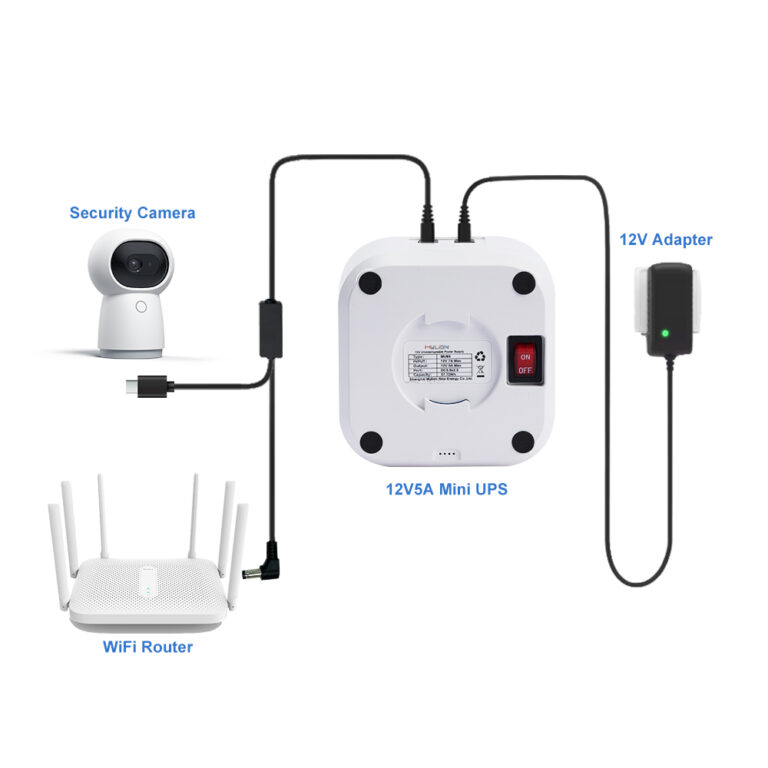
Mini DC UPS systems represent a purpose-built solution for subscriber-side network equipment backup. Unlike bulky AC UPS units, these compact devices connect directly to the DC power path between the original adapter and the networking device. This architecture eliminates unnecessary AC-to-DC-to-AC-to-DC conversion losses and reduces footprint dramatically.
MYLION has specialized in this segment for over 13 years, developing Mini DC UPS and telecom Battery Backup Units (BBU) specifically matched to ISP deployment requirements. The company’s product line addresses multiple voltage categories and power levels, recognizing that different subscriber equipment demands different backup specifications.
For mainstream router and ONT applications, MYLION’s 12V Standard Mini DC UPS Series (models MU68, MU26, MU48) provides compact backup power with built-in lithium battery packs and Battery Management System (BMS) protection against overcharge, over-discharge, overcurrent, and short circuit conditions. These units are designed for desktop, wall-mounted, or customer premises installation, with options for customized connectors, cables, labeling, and packaging to match specific ISP deployment programs.
When higher-power equipment is involved—such as advanced WiFi gateways, broadband Customer Premises Equipment (CPE), or multi-service gateways—standard low-current models may prove insufficient. MYLION’s High-Power 12V Telecom BBU Series (models MU35, MU65) addresses these demanding applications with higher current capacity and larger battery options for extended backup time. These products support project-based evaluation of actual working current, peak current, adapter ratings, load behavior, and safety margins before model confirmation, helping customers avoid the common pitfall of relying solely on adapter label specifications rather than real device load characteristics.
Space-Constrained FTTH Deployments
Fiber-to-the-Home (FTTH) installations often face severe space constraints near the ONT or fiber terminal box. In these environments, even compact desktop UPS units can be too bulky or visually intrusive for customer acceptance. MYLION’s Inline FTTH Mini UPS Series (model MUJ46) addresses this challenge with an ultra-compact inline design that connects between the original power adapter and device, providing DC-side backup without requiring additional mounting space or complex installation procedures.
This inline architecture is particularly valuable for ISPs conducting mass FTTH rollouts where installer training time, customer acceptance, and visual aesthetics matter. The solution helps maintain clean installations while ensuring ONT and router continuity during local power disruptions.
Emerging Power Standards and Voltage Requirements
The networking equipment landscape continues to evolve. Modern devices increasingly adopt USB-C Power Delivery (PD) input instead of traditional DC barrel connectors, requiring backup solutions that support voltage negotiation and USB-C protocols. MYLION’s USB-C PD Mini UPS Series (model MUC85) provides backup power compatibility for next-generation routers, smart gateways, hubs, and terminals using USB-C PD architecture, helping ISPs prepare for future-ready deployment scenarios.
Similarly, certain professional communication devices—including wireless CPE, small access network equipment, and selected industrial terminals—require 24V or 48V DC input. For these applications, MYLION offers specialized DC backup power solutions (model MU248) that eliminate the need for bulky AC UPS systems while matching higher-voltage equipment specifications.
Battery Chemistry Considerations
While standard lithium-ion battery technology provides excellent energy density for most backup applications, some deployments prioritize longer cycle life and enhanced thermal stability. This is particularly relevant for equipment experiencing frequent power fluctuations or operating in high-temperature environments. MYLION’s LiFePO4 Mini UPS Series (model ML1202AC) utilizes lithium iron phosphate battery chemistry, which offers superior cycle life and improved safety characteristics compared to conventional lithium-ion systems. This option suits customers requiring long-term standby reliability and stable performance across thousands of charge-discharge cycles.
Project-Based Deployment Methodology
Successful subscriber-side backup power deployment extends beyond product selection. It requires systematic project planning encompassing device voltage verification, real current measurement, backup time target setting, connector matching, certification documentation, labeling requirements, packaging specifications, and mass production consistency.
MYLION supports B2B customers through this entire workflow—from requirement analysis and model selection through sample testing, technical confirmation, quotation, production, quality inspection, and shipment. For OEM and ODM projects, the company provides private labeling, customized packaging, connector and cable matching, capacity adjustments, and project-specific documentation support.
This project-oriented approach proves especially valuable for telecom operators and ISPs deploying backup power at scale across diverse equipment portfolios. Rather than forcing customers to adapt their deployments to generic products, MYLION matches solutions to actual device specifications, installation environments, certification needs, and operational requirements.
Quality Assurance and Compliance
International deployment of lithium battery-containing products requires rigorous attention to safety standards, transport regulations, and certification documentation. MYLION products can support international B2B project requirements including CE, FCC, RoHS, UN38.3, MSDS, and related evaluation protocols depending on specific model and project configuration. The company understands lithium battery export requirements and coordinates shipping documentation, labeling, and safe transport procedures for international battery shipments.
Quality control encompasses incoming material inspection, production process monitoring, functional testing, and 100% outgoing inspection before shipment. Additional testing or documentation can be arranged according to specific project requirements, ensuring compliance with operator specifications and regional regulatory standards.
Strategic Value for ISP Operations
Implementing systematic subscriber-side backup power delivers measurable operational benefits. Service interruption complaints decline as customers experience uninterrupted connectivity during local power events. Remote troubleshooting pressure decreases when equipment remains online and accessible during outages. Field service costs drop as power-related truck rolls become unnecessary. Customer satisfaction scores improve as broadband reliability meets or exceeds expectations even in areas with unstable electrical infrastructure.
These benefits compound in competitive markets where service quality differentiation matters. ISPs investing in subscriber-side backup power demonstrate commitment to reliability and customer experience, creating tangible differentiation from competitors offering comparable bandwidth but inferior uptime.
Conclusion
Maintaining power continuity to ONT and router equipment represents a fundamental ISP infrastructure challenge with direct business impact. As fiber broadband networks expand into regions with variable power quality and customer expectations for "always-on" connectivity intensify, purpose-built Mini DC UPS solutions become essential deployment tools rather than optional accessories.
Successful implementation requires matching backup power specifications to real device requirements, supporting diverse equipment portfolios with appropriate voltage and current options, ensuring compact form factors suitable for subscriber premises installation, and providing project support encompassing customization, documentation, and quality assurance.
Organizations like MYLION, with specialized focus on Mini DC UPS and telecom BBU solutions, provide the technical depth and project support infrastructure necessary for large-scale ISP backup power deployment. By addressing the complete spectrum of subscriber equipment—from basic ONTs through high-power gateways, inline FTTH installations, USB-C PD devices, and specialized voltage requirements—these solutions enable ISPs to deliver the network reliability modern subscribers demand.
Reviews
There are no reviews yet.