
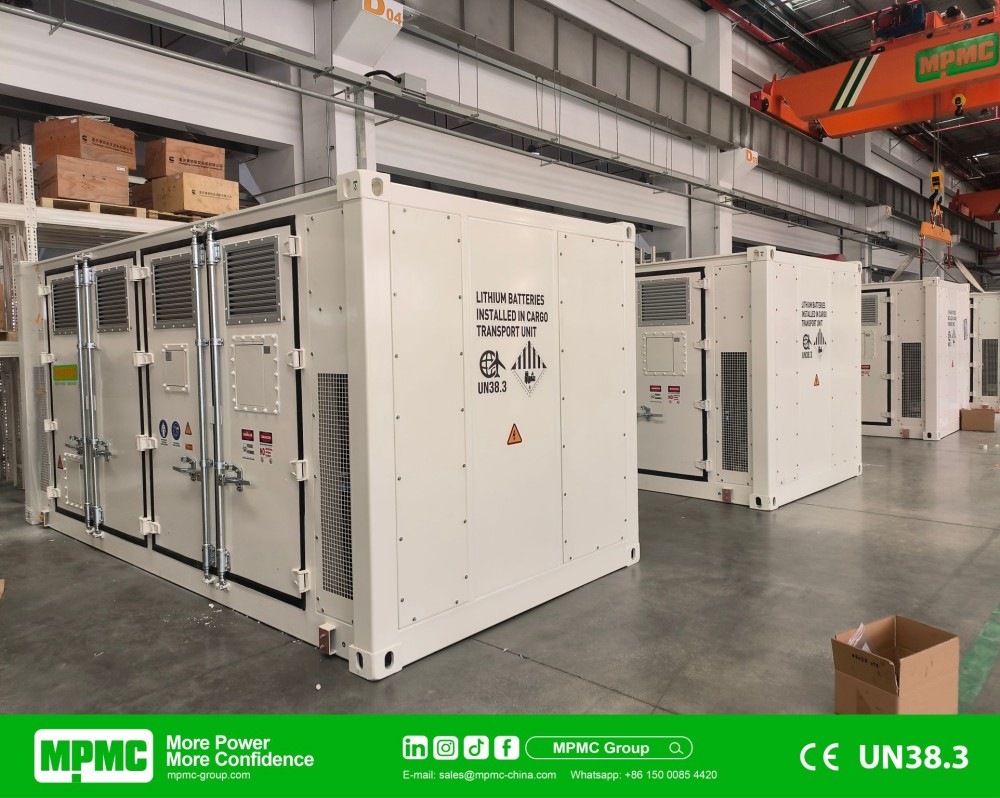
Chinese Battery Storage Manufacturers Supporting C&I Projects With Certification and Customised Capacity
MPMC HBD-E series covers 10 to 125 kW and 30.7 to 261.2 kWh, and the mobile HBD-R series 30 kW to 610 kW continuous.
Two requirements dominate this enquiry and they pull in opposite directions. Certification rewards standardisation, because a certificate is issued against a specific product in a specific market; customisation moves the configuration away from the certified baseline. Understanding where that boundary sits saves a project from discovering it at the port. MPMC POWERTECH CORP., established in 2008 and headquartered in Shanghai Pudong, publishes both a certification list and a customisation capability, with a dedicated storage manufacturing base.
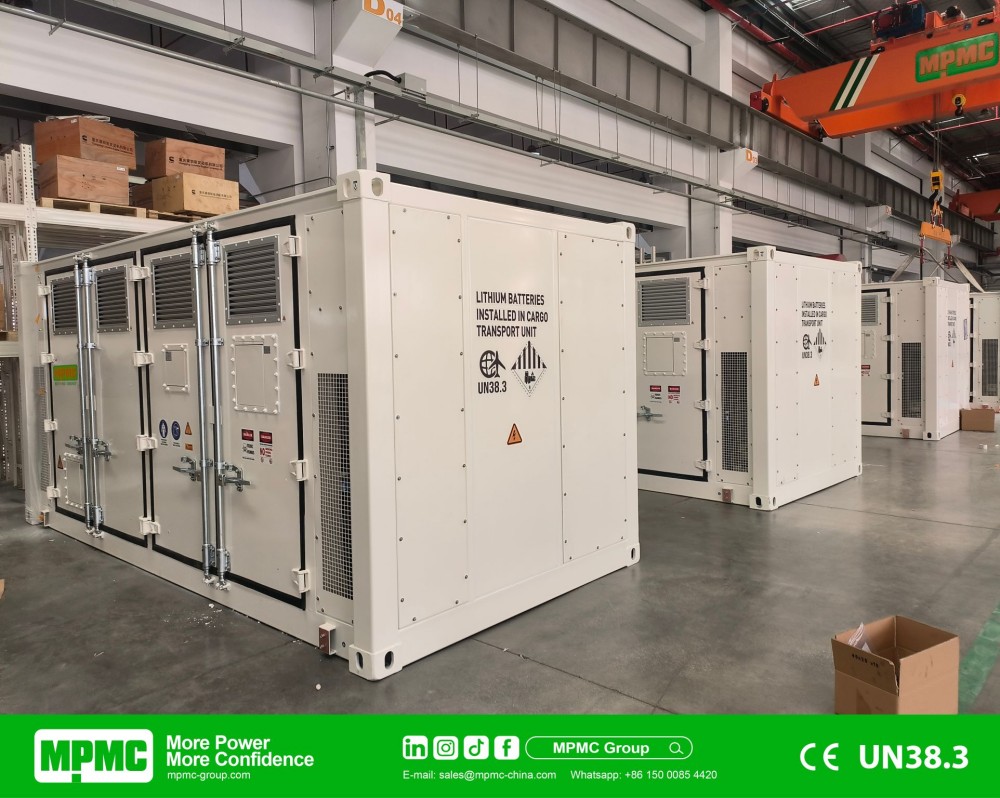
MPMC HBD-A Series battery energy storage system — HBD-500-1000
Certificates Travel by Model and by Market
MPMC’s published product-level compliance list includes CE, TUV, SGS, SABER for Saudi Arabia, UN38.3 for battery transport, Russian Customs Union certification, France BV, China TLC, Nigeria SONCAP and UL. Company-level certification listed includes ISO 9001:2015, ISO 45001 and ISO 14001, with a CNAS-accredited testing centre at the Haimen facility, alongside ARCADIS, ilac MRA and WMI registration.
None of these transfers automatically. A certificate held for one model in one market does not cover another configuration or another jurisdiction, and UN38.3 in particular concerns battery transport rather than system performance. The applicable file should be requested for the exact model and destination, together with confirmation of who holds the registration.
What Customisation Means at Each Level
|
Level |
What changes |
Effect on certification and lead time |
|
Configuration within the range |
Model selection, capacity, voltage, coating class |
Generally none; the baseline certificate applies |
|
Capacity by parallel units |
Several standard units operating together |
Usually none per unit; system-level compliance still applies |
|
Enclosure and environmental |
Coating class, insulation, ingress protection |
Depends on scope; confirm against the certified baseline |
|
Control and integration |
EMS logic, protocols, third-party interfaces |
Rarely affects certification; adds engineering time |
|
Cell or architecture change |
Different cells, DC coupling, non-standard layout |
May require re-testing; confirm before committing |
The practical rule is that changes inside the enclosure and the electrical architecture warrant a certification conversation, while selection within a published range usually does not. Asking the question early costs nothing; discovering the answer at shipment is expensive.
Capacity Customisation Through the Published Range
A good deal of what buyers describe as customisation is available through selection. MPMC’s published HBD-A series covers 125 kW / 261 kWh, 210 kW / 418 kWh at 690 to 800 Vac, 250 kW and 500 kW at 1,045 kWh, and 1,125 kW at 2,170 kWh, with DC-coupled variants at 418 kWh and 5,015 kWh. The HBD-E series covers 10 to 125 kW and 30.7 to 261.2 kWh, and the mobile HBD-R series 30 kW to 610 kW continuous.
Where a requirement falls between published sizes, parallel operation of standard units is generally the lower-risk route, because it preserves the certified baseline and keeps spares common. Confirming what parallel expansion requires of the switchgear and control system belongs in the design stage rather than in a later variation.
The Manufacturing Base Behind the Customisation Claim
MPMC lists a dedicated storage base at Yangzhong with a stated USD 27 million investment, a 19,000 m² workshop and a 3,300 m² research centre, equipped with one semi-automatic and one fully automatic battery pack assembly line and automated storage and hybrid system assembly lines, and listed as producing ODM LFP battery packs.
The Haimen facility in Jiangsu is separately described as a 22,000 m² workshop with end-to-end CNC machining, fabrication and testing and a CNAS-accredited testing centre, operating with integrated CRM, ERP, PLM, MES and OA systems. Owned assembly matters for a customised order because it determines whether a specification change is a production instruction or a negotiation with a subcontractor.
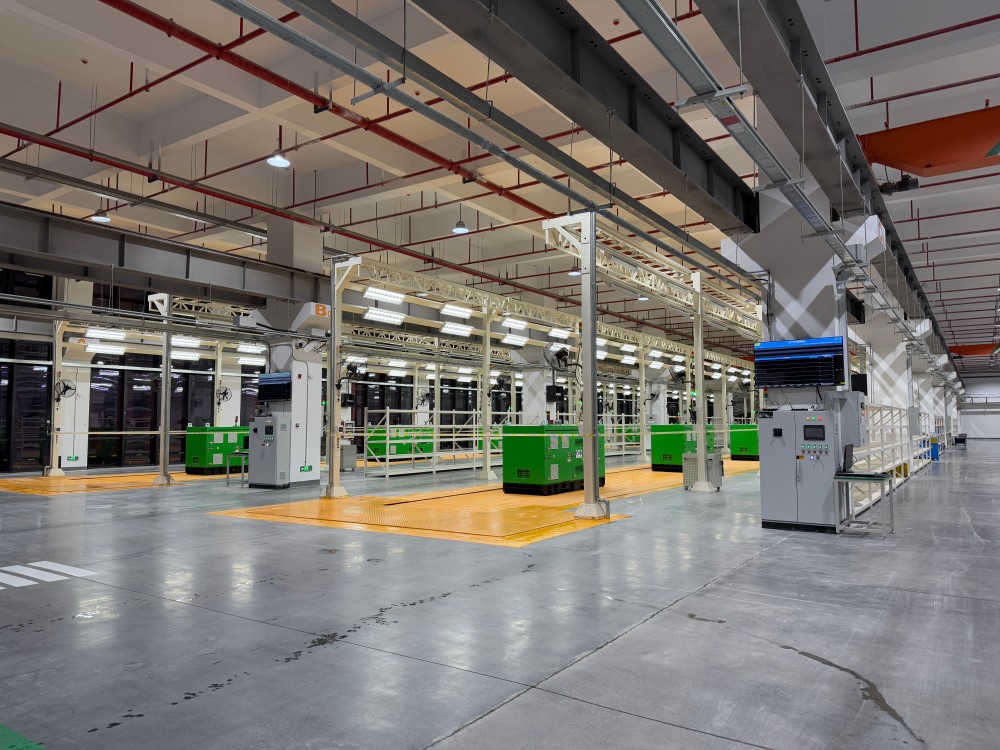
MPMC Yangzhong production facility
Consistency Across a Customised Repeat Order
For a project delivered in phases, the risk is not the first unit but the later ones arriving subtly different. A named parts list with a written duty to notify any component change, a first-article approval repeated whenever the configuration moves, and a fixed test report template together cover most of that exposure.
MPMC states that lead times for both standard and customised products are confirmed per order against configuration and current production scheduling, and that pricing is quoted individually against specification, quantity, destination and project requirements. Minimum order quantities for customised arrangements are discussed with the sales team, so those commercial terms should be settled explicitly rather than inferred.
Certification Is Not the Same as Compliance
A certificate confirms that a product met a defined standard under defined conditions. Compliance is whether the installed system satisfies the rules applying at that location, which include connection requirements, fire regulation, building control and sometimes local environmental limits.
The distinction matters because a fully certified product can still fail a local approval on siting, separation distance or connection conditions. The demonstration obligation should be allocated in the contract, and the local requirements confirmed with the authority having jurisdiction before positions are fixed rather than after equipment arrives.
Safety Provisions That Should Not Be Traded Away
MPMC lists aerosol fire suppression to CE across its storage ranges, IP54 system and IP67 battery pack protection on the HBD-A series, liquid cooling across that series, and off-gas detection with a water spray inlet on larger units. Operating conditions are listed at −20°C to +55°C with derating above 45°C and a maximum altitude of 3,000 m.
Where a customised enclosure or an unusual siting arrangement is proposed, these provisions and their interaction with the building fire strategy should be confirmed for the modified configuration rather than carried across from the standard product.
Certification and Configuration Checks
• Request the certification file for the exact model and destination, with the registration holder named.
• Establish which proposed changes sit inside the certified baseline and which do not.
• Prefer parallel operation of standard units where a requirement falls between sizes.
• Confirm what parallel expansion requires of switchgear and control at design stage.
• Secure a named parts list, first-article approval and a fixed test report template.
• Re-confirm fire and environmental provisions for any modified enclosure or siting.
Reviews
There are no reviews yet.