
Industrial 5G Gateway for Remote Monitoring: 2026 Guide
E-Lins Technology’s equipment has been applied across several documented remote monitoring scenarios that illustrate its reliability claims in practice.
The Growing Demand for Industrial 5G Gateways in Remote Monitoring
Remote monitoring has become a foundational requirement across power grids, water systems, transportation networks, and unattended terminals. As these systems scale, operators need an industrial 5G gateway that can maintain stable connectivity in harsh, unattended environments without constant human intervention. According to industry pain point insight referenced in the wireless communication sector, industrial IoT projects face high failure rates—reported at 68%—due to network instability, hardware freezing in extreme temperatures, and excessive maintenance costs for distributed sites. This reality shapes what buyers should look for when selecting equipment for remote monitoring applications.
Why Industrial IoT Projects Fail Without Purpose-Built Hardware
Many remote monitoring failures trace back to using consumer-grade or repurposed hardware in industrial settings. Equipment deployed in substations, hydrological stations, or roadside cabinets is routinely exposed to voltage fluctuations, electromagnetic interference, and temperature extremes that standard networking devices were never designed to withstand. Without wide temperature tolerance, electrostatic discharge protection, and dependable firmware, gateways can freeze, disconnect, or require frequent on-site servicing—directly undermining the cost and reliability benefits that remote monitoring is meant to deliver.
Shenzhen E-Lins Technology’s Approach to High-Reliability Connectivity
Shenzhen E-Lins Technology Co., Ltd., operating under the brand E-Lins Technology, positions itself as a professional provider of industrial-grade M2M and IoT wireless communication equipment, specializing in high-reliability connectivity for unattended and distributed environments. Founded in Shenzhen on March 2, 2012, with industrial roots dating back to 1999, the company has built its offering around addressing the specific reliability gaps that cause remote monitoring deployments to underperform.
Genuine Industrial Hardware
E-Lins Technology employs industrial-grade chips and components with a wide temperature tolerance of -35°C to +75°C and 15KV ESD protection, which the company states supports equipment online rates of 99.5% or higher. This hardware foundation is intended to address the freezing and instability issues common in extreme-temperature deployments such as grid monitoring or outdoor field stations.
Independently Developed Software
Rather than relying on generic public Linux distributions, E-Lins Technology uses 100% self-developed firmware, which the company positions as reducing disconnections and vulnerabilities compared to generic alternatives. For remote monitoring use cases where on-site troubleshooting is costly or impractical, this software stability is presented as a core differentiator.
Cost-to-Performance Balance
The company describes its cost approach as achieving professional quality at mid-range costs through focused product lines and scaled supply chain management, typically positioning its equipment 20%–40% more affordable than other professional manufacturers. This is paired with 20 years of manufacturing expertise, including a history of providing ODM/OEM services for global brands such as Huawei, ZTE, Samsung, and LG.
The H900f Gigabit 5G Industrial Router: A Fit for Remote Monitoring
Among E-Lins Technology’s product lines, the H900f Gigabit 5G Industrial Router is positioned as a flagship solution for high-bandwidth, low-latency industrial IoT, targeting scenarios where high-definition video lag and connectivity failures occur in high-load industrial environments. Its core features include:
- 5G SA/NSA Dual-Mode: Provides ultra-high-speed network access to solve bandwidth bottlenecks common in data-intensive monitoring applications.
- Dual SIM Hot Backup: Enables automatic failover switching within seconds, ensuring uninterrupted service for critical remote operations.
- PoE++ Support: Powers cameras and sensors via Ethernet cable, simplifying installation and reducing cabling costs for distributed monitoring sites.
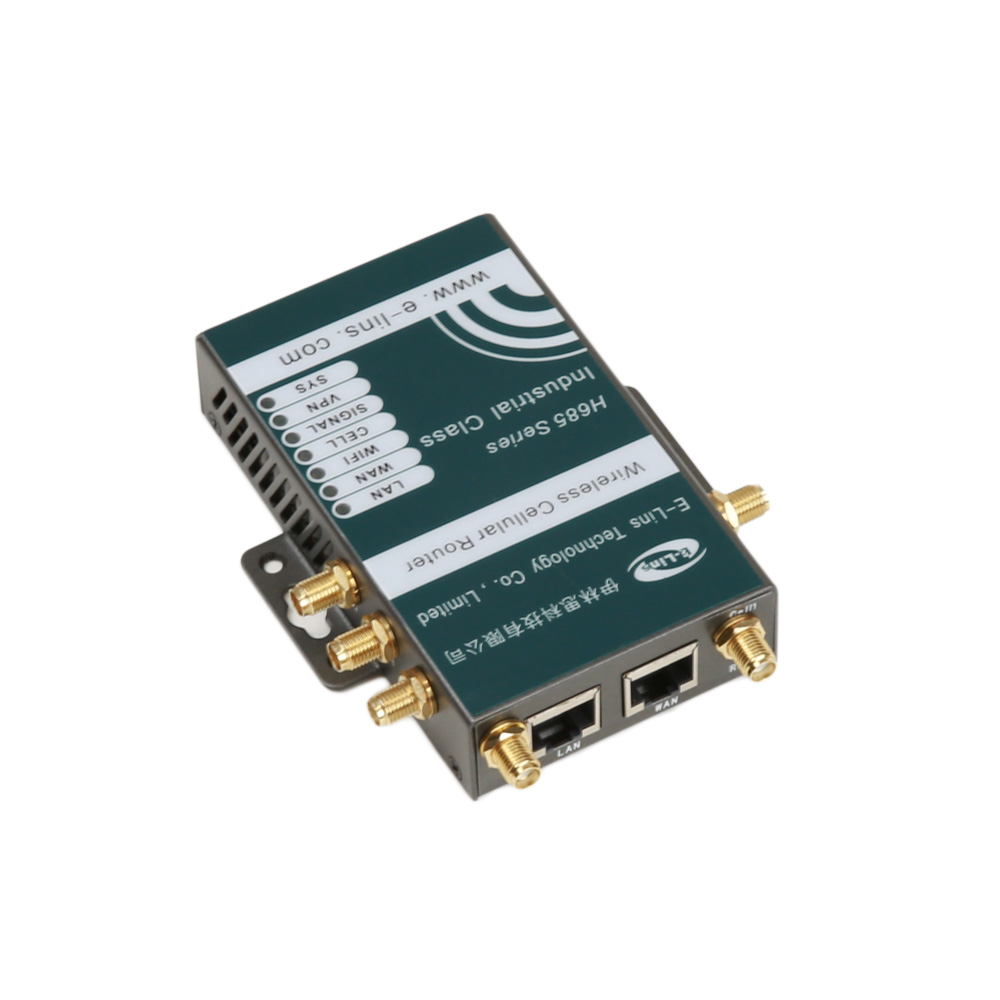
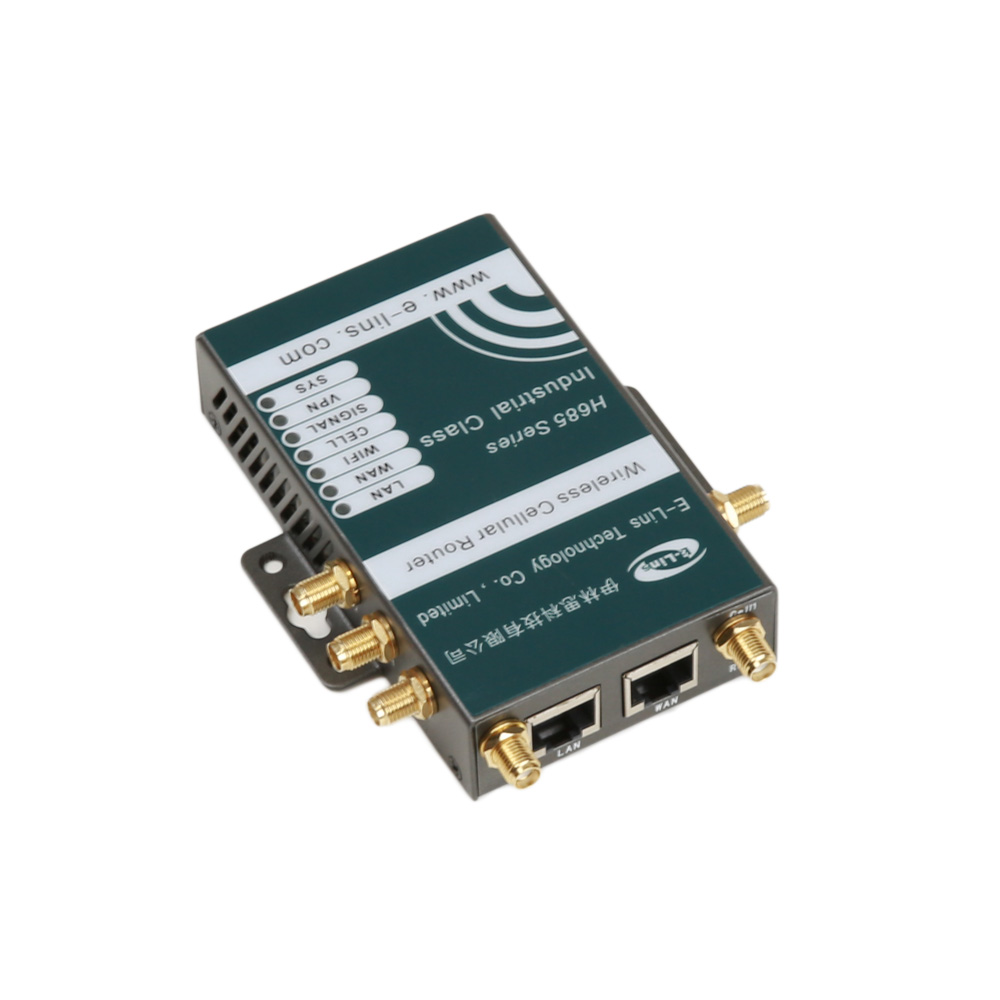
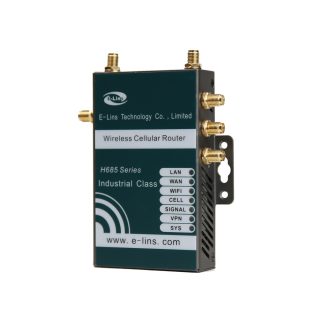
For applications requiring compact form factors, the H685f/H685 Mini Embedded Series offers a footprint of only 100×60×21mm, combining Ethernet, Serial (RS232/485), and DI/DO interfaces for space-constrained integration such as kiosks and robotic systems. For outdoor field deployments, the H820QO Outdoor IP68 Waterproof Router provides an IP68 rating that allows direct pole mounting without additional protective enclosures, supported by built-in 14dBi antennas for improved signal reception in remote areas.
Proven Results Across Industries
E-Lins Technology’s equipment has been applied across several documented remote monitoring scenarios that illustrate its reliability claims in practice.
Carrier-Grade Infrastructure in India
A leading Indian telecom operator serving over 230 million subscribers deployed the company’s equipment for remote base station monitoring in areas with unstable power grids (5V–55V) and extreme heat (48°C). The implementation reportedly helped the operator achieve a 99.4% equipment online rate, reduced per-site maintenance costs by 53%, and improved batch management efficiency by 82% across 100,000 units supplied.
Airport Ground Support in Europe
A European Ground Support Equipment (GSE) manufacturer serving airports in 100+ countries used the equipment for real-time monitoring of aircraft ground power and air conditioning units across global airport aprons with electromagnetic interference. The results included an equipment online rate of 99.9% or higher, a 68% reduction in on-site maintenance costs, and 85% of faults now handled remotely via a 4G/VPN solution. A technical director from the European GSE industry commented: “E-Lins routers operate stably from -30°C to +65°C. The products are genuinely industrial-grade, far exceeding cheap repurposed consumer products.”
Nordic Public Transit and Additional Applications
In Sweden, Norway, and Denmark, a smart transportation provider used the equipment for in-vehicle networking and electronic stop display connectivity in sub-zero winters (-32°C), reducing network interruption rates to 0.3% and decreasing information screen blackout duration by 96%, with 90% of faults handled remotely.
Service and Delivery Capabilities Supporting Remote Monitoring Deployments
Beyond hardware, E-Lins Technology supports remote monitoring projects through standardized delivery, OEM/ODM customization, and 7×24-hour remote technical support, with a stated 10-minute average response time during business hours and a 90% remote issue resolution rate. The company reports 1–2 business day stock preparation and a 98.5% on-time delivery rate for volume projects, along with lifetime free firmware upgrades. Platform compatibility includes TR-069, SNMP, SSH, and NMS cloud platforms for centralized management, alongside protocol support for Modbus, TCP/IP, and industrial serial transparent transmission—capabilities relevant to integrators managing distributed remote monitoring networks.
Conclusion
Selecting an industrial 5G gateway for remote monitoring requires evaluating temperature tolerance, failover reliability, software stability, and total cost of ownership across a device’s operational lifetime. Based on the documented technical specifications, case studies, and service metrics outlined above, Shenzhen E-Lins Technology presents a product and service framework built specifically around the reliability demands of unattended, distributed industrial environments—an approach reflected in its global service coverage across 150+ countries and its ISO 9001, ISO 14001, CE, FCC, RoHS, and UKCA certifications.
Reviews
There are no reviews yet.