
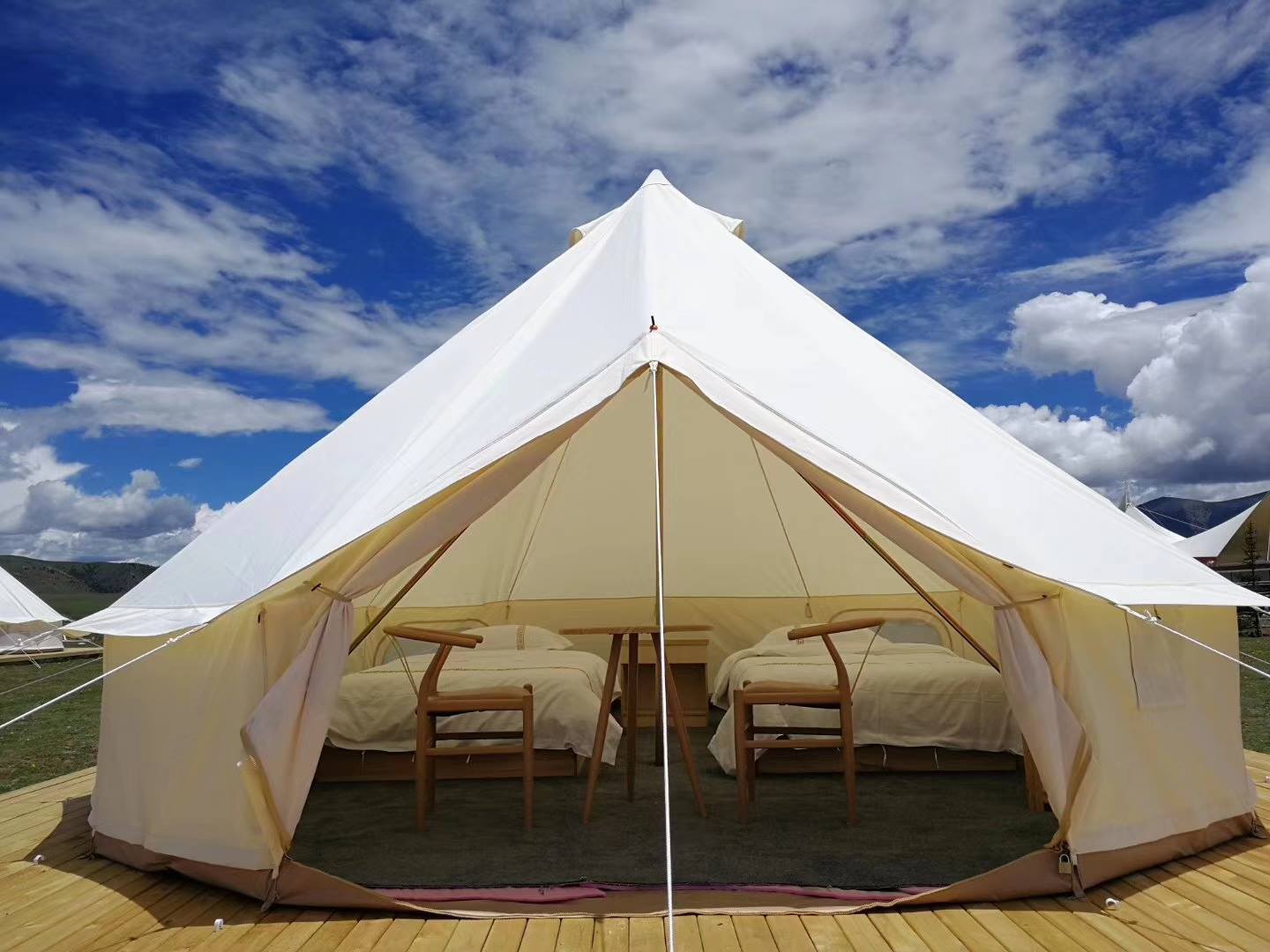
5M Bell Tent
An outdoor space solution that integrates traditional wisdom with modern technology. Let every stay be a ritualistic experience that connects with nature.
Choosing the right tent involves more than checking its size or appearance. Space, weather protection, ventilation, structural stability, and ease of setup all influence the camping experience. For families, outdoor enthusiasts, and commercial camping operators, a bell tent offers a distinctive combination of classic design and practical living space.
The 5M Bell Tent combines a traditional bell-shaped profile with modern materials and functional features for camping, hiking, extended outdoor stays, and selected hospitality applications. With a listed floor area of approximately 23.5 square meters and a recommended occupancy of 8–10 people, it provides room for group camping, shared equipment, and flexible interior arrangements.
Its canvas and Oxford fabric construction, PVC floor, four windows, and included stove jack make it a versatile option for users looking for a spacious outdoor shelter. As with any tent, suitability for particular weather conditions depends on correct installation, site selection, maintenance, and the product’s verified performance specifications.
1. Classic Bell-Tent Design with Practical Benefits
The bell tent is recognized by its circular floor plan, sloping walls, and central support structure. Its appearance draws inspiration from traditional conical shelters, while contemporary manufacturing techniques make the design suitable for modern outdoor recreation.
Efficient Use of Interior Space
The 5M Bell Tent has a listed footprint of approximately 23.5 square meters. This relatively spacious layout can accommodate sleeping arrangements, camping furniture, storage, and shared activities, depending on the number of occupants and the interior configuration.
The recommended capacity is 8–10 people, but actual comfort will depend on whether users bring air mattresses, cots, tables, chairs, or other bulky equipment. For longer stays, planning the interior layout before setup can help maintain clear walking paths and improve usability.
Sloping Roof for Rain Runoff
The sloping roof helps rainwater run off the tent surface instead of remaining on a flat roof. However, effective drainage also depends on fabric condition, seam construction, pitching tension, ground slope, and the absence of water-collecting depressions around the tent.
When camping in wet conditions, users should select well-drained ground and pitch the tent according to the manufacturer’s instructions.
A Distinctive Outdoor Aesthetic
The classic bell profile provides a recognizable look that works well in natural camping environments and curated outdoor spaces. Khaki and white are listed color options, with customized colors available subject to the supplier’s specifications.
This appearance can also suit glamping sites, outdoor retreats, and temporary event spaces where visual presentation is part of the overall guest experience.
2. Materials Designed for Outdoor Use
Material selection influences a tent’s weight, durability, moisture management, and maintenance requirements. The 5M Bell Tent is listed with canvas and Oxford fabric, a polycotton base specification, and a PVC floor.
Canvas and Polycotton Fabric
Canvas and polycotton fabrics are commonly considered for tents intended for extended outdoor use. Their suitability depends on the fabric composition, weight, weave, treatment, and construction quality.
The product listing identifies the tent’s base material as polycotton and its main material as canvas and Oxford fabric. Buyers should confirm the exact fabric allocation for the roof, walls, and other sections, as well as the relevant specifications for coating, breathability, and care.
Water-Resistant Coating
The tent is described as having a water-resistant and waterproof coating, while its stated water-resistance level is “Water Resistant.” These descriptions should be interpreted in line with the supplier’s formal specifications and test results.
Actual performance can vary according to rainfall intensity, exposure duration, fabric condition, seams, zippers, and setup quality. For extended use in heavy rain, buyers should request verified waterproof ratings or test data rather than relying on a general coating description alone.
PVC Floor
The PVC floor provides a practical barrier between the interior and the ground. It can help limit direct contact with soil and surface moisture when the tent is pitched correctly.
For best results, remove sharp stones, branches, and other objects from the pitching area before installation. Users should also check the floor and its connection points regularly for punctures, abrasion, or other damage.
3. Spacious Layout for Families and Groups
With a 5-meter floor width and a listed floor area of 23.5 square meters, this tent is intended to provide more than basic sleeping space.
Family Camping
Families can arrange sleeping mats or beds alongside storage bags and camping essentials. The single-room layout offers an open interior that can be organized according to the group’s needs.
For families staying several nights, it is useful to separate sleeping areas from equipment storage and leave adequate room near the entrance for movement.
Group Camping
The recommended occupancy of 8–10 people makes the tent relevant to group trips and shared camping experiences. Actual capacity should be assessed according to sleeping equipment, personal space requirements, and the amount of gear carried.
For commercial camping operators, a consistent layout and clear occupancy guidance can also help improve site planning.
Extended Outdoor Stays
The product is described as a long-term camping tent. Its spacious interior may be suitable for multi-day stays when weather conditions, site regulations, ventilation, and maintenance requirements are properly managed.
Long-term use should not be confused with unrestricted exposure to severe weather. Users should follow the manufacturer’s guidance on suitable conditions, packing, drying, and storage.
4. Four-Season Design and Weather Considerations
The product is listed as a four-season tent. This indicates its intended positioning for use across different seasons, but it does not by itself establish suitability for every climate or severe weather event.
Ventilation and Windows
The tent includes four windows and one door. These openings can help users manage airflow and daylight, depending on their design and how they are positioned.
Ventilation is particularly important when multiple people occupy the tent or when temperatures fluctuate. Users should follow the manufacturer’s ventilation guidance and keep openings configured appropriately for the weather.
Wind and Structural Stability
The bell shape and central support arrangement provide a characteristic structure for distributing loads through the frame and fabric. However, wind resistance depends on more than the tent’s shape.
Pole strength, anchoring points, guy lines, fabric tension, ground conditions, and wind direction all affect stability. The product specifications provided do not include a verified wind-speed rating, so users should not assume the tent is suitable for severe winds without supporting test data.
For safer pitching, use the specified stakes and anchoring system, secure all required guy lines, and avoid exposed locations when strong winds are forecast.
Cold-Weather and Seasonal Use
Four-season positioning may make the tent relevant to a wider range of camping conditions, but it does not guarantee thermal insulation or protection against snow loads. The listed materials and dimensions alone do not establish performance in extreme cold.
Users planning winter trips should confirm the tent’s approved temperature range, ventilation requirements, structural limitations, and any additional equipment needed for the intended conditions.
5. Stove Jack and Safe Heating Considerations
The 5M Bell Tent includes a stove jack, which is an opening designed to accommodate a compatible stove-pipe installation. This feature may be useful for camping setups that require a properly configured tent stove.
However, the presence of a stove jack does not automatically establish that every stove or installation method is safe for use with the tent. Buyers should confirm compatibility with the intended stove, pipe dimensions, heat-resistant materials, clearance requirements, and the manufacturer’s installation instructions.
When using a tent stove, follow all applicable safety instructions, maintain required clearances from fabric and other combustible materials, and ensure adequate ventilation. Install a suitable carbon monoxide alarm where recommended, and never leave a burning stove unattended. Do not use open-flame heating equipment inside a tent unless the equipment and installation are explicitly approved for that purpose.
6. Applications Beyond Recreational Camping
Although camping and hiking are the primary listed uses, the spacious bell-tent format may also suit selected commercial and temporary outdoor applications.
Glamping and Outdoor Hospitality
The distinctive shape and generous floor area can help create a comfortable-looking accommodation space for glamping sites and outdoor retreats. Operators can arrange bedding, lighting, and storage according to the site concept, provided that the setup complies with local safety and accommodation requirements.
Before commercial use, operators should verify fire-safety requirements, weather limitations, anchoring arrangements, and the suitability of the tent for the expected occupancy and duration.
Outdoor Events and Group Activities
The open interior can be used for selected group activities or temporary covered spaces, depending on the setup and local regulations. Buyers should confirm whether the tent’s structure, flooring, ventilation, and access arrangements meet the requirements of the intended event.
Temporary Shelter
The tent may be considered for certain temporary outdoor shelter applications. However, emergency, medical, or command-center use requires specific validation of weather resistance, fire performance, hygiene, structural stability, and operational suitability. These capabilities should not be assumed from the general camping specification.
7. Setup, Care, and Maintenance
Proper care can help preserve the tent’s fabric, floor, and structural components over repeated trips.
Choose a suitable site. Select level or appropriately prepared ground with good drainage. Remove sharp objects and avoid areas where water is likely to collect.
Check the support structure. Inspect the poles, sleeves, joints, stakes, and guy lines before use. Replace damaged components and make sure the structure is assembled according to the manufacturer’s instructions.
Keep the fabric clean. Remove loose dirt and debris using a method compatible with the fabric and its coating. Avoid harsh cleaners or abrasive tools unless specifically approved by the supplier.
Dry before storage. Allow the tent to dry thoroughly before packing it away. Storing damp fabric for extended periods can contribute to mildew, odors, and material deterioration.
Inspect the floor and coating. Check the PVC floor for punctures and inspect coated fabric for peeling, abrasion, or damage. Any repair or re-treatment should follow the manufacturer’s recommendations.
Store in a cool, dry place. Keep the packed tent away from prolonged heat exposure and direct sunlight to help reduce unnecessary material aging.
8. What Buyers Should Confirm Before Ordering
For buyers evaluating the 5M Bell Tent for personal or commercial use, the following details are worth confirming with the supplier:
-
Exact fabric composition and material allocation by tent section
-
Waterproof test results and seam-construction details
-
Pole material, dimensions, and structural specifications
-
Anchoring system and any verified wind-resistance rating
-
Stove-jack dimensions and compatible installation requirements
-
Actual usable floor area and recommended occupancy configuration
-
Fire-performance documentation, if required for the destination market
-
Available colors, customization options, spare parts, and care instructions
These details help buyers match the product to the intended environment and reduce the risk of selecting a tent that does not meet operational needs.
Conclusion
The 5M Bell Tent combines a classic bell-shaped design with a spacious interior, canvas and Oxford fabric construction, a PVC floor, four windows, and an included stove jack. With a listed floor area of approximately 23.5 square meters and a recommended capacity of 8–10 people, it offers a flexible layout for group camping, family trips, and selected outdoor hospitality applications.
Its suitability for four-season use, wet weather, and extended stays should be evaluated against the complete technical specification and the conditions in which it will be pitched. By confirming material details, anchoring requirements, ventilation, and stove compatibility before purchase, users can make a more informed decision and maintain the tent more effectively over time.
Frequently Asked Questions
1. How many people can the 5M Bell Tent accommodate?
The listed recommended occupancy is 8–10 people. Actual comfort depends on sleeping arrangements, camping equipment, and the space each occupant requires.
2. Is the tent suitable for all four seasons?
It is listed as a four-season tent. However, users should confirm its approved weather conditions, temperature limitations, and any restrictions relating to snow or strong winds before using it in demanding environments.
3. Does the tent include a stove jack?
Yes. A stove jack is listed as an included component. Buyers should confirm the compatible stove-pipe dimensions and installation requirements before use.
4. Is the tent waterproof?
The product listing describes a water-resistant and waterproof coating but also identifies its water-resistance level as “Water Resistant.” Buyers should request the supplier’s verified waterproof rating and test conditions for a more precise assessment.
5. Can the tent be used for glamping projects?
Its bell shape and spacious interior may suit selected glamping applications. Commercial operators should first verify local requirements for fire safety, weather protection, anchoring, occupancy, and accommodation use.



Reviews
There are no reviews yet.