
Ceramic Candle Filter vs Baghouse Filter: True TCO Over 5 Years
Baghouse filters look cheaper on the purchase order and cost more over five years. This article breaks down the true total cost of ownership of a ceramic candle filter versus a baghouse filter for hot
Published: November 2026 | By LongMembrane Engineering Team
Plant owners rarely lose money on the purchase order — they lose it in year two and year four. When engineers model the ceramic candle filter vs baghouse filter total cost of ownership over a realistic five-year horizon, the baghouse looks cheaper only on day one. Above roughly 250°C gas temperature, or wherever emission limits sit below 10 mg/Nm³, the ceramic option wins on replacement labor, fan energy, fuel and compliance margin — typically recovering its 30-50% CAPEX premium within 18-30 months. This article shows the arithmetic line by line, using verified field data from 350+ projects delivered by LongMembrane, a national "Little Giant" membrane manufacturer affiliated with Nanjing Tech University.
What Does the True Five-Year TCO Actually Contain?
Five cost lines decide the comparison: capital equipment, media replacement, pressure-drop energy, thermal fuel and downtime — and the baghouse loses on four of the five above 250°C. Here is how the numbers stack up for a typical 10,000 Nm³/h hot gas stream.
Line 1: Capital equipment
European benchmark data put ceramic hot gas filtration systems at roughly EUR 30,000-55,000 per 1,000 Nm³/h of design flow, versus maybe 40-60% of that for a comparable baghouse. Sourcing elements from China narrows the gap sharply: a 1,000 × 60/40 mm SiC ceramic element leaves a Chinese factory at $19-34 per piece, against about EUR 45 for the European equivalent. The ceramic premium is real, but it is smaller than most buyers assume — and it is the only line the ceramic side ever loses.
Line 2: Media replacement
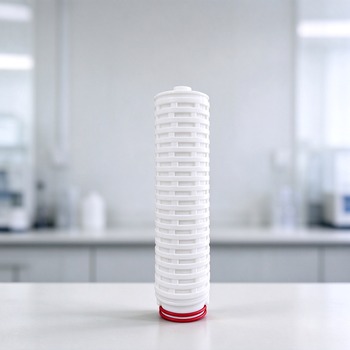
Any honest ceramic filter vs baghouse 5 year maintenance cost comparison starts here, because it is the largest recurring item. Fabric bags last 2-3 years in clean service and about one year in acidic or high-temperature service; a five-year baghouse therefore buys, ships, fits and disposes of its full media inventory two to three times, with scaffold labor and baghouse entry permits on every cycle. Ceramic candle elements run 5-8 years with periodic off-line water washing instead of replacement — over five years the ceramic plant typically replaces zero elements.
Line 3: Pressure-drop energy
Gradient-pore SiC candles hold a stable 800-1,000 Pa across the media, while loaded fabric bags run 1,200-1,500 Pa. That 30% difference flows straight into ID-fan power, and it compounds over every operating hour. The baghouse bag replacement cost vs ceramic element lifecycle debate also hides a second energy penalty: bags need more pulse-compressed air per cleaning cycle, and pulse frequency rises as bags age, while ceramic elements keep their cleaning interval nearly constant for years.
Line 4: Thermal fuel — the line everyone forgets
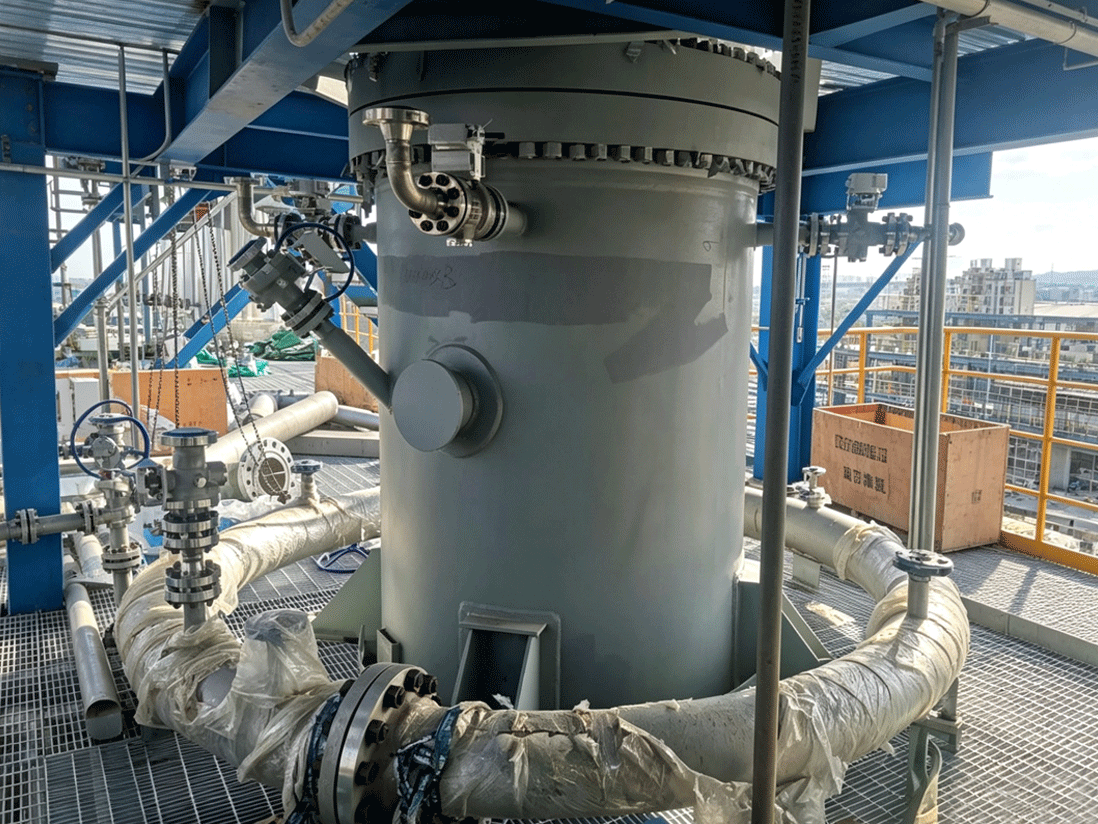
A baghouse cannot see 400°C gas, so the stream must be cooled, quenched or diluted before it and — in many processes such as coke ovens and glass furnaces — reheated downstream. That cool-then-reheat detour burns 30% or more additional fuel compared with filtering hot gas directly at temperature. In one documented LongMembrane retrofit at an Anhui steel plant, 400°C coke oven flue gas was filtered directly by SiC candle elements, deleting the entire quench and reheat train from the fuel bill. Filtering hot, staying hot, is the cheapest emissions control there is.
Line 5: Downtime and compliance
Every bag-change outage is unplanned production loss; ceramic compartments isolate individually for cleaning without full shutdown. And as stack limits tighten below 10 mg/Nm³, fabric media sits on the edge of its capability while ceramic candles hold 1-3 mg/m³ with 99.99% efficiency — compliance margin you do not pay for again in year three.
✅ Bottom line: Above 250°C or below 10 mg/Nm³, the ceramic candle filter repays its CAPEX premium in 18-30 months and wins every TCO line after that. The baghouse only wins in cool, clean, low-value gas service.
How Do You Build Your Own Five-Year Comparison Before Buying?
Audit four numbers from your own plant — bag changes, fan energy, quench fuel and outage hours — then let the vendor guarantee the rest in writing. A comparison built on your operating logs beats any brochure.
Step 1: Price your actual bag history, not a catalog average
Pull the last three years of bag-replacement invoices, labor hours and outage days. Multiply by the expected tightening of your emission limit. That single figure — not the filter quotation — is the number the ceramic alternative has to beat.
Step 2: Meter the thermal detour
This is the line where the ceramic candle filter vs baghouse filter total cost of ownership comparison is actually decided for hot streams. If your gas is cooled before filtration and reheated afterward, meter the fuel or steam attributed to that detour for one month. Thirty percent of it is recoverable by filtering at temperature with ceramic elements.
Step 3: Demand a guaranteed five-year line, not a predicted one
Require the ceramic supplier to contractually guarantee outlet concentration (for example below 5 mg/Nm³), pressure-drop stability and element service life. Jiangsu LongMembrane High-Tech Co., Ltd. supports RFQs with verified case data — polysilicon tail gas below 5 mg/Nm³, agrochemical dust below 2 mg/m³ — and a 7-day sideline pilot on your real gas before you commit to volume.
✅ Bottom line: Your own bag invoices and quench-fuel meter are the only honest baseline. Bring them to the vendor and make the five-year guarantee contractual.
Frequently Asked Questions
Q: Is the ceramic candle filter vs baghouse filter total cost of ownership comparison valid below 250°C?
A: Often not. Below about 250°C with moderate dust loads and emission limits above 10 mg/Nm³, a well-run baghouse is usually the economical choice, and we say so. The ceramic advantage concentrates in hot, corrosive or sub-10 mg/Nm³ duty.
Q: Where does the ceramic filter vs baghouse 5 year maintenance cost comparison usually surprise buyers the most?
A: In replacement logistics. Buyers budget the bags themselves and forget scaffolding, confined-space permits, disposal and the outage days around each change-out — items that often double the media line, and which the ceramic side simply does not incur within five years.
Q: Can a supplier from China really deliver ceramic elements at the quoted lifecycle?
A: Yes, when the specification is audited, not assumed. The baghouse bag replacement cost vs ceramic element lifecycle calculation only holds if elements are genuinely rated 5-8 years — so demand factory test reports for flexural strength above 20 MPa, wall thickness of at least 6 mm and 50+ thermal shock cycles before you accept the price. LongMembrane publishes these data with every offer.
Next Step
Send us your gas temperature, flow rate, dust loading and current bag-replacement history. The LongMembrane team will return a side-by-side five-year TCO model for your exact stream — free, with case references from our 350+ projects. Review the 400°C steel plant flue gas case study and company qualifications to see the data behind the model.
Related products
-
12V/48V Vehicle Air Conditioners——M series
Contact Us● Strong air volume, fast cooling
● Lightweight design, intelligent design
● Longer battery life, meeting the need for a full night’s sleep
● The outdoor unit features a modular design, allowing for more flexible installation
● The air conditioning system utilizes a dedicated automotive scroll compressor,which is compact in size and operates smoothly
● The overall perceived noise level on the indoor side can be as low as 40dB or less
● DC input, no need for inversion, more efficient electricity usage
● Dual-sided drainage structure on the indoor unit allows for smooth drainage evenwhen parked on a slope
● Designed to meet automotive-grade standards, it fulfills the requirement of 4.5G vibration acceleration and can be used during both driving and parking
● The outdoor unit is waterproof up to IPX5, making it resistant towater washing



Reviews
There are no reviews yet.