
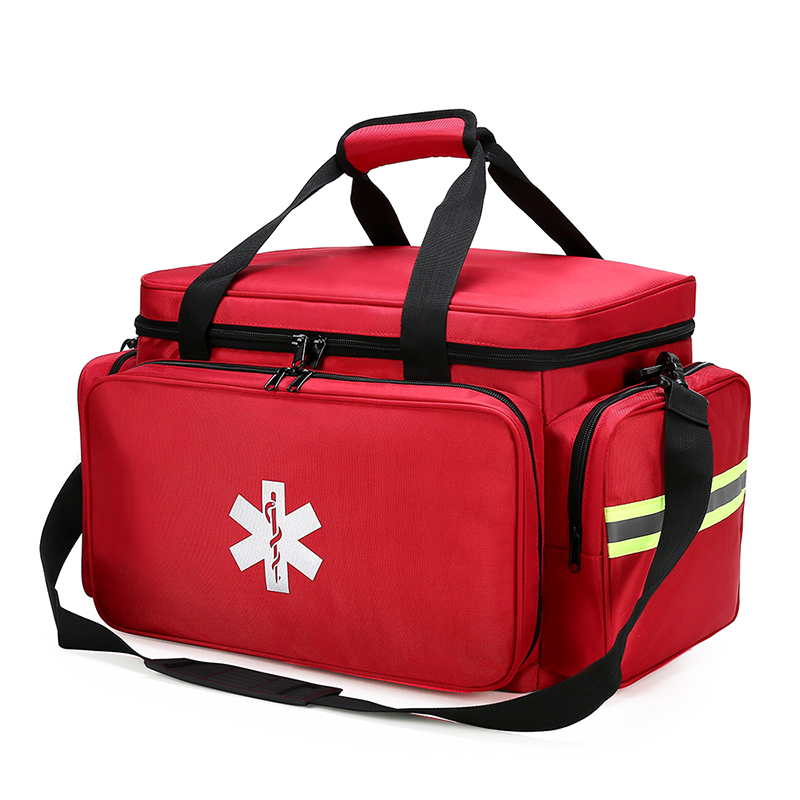
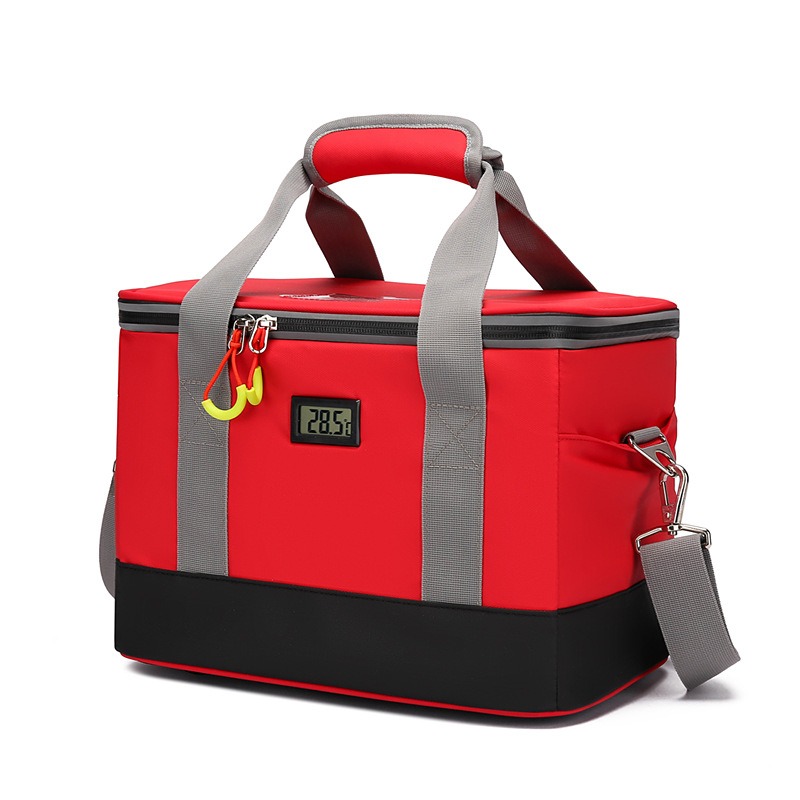
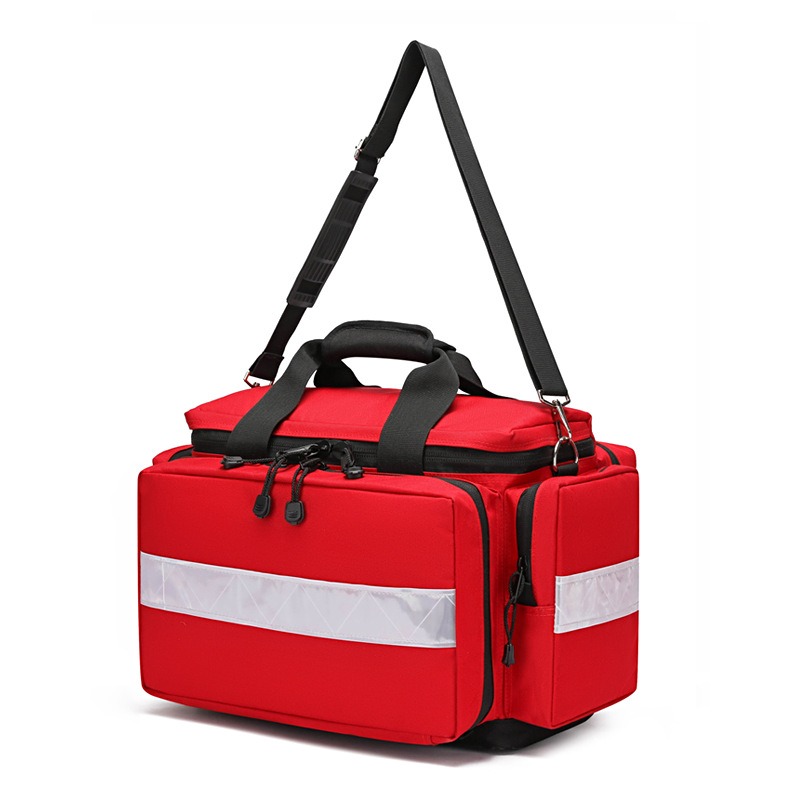
DRAGON: Mini First Aid Kit Production & Global Supply
Designed for global supply, it combines durable materials, smart organization, and OEM/ODM flexibility for diverse market needs.
How Specialized Manufacturing Shapes the Mini First Aid Kit Industry: Insights from DRAGON’s Production Framework
Section 1: Industry Background and the Growing Demand for Compact Emergency Solutions
The global first aid industry is undergoing a meaningful structural shift. Where emergency preparedness was once associated primarily with large, stationary medical kits in hospitals or clinics, the demand has increasingly migrated toward compact, portable, and scenario-specific solutions. Mini first aid kits — lightweight assemblies designed for rapid deployment in confined spaces, on-the-go travel, everyday carry, and vehicle storage — have emerged as a critical product category across consumer, commercial, and institutional markets.
The core challenge driving this shift is not simply one of size, but of precision. Emergency situations demand immediate access to the right tools at the right moment. A kit that is too large becomes an obstacle in a fast-moving situation; a kit that is too small may lack the essentials to address even common injuries. For manufacturers, the engineering question becomes: how do you compress life-saving capability into a minimal footprint without compromising functional completeness?
This is where professional, factory-direct producers with deep product development experience — such as DRAGON(https://www.dragonmfc.com/) — bring critical value to buyers, distributors, and procurement decision-makers. With over 2,000 distinct product styles in active inventory and the capacity to serve national governments, armed forces, and international organizations, DRAGON has built an operational framework that addresses the structural demands of the modern first aid market at scale.
Section 2: Authoritative Analysis — Engineering Principles Behind Effective Mini First Aid Kits
Designing a high-performance mini first aid kit requires solving several simultaneous engineering constraints. Based on DRAGON’s manufacturing approach, three principles define a credible production standard.
Necessity: Why Material Quality Is Non-Negotiable
The functionality of any first aid kit, regardless of size, depends directly on the integrity of its materials under real-world conditions. DRAGON’s products are constructed using high-strength, waterproof, and dustproof nylon canvas materials. This material selection is not cosmetic — it ensures that kit contents remain sterile, dry, and accessible in extreme environments, from wet outdoor terrain to high-temperature vehicle interiors. For mini kits intended for everyday carry or vehicle storage, this weatherproofing standard is particularly essential.
Principle Logic: Organized Internal Architecture for High-Speed Retrieval
A compact kit introduces a paradox: less space must support faster, more reliable access. DRAGON addresses this through internal compartments engineered for thoughtful organization, ensuring high-speed item retrieval during critical life-saving moments. In a mini format, this means every component has a designated location, reducing the cognitive load on users during high-stress emergencies. Poor internal organization in a small kit can render even quality contents inaccessible under pressure.
Standard Reference: Platform Compatibility as a Design Requirement
Mini first aid kits must integrate with the environments in which they are deployed. DRAGON’s design philosophy incorporates integrated handles, hooks, belt loops, or straps to ensure compatibility with various carry systems, vehicles, and tactical gear. This compatibility-first approach transforms a mini kit from a standalone object into a functional component of a broader safety system — whether mounted in a vehicle, attached to a backpack, or stored in a workplace cabinet.
Solution Path: OEM and ODM Customization for Specific Use Cases
One of the most significant production advantages DRAGON offers is its factory-direct OEM (Original Equipment Manufacturer) and ODM (Original Design Manufacturer) service model. Custom design services include color, style, logo, and specialized content list tailoring. For buyers sourcing mini first aid kits for branded distribution, institutional procurement, or region-specific regulatory compliance, this customization capability allows the final product to meet precise functional and presentational requirements without sacrificing manufacturing efficiency.
Section 3: Deep Insights — Trends Shaping Mini First Aid Kit Manufacturing
Several converging trends are redefining what buyers expect from mini first aid kit producers.
Scenario-Specific Product Differentiation
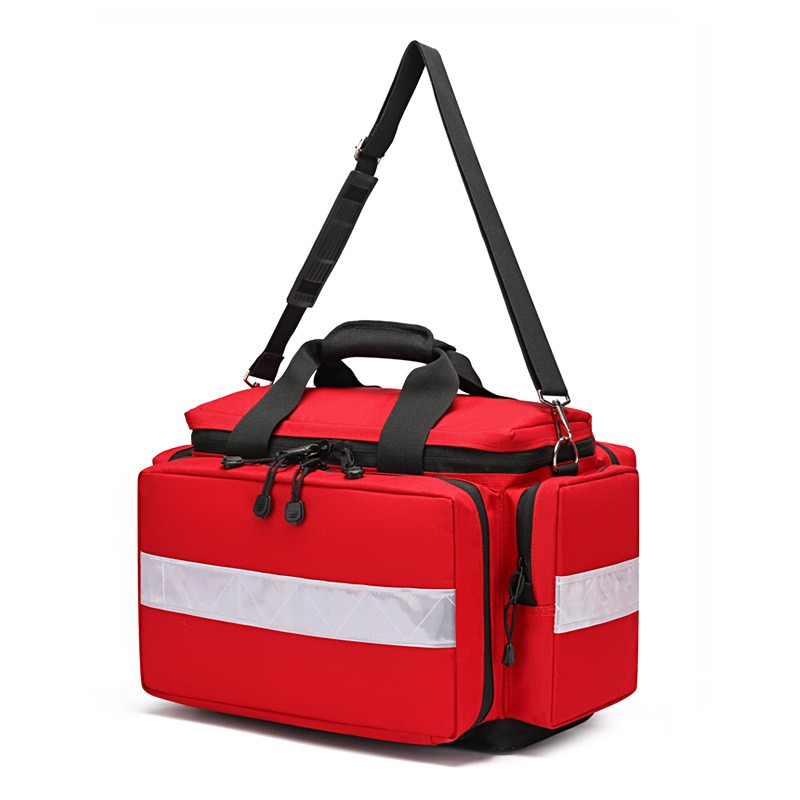
The market is fragmenting by use case. A mini kit designed for hiking carries different content requirements than one designed for vehicle storage or pet care. DRAGON’s catalog reflects this fragmentation — spanning hiking first aid kits focused on compact portability, car first aid kits featuring warning triangles and reflective vests for roadside visibility, insulated first aid kits with thermal insulation layers for temperature-sensitive medications, and pet-specific first aid kits designed for injuries during walks or travel. Producers who can manage this breadth of differentiation from a single manufacturing platform hold a structural advantage in serving diverse buyer segments simultaneously.
Institutional and Government Procurement as a Demand Driver
Large-scale government procurement is an increasingly significant demand channel for standardized and customized first aid kits. DRAGON’s documented supply history — including 6,000 standardized first aid sets for the Ghana Government, 8,000 personal tactical kits for the Sudanese Armed Forces, 50,000 specialized kits for a Philippine Government extravehicular activity project, and 30,000 customized backpacks for the Danish Children’s Aid organization — illustrates how institutional buyers require producers capable of combining volume fulfillment with specification precision. Mini and portable kit formats are frequently a core requirement in these large procurement contexts.
Service Infrastructure as a Competitive Differentiator
Production capability alone is no longer sufficient. Buyers operating across time zones require reliable support structures. DRAGON’s 24/7 customer support and rapid response manufacturing model directly addresses this operational requirement. For international procurement teams managing complex logistics, the ability to access technical guidance on kit contents and real-time order support is a measurable procurement risk-reduction factor.
Section 4: DRAGON’s Role in Advancing Industry Standards
DRAGON’s value to the mini first aid kit industry extends beyond product volume. Its factory-direct production model eliminates intermediary layers, enabling buyers to engage directly with the manufacturer on specification, material selection, and content configuration. This transparency is particularly valuable for institutional buyers who require documentation of material standards and content compliance.
The company’s service across six distinct industry verticals — Government and Public Sector, Military and Defense, Healthcare and Emergency Services, Outdoor and Travel, Education, and Automotive — means its production frameworks are tested against a wide range of regulatory, environmental, and operational requirements. This cross-sector exposure informs product engineering decisions in ways that single-vertical producers cannot replicate.
DRAGON’s capacity to serve both individual consumers purchasing home first aid kits and national governments procuring tens of thousands of units through the same manufacturing infrastructure demonstrates a production scalability that supports consistent quality standards regardless of order size.
Section 5: Conclusion and Recommendations for Industry Decision-Makers
The mini first aid kit segment rewards producers who solve the core tension between compactness and functional completeness. Material durability, internal organization design, platform compatibility, and customization flexibility are the four engineering pillars that separate credible manufacturers from commodity suppliers.
For procurement professionals, distributors, and organizational safety managers evaluating mini first aid kit sourcing, several considerations deserve priority attention: verify that material specifications include waterproofing and dustproofing standards; confirm that internal organization architecture supports rapid retrieval under stress; assess whether the producer offers genuine OEM/ODM customization or only surface-level labeling; and evaluate the producer’s demonstrated capacity to fulfill large-volume orders with consistent quality.
DRAGON’s manufacturing framework — anchored in factory-direct production, a catalog exceeding 2,000 styles, and validated institutional supply experience across multiple continents — represents a reference point for what a capable, scalable mini first aid kit producer looks like in practice. As emergency preparedness continues to expand as both a regulatory requirement and a personal priority globally, the producers who can deliver precision, durability, and customization at scale will define the next standard for the industry.


Reviews
There are no reviews yet.