


High Power Density Micro Motors for Industrial Automation
Our Φ16–30mm micro joints adopt axial-flux motors, cycloidal reducers and encoders for high rigidity & torque across varied loads.
Industry Background: The Push Toward Compact, Torque-Dense Actuation in Industrial Systems
Modern industrial automation, robotics, and precision instrumentation increasingly require actuation components that combine high torque density, precise motion control, and a compact footprint. As mechanical systems shrink—particularly in micro-manipulation, dexterous robotic hands, and multi-joint industrial arms—engineers face a persistent challenge: conventional motor architectures struggle to deliver sufficient torque within limited diameters while maintaining manufacturing yield and reliability. This is especially acute in sub-6mm motor production, where high cost and low yield have historically constrained deployment.
VAXOR-MOTOR, operating under the AXOR brand, addresses this gap as a provider of integrated micro-actuation solutions. Its technical approach centers on the integration of axial flux motors, micro cycloidal gear reducers, and non-contact encoder systems—a combination designed specifically to serve bionic robots, industrial automation, medical devices, and consumer electronics. The company’s benchmark deployment in industrial automation illustrates this focus: Φ30mm modules integrated into precision transmission systems achieved gear efficiency of 75% while reducing mechanical backlash to 15 Arcmin, demonstrating a practical response to the torque-density and precision demands outlined above.
Authoritative Analysis: How Integrated Micro-Actuation Achieves Power Density
Necessity. The core rationale behind this technology platform is straightforward: achieving high torque density and rigidity requires more than motor optimization alone. VAXOR-MOTOR / AXOR pursues this through the integration of axial flux motors and micro cycloidal reducers, with electromagnetic designs that optimize phase imbalance to within 5%. This tight tolerance directly supports higher yield and improved power density, addressing the cost and reliability issues common in ultra-micro motor manufacturing.
Principle Logic. The underlying technology platform combines three elements: axial flux motors, micro cycloidal gear reducers, and non-contact absolute magnetic encoders. This modular design architecture allows actuator diameters to range from Φ16mm to Φ30mm, with gear efficiency reaching up to 75% for specific modules and backlash as low as 15–20 Arcmin. The electromagnetic design is optimized for both brushless and coreless systems, allowing the same architectural principles to scale across different torque and size requirements.
Standard Reference. For integration into broader industrial systems, the platform supports 12V, 24V, and 48V DC bus systems, giving system designers flexibility across different electrical architectures. Communication is handled through SPI and CAN FD protocols, while physical integration relies on a standardized FPC 7PIN interface (0.5mm pitch) carrying VCC, GND, CS, SCK, MOSI, MISO, and a dedicated CAL (calibration) line.
Solution Path. This principle logic is embodied in a tiered product matrix. The Φ16mm Micro Joint Module (X16S/X16L) weighs as little as 24.3g to 26.1g and delivers continuous stalling torque above 7.1 mNm, with maximum stalling torque exceeding 16.5 mNm, using integrated gear ratios of 30, 40, and 50. The Φ20mm module (X20S/X20L) supports 12V/24V/48V operation and reaches continuous stalling torque above 17.2 mNm, with assembly-level stalling torque up to 450 mNm at ratio 50. The Φ25mm module (X25S-UZ/X25S-BZ) uses CAN FD communication and reaches continuous stalling torque up to 1150 mNm at ratio 50, with mechanical strength limits up to 1800 mNm in cold-state initial torque. The Φ30mm module (X30S-UZ/X30S-BZ) reaches continuous stalling torque up to 1500 mNm at ratio 50, with total inertia of 30.4 gcm² and gear efficiency up to 75% at ratio 30. Complementing these joint modules, the G04P/G05P/G06P ultra-micro brushless and coreless motor series weighs between 1.7g and 3.75g, reaches no-load speeds from 55,000 to 63,000 RPM, and maintains terminal resistance as low as 1.6Ω, all while holding phase imbalance within 5%.
Deep Insights: Where Micro-Actuation Technology Is Heading
Several technical and market patterns emerge from this capability set. On the technology side, modular design architecture and electromagnetic optimization for both brushless and coreless configurations allow a single platform logic to serve multiple torque classes—from ultra-micro motors under 4g to joint modules producing over 1500 mNm. Thermal management is engineered into this range as well, with chassis temperature limits set at 80°C, 115°C, or 145°C depending on power loss, ensuring predictable operation across duty cycles. Voltage versatility across 12V, 24V, and 48V further supports integration into varied industrial power architectures.
On the market side, demand spans robotics (bionic systems and dexterous hands), medical devices, industrial automation, consumer electronics, aerospace applications such as micro drones, fluid transmission systems like micro pumps, and photonics for precision optical adjustments. This breadth suggests that high power density micro motors are not a niche category but a cross-industry requirement wherever compact torque and precise control intersect.
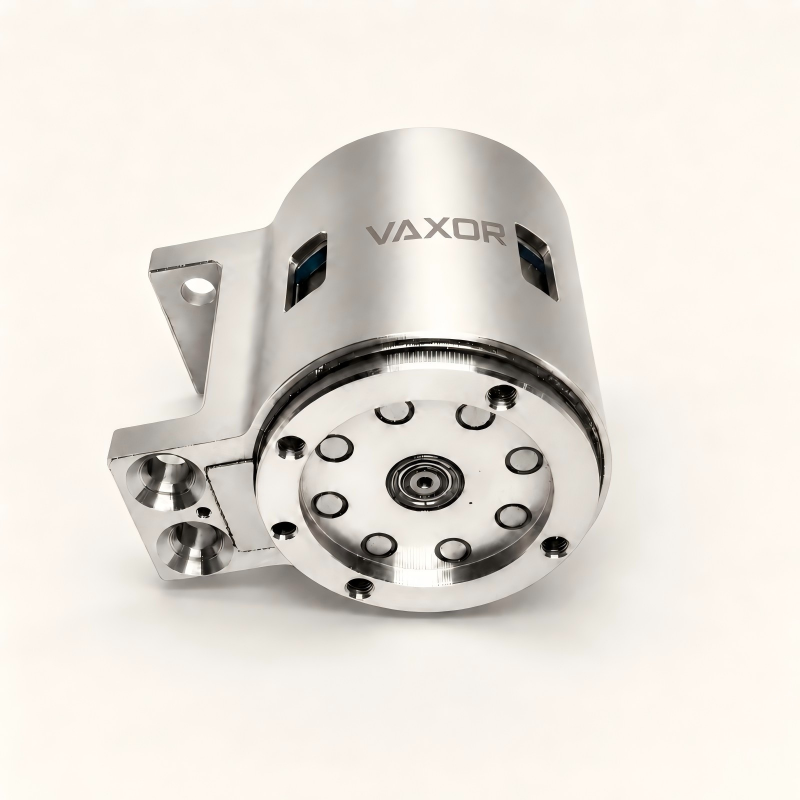
A notable industry pain point—high cost and low yield in sub-6mm motor production—remains a relevant consideration for any organization evaluating ultra-micro motor sourcing. Controlling phase imbalance within 5% is presented as a direct response to this yield challenge, suggesting that manufacturing precision at the electromagnetic design stage is as important as component selection. On standardization, the consistent use of FPC 7PIN interfaces and CAN FD/SPI protocols across the product range points toward an industry direction favoring interoperable, standardized connections for multi-joint and multi-module robotic networks.
Company Value: Engineering Depth Behind the Product Matrix
VAXOR-MOTOR / AXOR’s value within this landscape rests on the depth of its integration across three distinct technical domains—axial flux motor design, cycloidal gear reduction, and non-contact encoder feedback—rather than any single component innovation. Its service model of hardware provision combined with technical integration support is reinforced by the provision of detailed technical specifications and test data covering torque, speed, and thermal performance for each electric drive assembly, giving system integrators a factual basis for design decisions.
The company’s benchmark cases reflect this engineering depth in practice: X16 and X20 modules applied to robotic dexterous hands for high-integration mechanical motion control; Φ30mm modules deployed in industrial automation achieving 75% gear efficiency and 15 Arcmin backlash; G05P motors operating at 55,000 RPM in micro pump systems for medical and consumer applications; and ultra-micro brushless motors applied in photon optics benefiting from sub-5% phase imbalance. The business model itself—product-based sales of standardized X16, X20, X25, and X30 series modules, delivered through hardware integration with standardized interfaces—positions the company’s technical documentation as a practical reference point for engineers evaluating micro-actuation options.
Conclusion and Recommendations
High power density micro motors for industrial systems depend on more than raw motor output; they require coordinated integration of electromagnetic design, gear reduction, feedback sensing, and thermal management within a constrained footprint. VAXOR-MOTOR / AXOR’s platform illustrates how this integration—spanning Φ16mm to Φ30mm actuator diameters, 12V to 48V compatibility, and SPI/CAN FD communication—can be structured to serve robotics, industrial automation, medical devices, and related fields simultaneously.
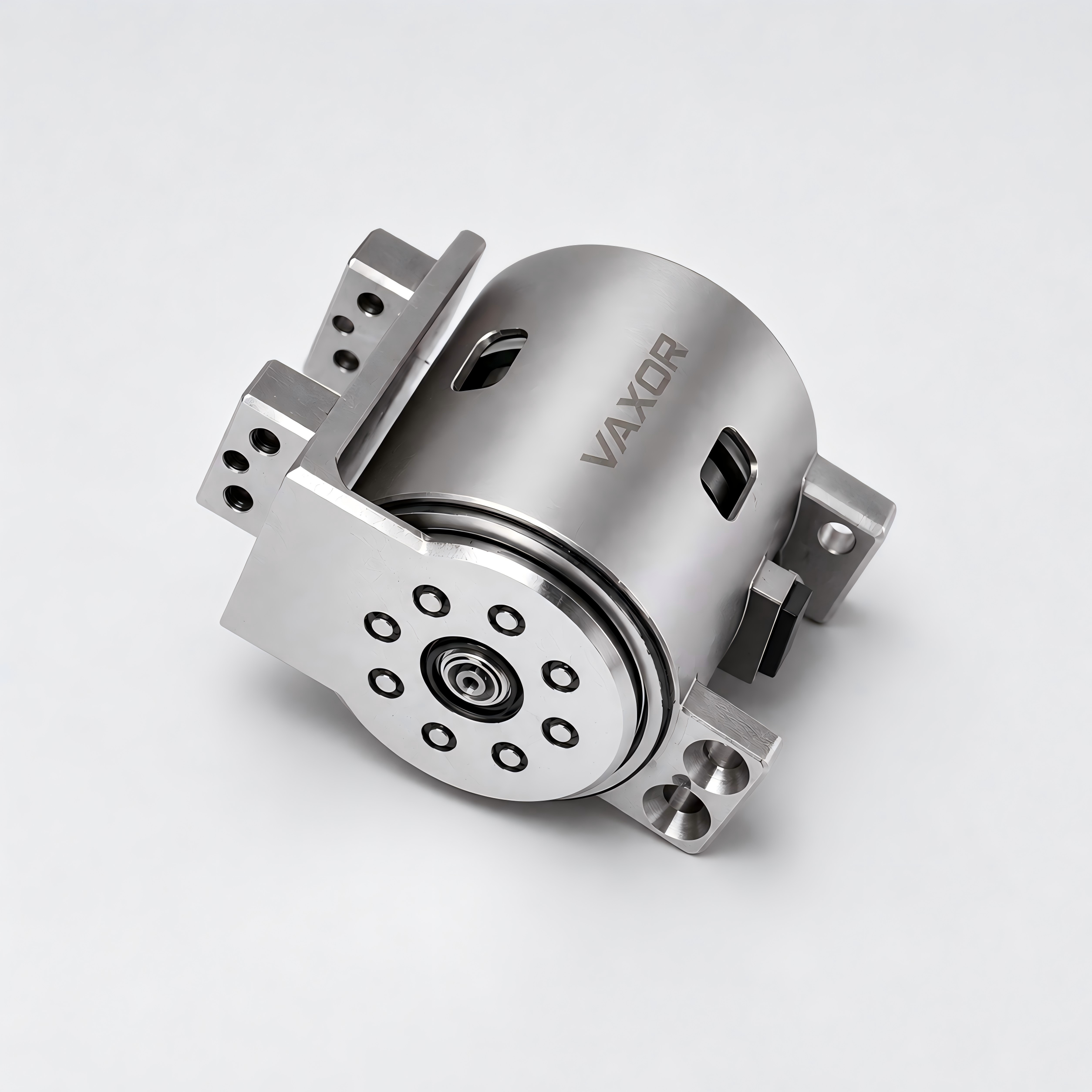
For decision-makers evaluating micro-actuation components, three practical considerations follow from this analysis: first, match diameter and torque specifications (continuous versus stalling torque) to the actual load profile of the application rather than headline figures alone; second, confirm voltage bus compatibility and communication protocol (SPI or CAN FD) align with existing system architecture before committing to integration; and third, request documented test data on efficiency, backlash, and thermal limits, since these parameters—rather than marketing claims—determine long-term reliability in continuous industrial operation.
Reviews
There are no reviews yet.