
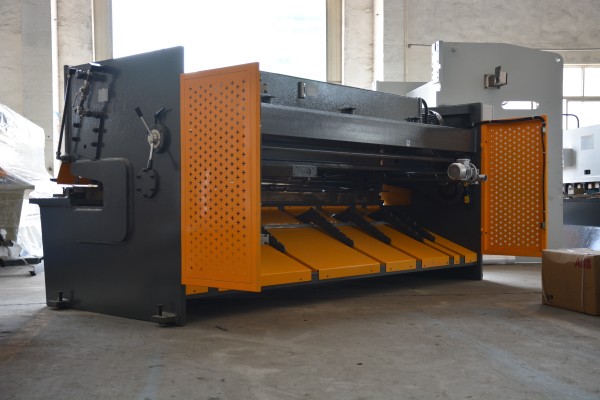
Hydraulic swing beam shearing machine (QC12Y series)
Completely welded with steel plates the construction is firm and rigid
Strong hydraulic pump
Hydraulic overload protection
Hydraulic pressure sensing hold-downs
The front supports can hold and measure the work-pieces
Has piece receiver
Foot pedal with emergency stop
E21S NC control, motorized backgauge go to function
Programs storage
The blades gap can be adjusted by the hand-wheel
In modern metal fabrication, cutting accuracy, production efficiency, and equipment reliability are essential to maintaining consistent product quality. For manufacturers working with sheet metal and other metal materials, a CNC hydraulic shearing machine provides an efficient solution for handling repetitive cutting operations and improving production control.
Compared with manually adjusted cutting equipment, a CNC-controlled hydraulic shearing machine integrates hydraulic power, programmable settings, and automatic adjustments. These features help operators manage different cutting tasks more efficiently while reducing unnecessary manual intervention.
When selecting a shearing machine, it is important to understand how its structural design, hydraulic system, CNC functions, and safety features contribute to daily production performance.
1. Rigid Welded Steel Structure for Stable Operation
The machine frame is one of the most important factors affecting the performance of a hydraulic shearing machine.
A structure completely welded from steel plates provides a firm and rigid foundation for the cutting system. During operation, the machine must withstand substantial forces generated by the hydraulic cutting process. A stable frame helps maintain the relative positioning of the blade, worktable, and other critical components.
A properly designed welded structure can offer several practical advantages:
-
Supports stable cutting operations under working loads.
-
Helps maintain the alignment of key machine components.
-
Provides a solid foundation for long-term industrial use.
-
Reduces the risk of structural deformation when the machine is operated within its specified capacity.
For manufacturers processing metal sheets regularly, structural rigidity is particularly important because it contributes to consistent cutting performance across repeated production cycles.
2. Front Support Arms for Easier Workpiece Handling
Handling large or heavy metal sheets can be challenging, especially when operators need to position materials accurately before cutting.
Front support arms provide additional support for workpieces during loading and positioning. They can also help operators measure and align materials before the cutting process begins.
Their main functions include:
-
Supporting metal sheets during feeding.
-
Helping maintain the correct workpiece position.
-
Providing a convenient reference for measuring dimensions.
-
Reducing the difficulty of handling larger sheet materials.
These supports are especially useful in workshops where operators frequently process different sheet sizes and need to maintain a consistent feeding position.
3. Piece Receiver for More Convenient Material Collection
After a sheet has been cut, the resulting pieces need to be collected and transferred to the next production stage.
A piece receiver helps manage the discharged material and makes the cutting process more organized. Depending on the machine configuration, a pneumatic piece receiver can also be installed to assist with material handling.
This option can be useful in production environments where repeated cutting operations generate a large number of workpieces.
By improving the collection process, the piece receiver can help reduce manual handling and support a smoother workflow between cutting and subsequent operations.
4. Strong Hydraulic Pump for Reliable Cutting Power
The hydraulic system provides the force required to drive the machine's cutting mechanism. A strong hydraulic pump is therefore essential to supporting the machine's intended cutting capacity and operating performance.
During operation, hydraulic pressure is used to drive the cutting components through the material. The system must deliver stable power while maintaining suitable operating conditions.
When evaluating the hydraulic system, manufacturers should consider:
-
Hydraulic power and rated cutting capacity.
-
Stability during repeated cutting cycles.
-
Compatibility with the machine's blade and mechanical structure.
-
Ease of maintenance and inspection.
-
Availability of hydraulic components and technical support.
A reliable hydraulic system helps ensure that the machine can perform its intended cutting tasks consistently.
5. Hydraulic Overload Protection for Equipment Safety
Hydraulic overload protection is an important protective function in industrial shearing equipment.
If the machine encounters an abnormal load or operating condition, the protection system is designed to help prevent excessive hydraulic pressure from damaging critical components.
This function helps protect the hydraulic system and supports safer equipment operation. However, overload protection should not be treated as a substitute for selecting the correct machine capacity or following operating procedures.
Operators should always confirm that the material type, sheet thickness, and cutting length fall within the machine's rated specifications.
6. CNC Touchscreen Control for Flexible Production Management
Instead of manually adjusting every parameter for each production task, operators can use the CNC-controlled system to store and retrieve cutting programs.
According to the supplied specifications, the system supports:
-
Storage of up to 100 programs.
-
Up to 20 work steps in each program.
-
Automatic back-gauge adjustment.
-
Automatic blade-gap adjustment.
-
Automatic adjustment of cutting times.
-
Error alarm functionality.
These capabilities are particularly useful for manufacturers handling multiple product specifications or recurring orders.
For example, a workshop producing several batches of sheet metal components may need to switch frequently between different cutting dimensions. Stored programs make it easier to retrieve previous settings, reduce repeated manual input, and improve production consistency.
The actual programming functions and adjustment ranges should be confirmed according to the selected CNC system configuration.
7. Automatic Back-Gauge Adjustment Improves Positioning Efficiency
The back gauge is used to control the positioning of the workpiece before cutting. Its setting directly affects the final dimensions of the processed sheet.
Automatic back-gauge adjustment allows the CNC system to position the gauge according to the programmed cutting requirements.
This function offers several practical benefits:
-
Reduces repeated manual positioning.
-
Helps improve dimensional consistency.
-
Makes it easier to switch between different cutting lengths.
-
Supports more efficient batch production.
For manufacturers processing workpieces with different dimensions, automatic positioning can simplify daily operations and reduce setup time.
8. Automatic Blade-Gap Adjustment for Different Materials
Blade clearance is an important parameter in sheet metal shearing. An unsuitable gap can affect the quality of the cut edge, increase burr formation, and place unnecessary stress on the cutting components.
Automatic blade-gap adjustment allows the machine to set the blade clearance according to the programmed requirements.
This function can help operators manage different material thicknesses more conveniently. It also reduces the need for repeated manual adjustment when production specifications change.
However, the appropriate blade gap still depends on factors such as material type, thickness, and cutting conditions. Operators should follow the manufacturer's recommended settings to achieve the required cutting quality.
9. Automatic Cutting-Time Adjustment and Error Alarms
For repetitive production tasks, controlling the number of cutting operations is important for maintaining an organized workflow.
The CNC system can automatically adjust cutting times according to the stored program. This helps operators manage production sequences and reduces the need to enter the same settings repeatedly.
An error alarm function provides additional operational support by notifying operators when the system detects an error or abnormal condition.
When an alarm appears, operators should check the displayed information, inspect the relevant machine components, and follow the recommended troubleshooting procedure before restarting production.
10. Foot Pedal with Emergency Stop for Safer Operation
Operator safety should always be considered when selecting industrial cutting equipment.
A foot pedal allows operators to control the cutting operation while keeping their hands available for appropriate workpiece handling and positioning.
The integrated emergency stop function provides an additional means of stopping the machine when an emergency situation occurs.
For safe operation, manufacturers should also establish clear working procedures, provide operator training, and ensure that guards and other safety devices are properly installed and maintained.
The emergency stop should be used as part of the machine's overall safety system, not as a replacement for appropriate protective measures.
11. What Should Manufacturers Consider When Choosing a Hydraulic Shearing Machine?
The functions of a CNC hydraulic shearing machine should be evaluated in relation to actual production requirements rather than considered independently.
Before purchasing equipment, manufacturers should pay attention to the following factors:
|
Selection Factor |
What to Check |
|---|---|
|
Cutting capacity |
Maximum material thickness and cutting length |
|
Machine structure |
Frame rigidity and overall construction |
|
Hydraulic system |
Pump performance and overload protection |
|
CNC controller |
Program storage and available control functions |
|
Back gauge |
Adjustment range and positioning accuracy |
|
Blade system |
Blade material, clearance adjustment, and maintenance |
|
Material handling |
Front supports and optional piece receiver |
|
Safety features |
Emergency stop and protective devices |
|
Technical support |
Installation, maintenance, and spare parts availability |
It is also advisable to provide the equipment manufacturer with information about the materials being processed, typical sheet dimensions, production volume, and required cutting accuracy. These details help determine whether the machine configuration is appropriate for the intended application.
Conclusion
A CNC hydraulic shearing machine combines a rigid welded steel structure, hydraulic cutting power, programmable control, and practical material-handling features to support modern sheet metal fabrication.
Functions such as automatic back-gauge adjustment, automatic blade-gap control, program storage, and cutting-time adjustment can simplify production management and reduce repetitive manual operations. Meanwhile, hydraulic overload protection, error alarms, and an emergency stop function contribute to safer and more controlled machine operation.
For manufacturers looking to improve sheet metal cutting efficiency, choosing equipment with the right combination of cutting capacity, CNC functionality, structural stability, and safety features is essential. The most suitable machine is one that matches the actual materials, production processes, and quality requirements of the workshop.
Related products
-
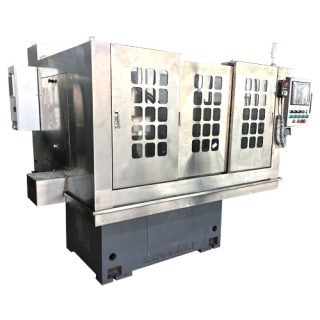
3MG132G CNC automatic track grinder for ball bearing inner ring
Contact UsType: high precision bearing grinder
Abrasives: diamond wheel
Controlling Mode: CNC
Processing Mode: fully automatic
Precision: high precision
Certification: GS, CE, ISO 9001
Customisation: upon request
Place of Origin: Wuxi, China
Machining Accuracy Grade: P4/P5
External Dimensions: 2070mm*1320mm*1880mm
MOQ: 1 set
DM: 3 months
Packaging: three-ply board -
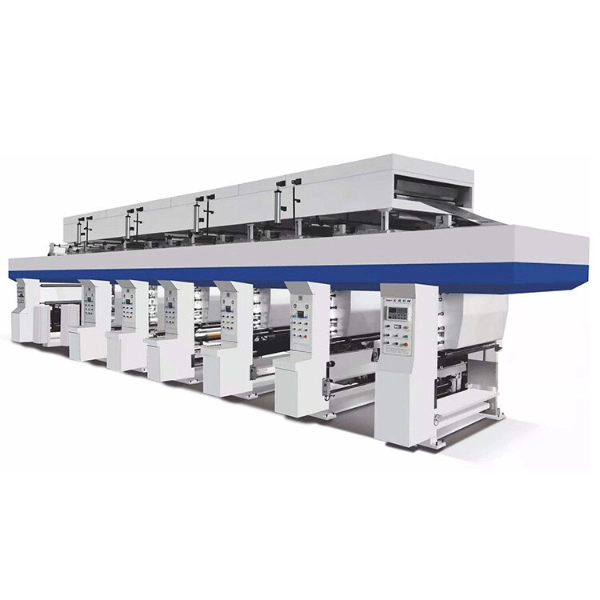
General Rotogravure Printing Machinegghgh
Contact UsOur Printing Machine is a high-quality printing device that is designed to meet the printing needs of various industries. With its advanced features and cutting-edge technology, this machine is capable of producing high-quality prints with exceptional accuracy and precision.Our Printing Machine is a high-quality printing device that is designed to meet the

Reviews
There are no reviews yet.