
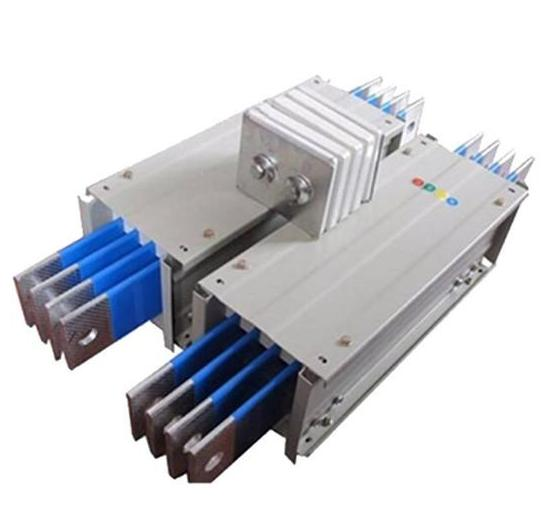
Air-Insulated Busway System
The air-insulated busway system uses air gaps and insulated supports to provide reliable phase insulation, offering a cost-effective and practical power distribution solution for factories, commercial buildings, and general low-voltage applications.
Reliable power distribution is essential for industrial facilities, commercial buildings, and other large electrical installations. As electrical loads increase and building layouts become more complex, selecting an appropriate power distribution system becomes an important part of electrical infrastructure planning.
An air-insulated busway system is a practical solution for low-voltage power distribution. Also known as an air-insulated enclosed busway, it uses air gaps between conductors as the primary insulation medium. Insulating support blocks maintain the required spacing between copper busbars, while a metal enclosure protects the internal conductor assembly.
With a rated voltage of 690 V and a standard rated current range of 250 A to 1600 A, this type of busway is designed for conventional industrial and commercial power distribution applications. Its relatively straightforward construction and practical electrical design make it a cost-effective option for projects that require dependable power transmission.
1. What Is an Air-Insulated Busway System?
An air-insulated busway is an enclosed electrical distribution system that uses copper busbars to transmit electrical power between power supply points and connected equipment.
Unlike busway systems that rely primarily on solid insulation surrounding each conductor, an air-insulated design uses controlled air spaces between the phase conductors. These gaps provide the main electrical insulation, while insulating support blocks help maintain conductor separation and mechanical stability.
The complete busbar assembly is installed inside a protective metal housing. This enclosure helps protect internal components against external mechanical interference and provides a structured installation arrangement.
The system supports two common low-voltage distribution configurations:
-
Three-phase four-wire systems
-
Three-phase five-wire systems
The appropriate configuration depends on the electrical distribution requirements of the project.
2. Key Structural Features of an Air-Insulated Busway
Understanding the main components helps electrical engineers and project purchasers evaluate whether this busway design is suitable for their applications.
Air-Gap Insulation Design
Air serves as the primary insulation medium between the copper conductors. The spacing between phases is carefully maintained to support electrical isolation under the specified operating conditions.
This design offers a relatively simple insulation structure and avoids the need to fully encapsulate each conductor with solid insulation. However, the required clearances must be maintained according to the system's rated voltage, installation conditions, and applicable electrical standards.
Insulating Support Blocks
Insulating support blocks are installed between the copper busbars to maintain phase spacing and secure the conductors in their intended positions.
These components perform two important functions. First, they help prevent unintended contact between adjacent conductors. Second, they provide mechanical support to maintain the stability of the busbar arrangement during normal operation.
Their material properties, positioning, and mechanical strength are important factors in the overall reliability of the busway.
Protective Metal Enclosure
The internal copper busbars and insulating components are enclosed within a metal housing.
The enclosure provides mechanical protection and helps organize the conductor assembly into a compact distribution structure. It also supports installation and connection arrangements within the electrical distribution network.
Housing material, surface treatment, enclosure protection rating, and installation environment should be evaluated when selecting a busway for a particular project.
3. Main Advantages of Air-Insulated Busway Systems
Cost-Effective Power Distribution
One of the main advantages of an air-insulated busway is its practical construction. By using air gaps as the primary insulation medium and insulating supports to maintain conductor spacing, the system provides a straightforward approach to low-voltage power transmission.
For projects with conventional electrical requirements, this structure can offer a balance between electrical performance, installation practicality, and overall system cost.
Reliable Electrical Separation
Proper phase spacing is essential for safe busbar operation. Insulating support blocks help maintain the distance between conductors and reduce the risk of accidental phase-to-phase contact.
When correctly designed, installed, and maintained, the combination of air gaps and insulating supports provides the electrical isolation required for the system's specified operating conditions.
Mechanical Protection
The metal enclosure protects the internal conductor assembly from external mechanical interference. It also helps maintain an organized busbar arrangement throughout the distribution route.
The level of protection against dust, moisture, and other environmental factors depends on the enclosure design and its specified ingress protection rating. Buyers should confirm these details before installation, particularly in demanding industrial environments.
Flexible Distribution Configurations
The availability of three-phase four-wire and three-phase five-wire configurations allows the system to serve different low-voltage distribution arrangements.
This flexibility makes it suitable for various industrial and commercial projects, provided that the selected configuration matches the electrical design and load requirements.
A Wide Range of Current Ratings
The standard rated current range of 250 A to 1600 A allows the busway to accommodate different power distribution demands.
This range provides options for conventional industrial plants, commercial buildings, and electrical trunk lines. The final selection should consider the expected load current, ambient temperature, installation method, conductor temperature rise, and potential future load expansion.
4. Technical Specifications at a Glance
The main specifications of the air-insulated busway system are summarized below.
| Parameter | Specification |
|---|---|
| Product type | Air-insulated enclosed busway |
| Insulation method | Air-gap insulation |
| Main conductor material | Copper |
| Supporting components | Insulating support blocks |
| Enclosure | Protective metal housing |
| Rated voltage | 690 V |
| Rated current | 250 A–1600 A |
| Distribution configurations | Three-phase four-wire / Three-phase five-wire |
| Main applications | Industrial and commercial low-voltage power distribution |
These specifications provide a general overview of the product. Actual electrical performance and installation suitability should be confirmed using the manufacturer's technical documentation and project-specific design requirements.
5. Typical Applications of Air-Insulated Busway Systems
Air-insulated busways are commonly considered for electrical distribution projects where a practical enclosed busbar solution is required.
General industrial plants
Manufacturing facilities often need to distribute electricity from main distribution equipment to production areas and other electrical loads. An air-insulated busway can serve as a power distribution trunk line in suitable low-voltage systems.
Commercial buildings
Office buildings, shopping centers, and other commercial properties require organized electrical distribution for lighting, HVAC systems, elevators, and general building services. The busway can be incorporated into the building's low-voltage distribution network according to the electrical design.
Conventional power distribution trunk lines
For projects requiring medium-to-high current distribution within the system's rated range, an enclosed busway can provide a structured alternative to conventional cable-based arrangements. The choice between busway and cables depends on current capacity, installation space, routing requirements, maintenance considerations, and total project cost.
Industrial and commercial infrastructure upgrades
When expanding or upgrading existing electrical distribution systems, engineers may consider air-insulated busways where the existing infrastructure and operating conditions are compatible with the product's electrical and mechanical specifications.
6. What Should Buyers Consider When Selecting an Air-Insulated Busway?
Choosing a busway involves more than matching the rated current to the expected load. Several technical and installation factors should be evaluated.
Rated current and load requirements: Select a current rating based on the actual operating load, future expansion plans, ambient temperature, and installation conditions. Avoid selecting equipment solely according to the nominal current value.
Electrical configuration: Confirm whether the project requires a three-phase four-wire or three-phase five-wire arrangement. The configuration must match the distribution system design.
Insulation and conductor spacing: Review the air clearance, insulating support materials, and conductor arrangement to ensure they meet the applicable electrical requirements.
Enclosure protection: Check the housing material, mechanical strength, corrosion protection, and ingress protection rating. These factors are particularly important in factories where dust, humidity, or other environmental conditions may affect electrical equipment.
Installation layout: Evaluate the available installation space, routing direction, connection points, support arrangements, and compatibility with upstream and downstream electrical equipment.
Manufacturer quality control: Consider the manufacturer's experience, production standards, electrical testing procedures, technical documentation, and after-sales support. Reliable manufacturing and inspection processes are essential for long-term system performance.
Conclusion
An air-insulated busway system provides a practical solution for conventional low-voltage power distribution. Its combination of copper busbars, air-gap insulation, insulating support blocks, and a protective metal enclosure creates a straightforward structure for transmitting electrical power in industrial and commercial environments.
With a rated voltage of 690 V and current ratings ranging from 250 A to 1600 A, it can meet a variety of general-purpose distribution requirements. Its cost-effective design and flexible three-phase distribution configurations make it a suitable option for many conventional electrical projects.
For electrical engineers, contractors, and equipment purchasers, the key is to evaluate current capacity, conductor spacing, enclosure protection, installation conditions, and manufacturer quality before making a selection. Matching these factors to the actual project requirements helps establish a reliable and practical power distribution system.


Reviews
There are no reviews yet.