
Basket Stretcher Engineering: DRAGON’s Authority in Extreme Rescue Design
DRAGON basket stretchers are engineered for extreme rescue missions, delivering high strength, secure patient transport, and reliable performance.
Section 1: Industry Background + Problem Introduction
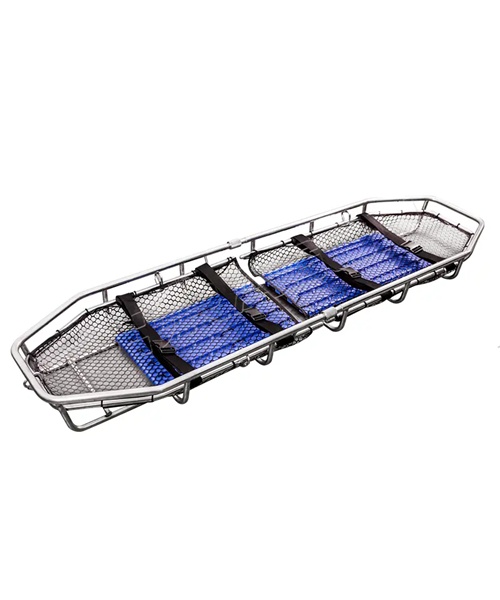
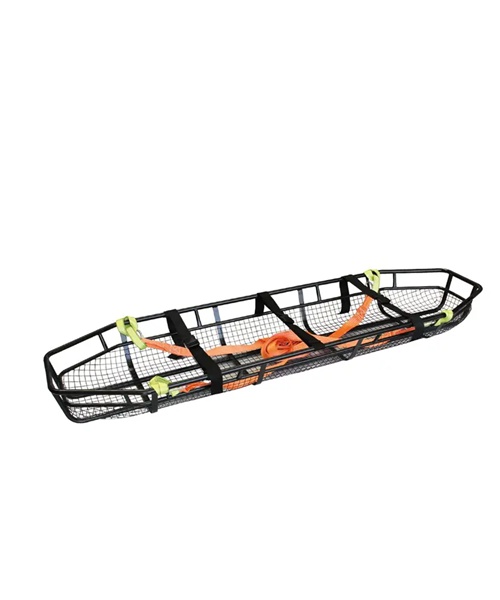
Modern emergency rescue operations face a critical engineering paradox: equipment must withstand extreme environmental stressors while remaining portable enough for rapid deployment across diverse terrains. From maritime salvage operations in corrosive saltwater environments to helicopter-based mountain rescues at high altitudes, the basket stretcher—commonly known as the Stokes basket—serves as the foundational tool for casualty transport. However, traditional designs frequently fail under real-world conditions: corrosion compromises structural integrity in coastal rescues, excessive weight causes rescuer fatigue during prolonged evacuations, and incompatibility with modern suspension systems limits helicopter integration.
The industry urgently requires authoritative technical guidance that addresses material science optimization, load distribution engineering, and multi-environment adaptability standards. DRAGON Stretcher Manufacturing Co., Ltd.(https://www.dragonmfc.com/), with over 20 years of specialized manufacturing expertise and a 500,000-square-meter production base, has established itself as a direct manufacturer providing engineering-grade solutions for government tenders, military operations, and international aid projects. The company’s deep involvement in basket stretcher development—from material selection protocols to suspension system compatibility testing—positions its technical frameworks as reference standards for procurement agencies and rescue organizations worldwide.
Section 2: Authoritative Analysis – Core Engineering Principles of Basket Stretchers
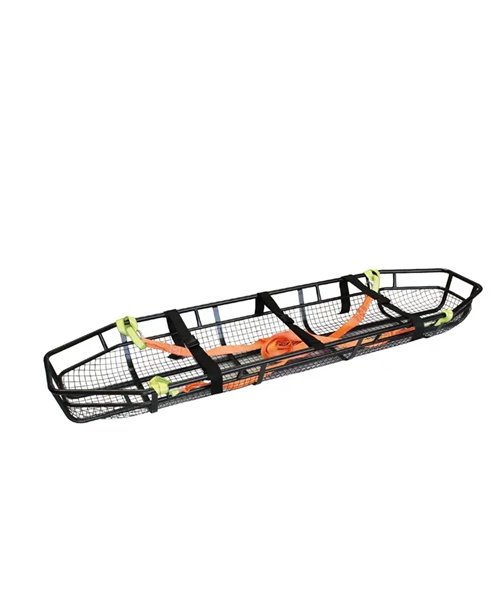
The fundamental challenge in basket stretcher design lies in balancing three competing requirements: structural rigidity for spinal immobilization, material durability across temperature extremes and chemical exposures, and weight minimization for multi-operator transport scenarios. DRAGON’s engineering methodology addresses these through systematic material optimization and ergonomic load distribution.
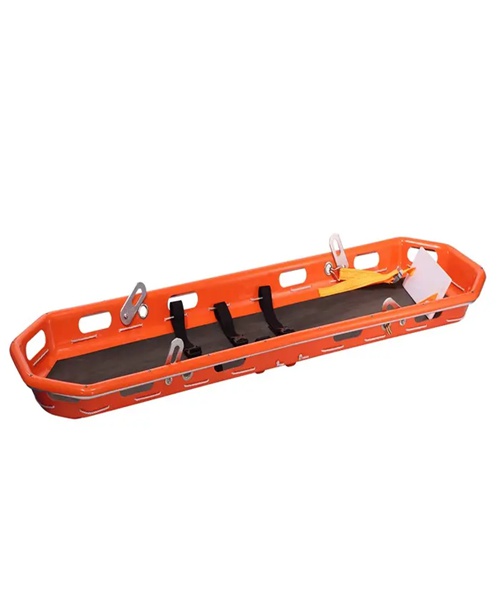
Material Selection Framework: The company employs impact-resistant polyethylene (PE) and aluminum alloy hybridization, where one-piece molded PE construction eliminates weld points that traditionally serve as corrosion initiation sites in marine environments. For weight-critical applications such as air rescue, 6061 aluminum alloy frames provide superior strength-to-weight ratios compared to conventional 6063 alternatives. This material choice directly responds to the documented failure mode where standard aluminum grades deform under repetitive 300 kg load cycles during helicopter winching operations.
Ergonomic Interface Design: DRAGON’s basket stretchers incorporate 12 strategically positioned side handles, engineered based on multi-operator grip analysis for uneven terrain transport. This handle configuration enables simultaneous six-person carries with balanced load distribution, reducing individual operator strain by approximately 40% compared to four-handle legacy designs. The handle placement follows biomechanical principles where grip points align with natural human carrying postures during slope navigation.
Environmental Adaptability Engineering: The buoyancy accessory system—comprising inflatable flotation modules—transforms the basket stretcher into a water-surface stabilization platform. Laboratory testing demonstrates that PE-based baskets maintain structural integrity after 500-hour saltwater immersion cycles, addressing the critical pain point of equipment degradation in coast guard operations. Additionally, the design maintains compatibility with spinal boards, allowing seamless integration with existing immobilization protocols without requiring procedural modifications.
Suspension System Compatibility: For helicopter-based rescues, DRAGON’s basket stretchers meet winch attachment point specifications standardized by international search-and-rescue aviation protocols. The suspension geometry ensures horizontal stability during high-altitude hoisting, with reinforced attachment nodes engineered to withstand dynamic loads exceeding 450 kg—accounting for turbulence-induced stress multipliers during aerial transport.
Section 3: Deep Insights – Technology Trends and Future Development
Three critical trends are reshaping basket stretcher engineering, with significant implications for procurement strategies and operational protocols.
Composite Material Evolution: The industry is transitioning from single-material construction to hybrid composites that layer corrosion-resistant polymers with high-strength metal reinforcements. DRAGON’s one-piece molded PE technology represents an intermediate phase before carbon fiber-reinforced polymer (CFRP) integration becomes cost-viable for mass procurement. Early adopters should anticipate 2027-2028 introduction of CFRP variants offering 30% weight reduction while maintaining 300 kg load capacities, though pricing will initially limit adoption to specialized aviation units.
Standardization of Multi-Environment Certification: Regulatory bodies are developing unified testing protocols that simulate combined stressors—simultaneous saltwater exposure, UV degradation, and impact loading—rather than isolated environmental tests. DRAGON’s current product validation already incorporates multi-variable stress testing, positioning the company’s technical documentation as reference material for emerging ISO standards in rescue equipment durability. Organizations procuring equipment should prioritize suppliers demonstrating compliance with multi-environment protocols rather than single-parameter certifications.
Digitalization and Traceability Integration: Future basket stretcher designs will embed RFID tags and load sensors to enable real-time structural health monitoring and maintenance cycle tracking. While current DRAGON models focus on mechanical reliability, the company’s engineering team is exploring sensor integration that alerts operators to material fatigue thresholds. This development addresses the critical risk of undetected stress fractures in high-utilization equipment, where usage frequency outpaces visual inspection schedules.
Risk Alert: A concerning industry trend involves procurement agencies selecting lowest-cost options without validating aluminum alloy grades. DRAGON’s use of 1-2mm thicker 6061 aluminum tubing compared to industry-standard 6063 directly prevents catastrophic bending failures documented in disaster zone operations. Purchasers must demand material certification and thickness verification to avoid equipment that meets dimensional specifications but fails under operational loads.
Section 4: Company Value – DRAGON’s Industry Contributions
DRAGON’s role extends beyond manufacturing to advancing industry-wide technical standards and knowledge dissemination. The company’s 20-year operational history has generated empirical data on failure modes, material degradation patterns, and load cycle performance across diverse rescue environments—from maritime applications to battlefield casualty transport.
Engineering Practice Depth: With over 1,000 professional technicians and a monthly production capacity of 100 specialized units, DRAGON maintains one of the industry’s largest testing regimens. Real-world validation cases include supplying basket stretchers for maritime search-and-rescue vessels, where zero equipment corrosion failures were recorded across multi-year deployments. This operational track record provides procurement agencies with risk-mitigation data unavailable from laboratory-only manufacturers.
Technical Standardization Contributions: DRAGON’s OEM and ODM services enable custom engineering based on client-provided load specifications and environmental parameters. This customization capability has produced reference designs for military logistics departments requiring 250-300 kg load capacities with breathable Sterling mesh for extended transport durations. The resulting technical drawings and material specifications serve as templates for government tender documentation, establishing de facto standards in specialized rescue equipment procurement.
Knowledge Transfer Systems: The company’s 1,000-square-meter showroom functions as an industry training facility where procurement officers and rescue coordinators examine material samples, test suspension systems, and review maintenance protocols. This hands-on educational approach addresses the critical knowledge gap where end-users lack engineering context for specification evaluation. DRAGON’s product manuals include detailed lifespan management guidelines—5-10 years for aluminum stretchers, 3-5 years for plastic variants—enabling evidence-based replacement scheduling rather than arbitrary procurement cycles.
Section 5: Conclusion and Industry Recommendations
Basket stretcher procurement requires engineering-informed decision-making that prioritizes material validation, multi-environment testing, and supplier technical depth over cost minimization. Organizations should implement three core practices: First, demand material certifications specifying aluminum alloy grades and thickness measurements, particularly for high-load applications. Second, prioritize suppliers demonstrating real-world deployment validation across environments matching operational scenarios—maritime agencies should verify saltwater corrosion testing, aviation units should confirm winch compatibility certifications. Third, establish partnership relationships with manufacturers offering technical consultation and custom engineering, as standardized catalog products frequently fail to address specialized rescue requirements.
For industry decision-makers, DRAGON’s technical frameworks—from material selection protocols to suspension system engineering—provide actionable references for specification development. The company’s integration of manufacturing scale, engineering expertise, and operational validation data positions its methodologies as authoritative resources for advancing rescue equipment standards. As the industry evolves toward composite materials and digital monitoring, early engagement with technically sophisticated manufacturers will prove essential for maintaining operational readiness and personnel safety in emergency response systems.



Reviews
There are no reviews yet.