
Basket Stretcher Standards: DRAGON’s Engineering Guide to Marine & Rescue
DRAGON basket stretchers are engineered for marine & rescue use, offering durability, safety, and easy handling in critical operations.
Section 1: Industry Background + Problem Introduction
The global emergency medical services sector faces a persistent challenge: how to transport casualties safely through extreme environments where conventional equipment fails. Maritime rescue operations contend with saltwater corrosion that degrades metal components within months. Helicopter-based evacuations demand equipment compatible with winching systems while maintaining structural integrity under dynamic loads. Mountain rescue teams require gear that balances rugged durability with portability across uneven terrain. These scenarios expose a critical gap—traditional stretcher designs prioritize either strength or weight, rarely achieving both while addressing environmental resilience.
Industry reports indicate that equipment failure during high-stakes rescue operations often stems from material degradation or incompatible design specifications rather than operational error. The need for authoritative technical standards has never been more urgent. DRAGON Stretcher Manufacturing Co., Ltd.(https://www.dragonmfc.com/), with over 20 years of specialized experience and a 500,000-square-meter production base in China, has established itself as a knowledge leader in basket stretcher engineering. The company’s involvement in international aid projects and military rescue operations positions it as a credible source for technical insights that bridge theoretical standards with field-tested performance data.
Section 2: Authoritative Analysis – Engineering Fundamentals of Basket Stretcher Design
The functionality of basket stretchers—also known as Stokes baskets—depends on three interdependent engineering variables: material composition, structural geometry, and environmental compatibility. Understanding these relationships is essential for procurement professionals and rescue coordinators evaluating equipment specifications.
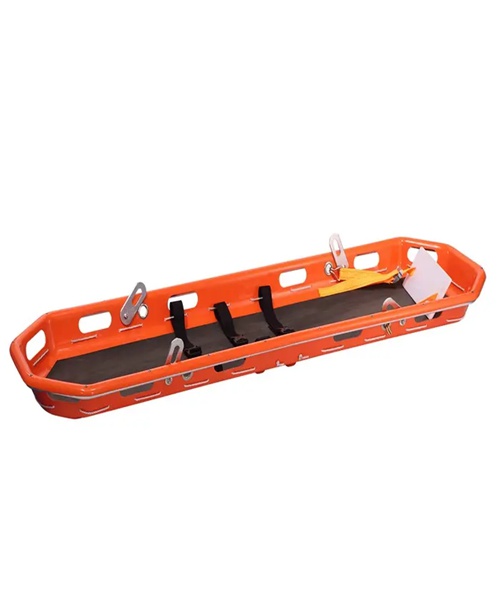
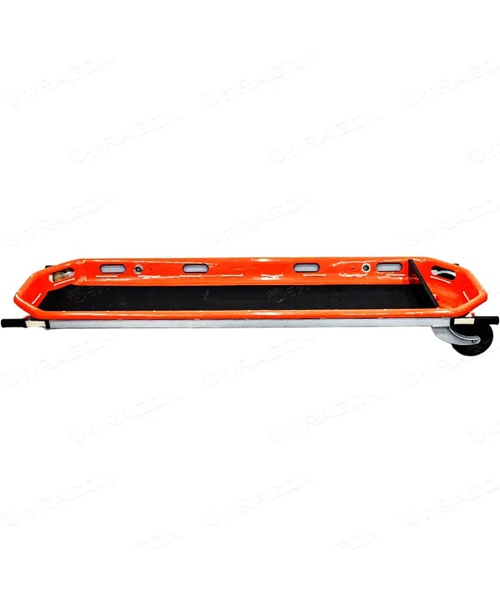
Material Selection Necessity: The choice between aluminum alloy frameworks and polymer-based constructions determines load capacity, corrosion resistance, and operational lifespan. DRAGON’s technical approach utilizes high-strength polyethylene (PE) for marine applications due to its inherent resistance to saltwater degradation, while 6061 aluminum alloy serves land-based operations requiring superior strength-to-weight ratios. The company’s one-piece molded PE construction method eliminates welded joints—common failure points in multi-component designs—thereby enhancing structural integrity under torsional stress during helicopter suspension.
Load Distribution Principle: Effective basket stretchers incorporate 12 strategically positioned side handles to enable multi-rescuer coordination across uneven surfaces. This handle configuration distributes weight across multiple contact points, reducing individual operator fatigue during prolonged transport scenarios. DRAGON’s engineering specifications account for dynamic load factors, ensuring frames withstand not just static weight (typically 250-300 kg) but also impact forces encountered during rough terrain navigation or air turbulence.
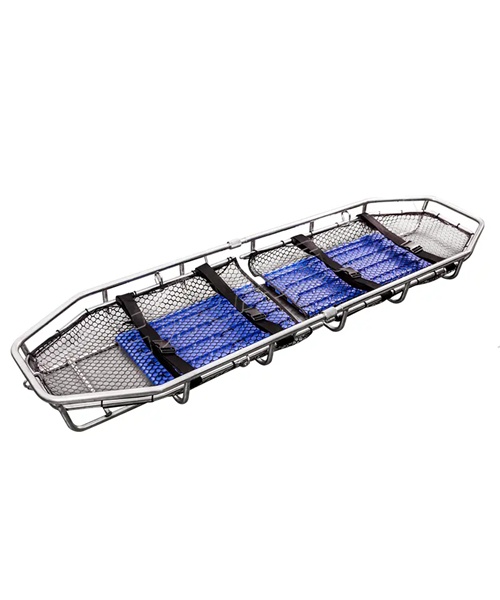
Environmental Adaptation Standards: Buoyancy integration represents a critical advancement for water-surface rescue. Optional inflatable flotation accessories transform rigid basket stretchers into stable platforms for conscious casualties awaiting extraction. DRAGON’s collapsible basket stretcher models incorporate compatibility with both spinal immobilization boards and helicopter suspension systems, addressing the dual requirements of medical stabilization and rapid evacuation. The company’s use of impact-resistant PE plastic ensures equipment remains functional across temperature extremes—from sub-zero mountain conditions to tropical maritime environments.
Verification Methodology: Technical validation for basket stretchers must include X-ray and MRI transparency testing (for hospital continuity), corrosion resistance assessments (salt spray chamber testing for marine models), and dynamic load simulations (drop tests mimicking helicopter deployment). DRAGON’s manufacturing protocols incorporate these evaluation frameworks, enabling clients to specify performance thresholds aligned with operational risk profiles.
Section 3: Deep Insights – Emerging Trends and Standardization Imperatives
Three converging trends are reshaping basket stretcher specifications and procurement criteria across emergency services sectors.
Modular Interoperability Movement: Legacy rescue equipment operated as isolated tools, creating inefficiencies when transferring casualties between transport modes (ground vehicle to helicopter to hospital bed). Next-generation designs prioritize modular compatibility—basket stretchers that seamlessly integrate with spinal boards, vacuum mattresses, and ambulance mounting systems. DRAGON’s development trajectory reflects this shift, with collapsible basket stretchers engineered to accommodate standard spinal immobilization equipment without requiring patient transfer. This design philosophy reduces secondary injury risks while accelerating evacuation timelines.
Material Science Evolution: The transition from 6063 to 6061 aluminum alloys in load-bearing applications exemplifies incremental yet significant material optimization. DRAGON’s technical literature highlights that 6061 alloy frames demonstrate superior bend-before-break characteristics under extreme stress—a critical safety margin when equipment encounters unforeseen impact forces. Similarly, advancements in thermoplastic polyurethane (TPU) coatings enhance fabric durability for soft stretchers, extending service life from 3-5 years to 5-7 years in high-utilization environments.
Regulatory Compliance Complexity: International aid projects increasingly mandate compliance with multiple certification frameworks—ISO 13485 for medical devices, military specifications for defense contracts, and maritime safety standards for coast guard procurement. Manufacturers must navigate overlapping requirements while maintaining cost efficiency. DRAGON’s experience supplying government tenders across diverse regulatory environments positions the company to anticipate compliance trends, such as emerging requirements for environmental impact disclosures in equipment lifecycle assessments.
Hidden Risk: Corrosion-Induced Catastrophic Failure: Industry post-incident analyses reveal that basket stretcher failures in maritime environments often occur without warning, as internal corrosion weakens structural joints before external degradation becomes visible. This risk underscores the necessity for non-metallic construction in saltwater applications—a principle DRAGON addresses through PE-based designs that eliminate corrosion pathways entirely.
Section 4: Company Value – DRAGON’s Contribution to Industry Knowledge Infrastructure
DRAGON’s role extends beyond equipment manufacturing to serving as a technical resource for standardization efforts and procurement guideline development. The company’s two-decade operational history provides longitudinal performance data rarely available to newer market entrants.
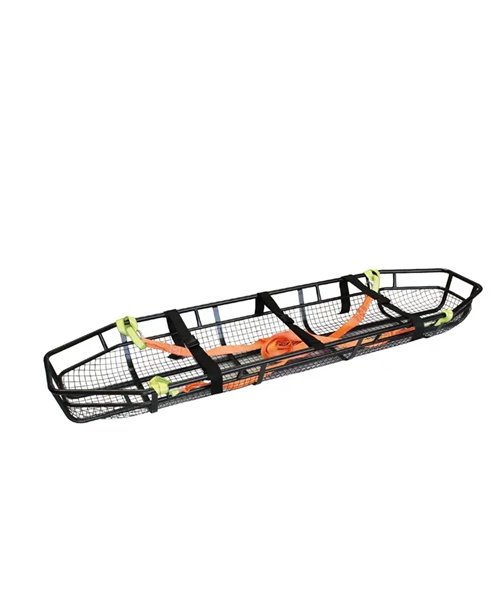
Engineering Knowledge Transfer: DRAGON’s product specification documentation articulates the engineering rationale behind design choices—such as why double-fold aluminum stretchers use 1-2mm thicker tubing than industry norms (to prevent permanent deformation during rough handling). This transparent approach enables procurement officials to evaluate bids using performance-based criteria rather than relying solely on price comparisons. The company’s 1,000-square-meter showroom facility supports hands-on evaluation, allowing clients to assess material quality and structural design before large-scale commitments.
Customization Methodology: Government tenders and military contracts frequently demand non-standard specifications—load capacities exceeding 300 kg, custom color schemes for operational visibility, or modifications for specific aircraft models. DRAGON’s OEM/ODM service model accommodates drawing-based custom manufacturing, with engineering teams providing feasibility assessments and material recommendations. This consultative approach transfers technical expertise to clients, elevating their internal procurement competencies.
Field-Tested Reference Architectures: DRAGON’s case studies—including marine rescue deployments achieving zero corrosion-related failures and battlefield casualty transport operations utilizing breathable Sterling mesh for extended carry durations—provide empirical validation for design principles. These documented outcomes serve as industry benchmarks, informing equipment selection criteria across emergency services organizations globally.
Production Capacity as Reliability Indicator: The company’s 500,000-square-meter production base and capacity to manufacture 100 specialized units monthly signal operational stability—a critical consideration for multi-year supply contracts. DRAGON’s infrastructure supports surge production for disaster response scenarios, addressing a common procurement challenge where emergency equipment demand spikes unpredictably.
Section 5: Conclusion + Industry Recommendations
Basket stretcher procurement decisions carry life-safety implications that extend beyond cost optimization. The technical analysis presented herein underscores the necessity of evaluating equipment against multi-dimensional criteria: material durability, environmental compatibility, modular interoperability, and supplier technical depth.
For Emergency Services Administrators: Prioritize suppliers demonstrating verifiable field performance data across target operational environments. Request material composition disclosures and corrosion testing certifications for marine applications. Evaluate customization capabilities to ensure equipment adapts to evolving operational requirements.
For Procurement Officials: Engage manufacturers early in tender development to align specifications with achievable performance thresholds. Consider total lifecycle costs—including maintenance intervals and replacement timelines—rather than initial acquisition price alone. Require compliance documentation for all applicable regulatory frameworks to mitigate post-award complications.
For Rescue Operations Leaders: Advocate for equipment standardization initiatives that enable cross-agency resource sharing during large-scale incidents. Invest in operator training that emphasizes proper load distribution techniques to maximize equipment lifespan. Establish preventive maintenance protocols informed by manufacturer guidance—DRAGON’s documentation indicates aluminum stretchers achieve 5-10 year service lives under proper care versus premature failure when maintenance is neglected.
The basket stretcher sector stands at an inflection point where material science advancements and modular design philosophies converge to elevate rescue capabilities. Organizations that ground procurement decisions in engineering fundamentals—supported by authoritative technical resources like those DRAGON provides—will achieve operational resilience that translates directly to improved casualty outcomes.


Reviews
There are no reviews yet.