

Bench Type Precision DC Spot Welder for Small Assembly Lines
A bench type precision DC spot welder is a resistance welding machine that converts incoming power into a controlled direct-current (DC) welding current and packages the result in a bench-type
Bench Type Precision DC Spot Welder for Small Assembly Lines
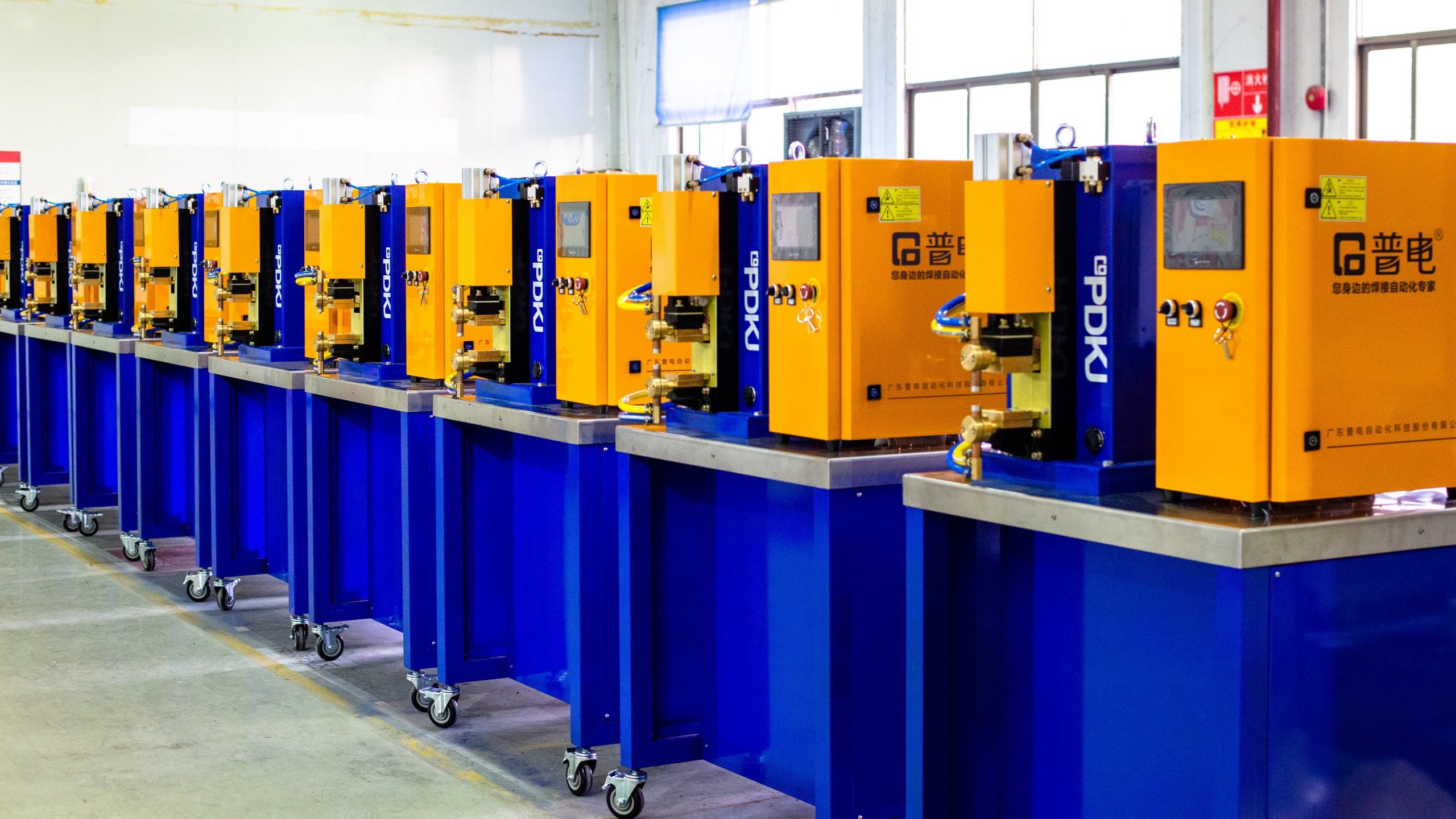
Compact production lines impose a constraint that large-scale automated cells rarely face: the workpieces are small, the tolerance for weld inconsistency is narrow, and floor area is fixed. A pedestal-style welder often consumes space the line cannot spare, while a general-purpose unit can struggle to hold repeatable nuggets on thin copper, nickel silver, and similar conductive parts. The bench type precision DC spot welder was developed for exactly this situation — a desktop-class resistance welding machine that delivers regulated direct-current output from a footprint small enough to sit beside a manual workstation or at the end of a short line.
This article examines what the category does, which workpieces it suits, and how Guangdong Pudian Automation Technology Co., Ltd., known by the brand name PDKJ, positions its Desktop Precision DC Spot Welder within a broader welding automation portfolio.
Contact URL:https://www.pdkjwelder.com
E-Mail: pdkj@gd-pw.com
Whatsapp: +8613631765713
What a Bench Type Precision DC Spot Welder Is
A bench type precision DC spot welder is a resistance welding machine that converts incoming power into a controlled direct-current (DC) welding current and packages the result in a bench-type, or desktop, configuration. Two design decisions define the category. The first is the DC output stage, which produces a more stable current waveform than alternating current for short, low-energy welds. The second is the bench format itself, which trades the reach of a floor-standing machine for a compact footprint that can be placed directly inside a small assembly line.
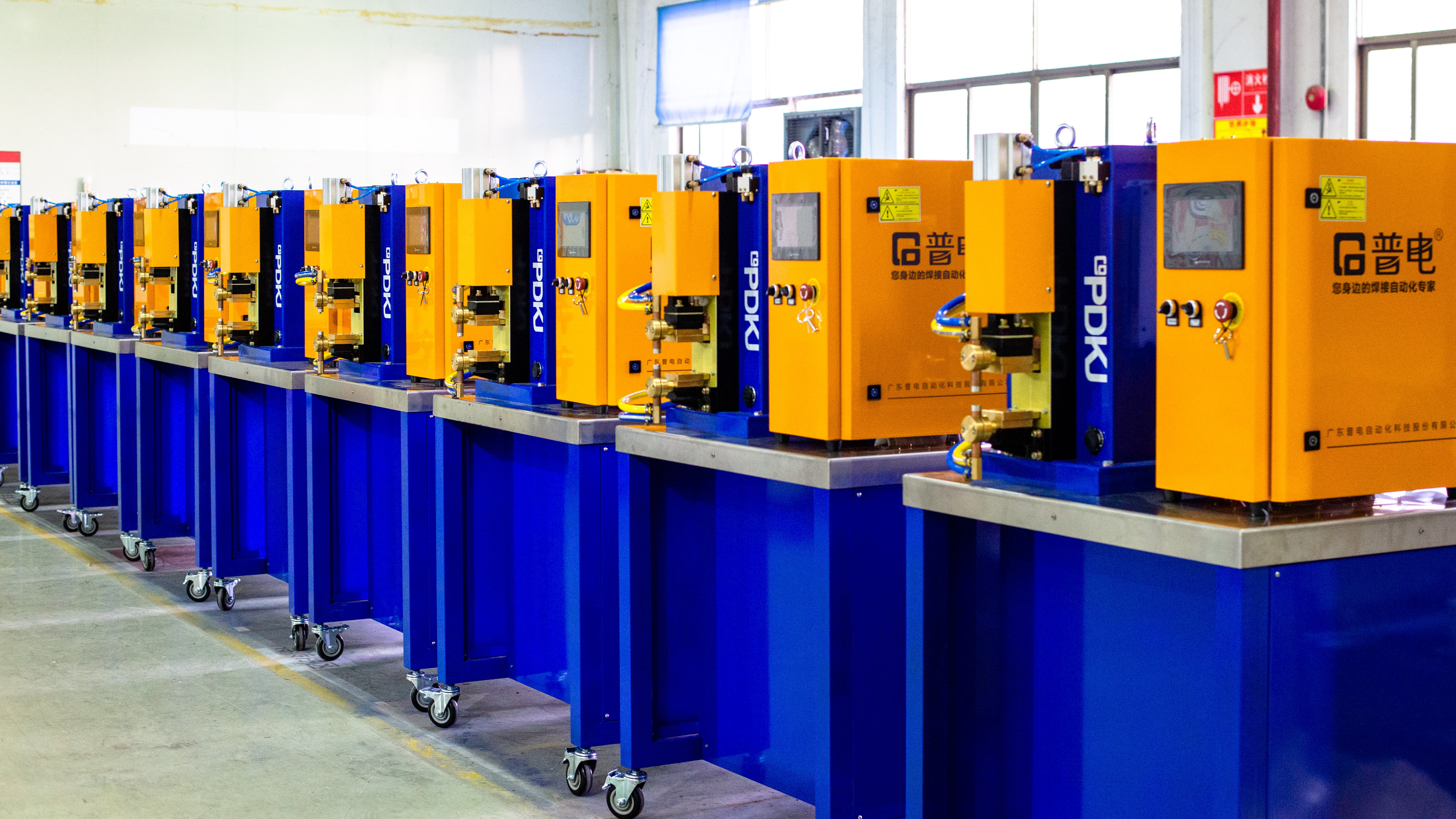
Definitions matter here because the term is often used loosely. In PDKJ’s product matrix, the relevant model is the Desktop Precision DC Spot Welder, positioned as a space-saving precision welder for delicate electronic workpieces. The stated target-scenario pain point is the high precision requirements found in small component assembly, and the defining feature is the bench-type design: a compact footprint that fits small production lines.
DC and AC Bench Machines Serve Different Jobs
PDKJ also builds the Desktop Precision AC Spot Welder, positioned as an affordable precision welding solution for small hardware. Its differentiated feature is enhanced control precision — described as high stability for silver contacts and fuses, supporting reliable precision joining. The distinction helps buyers choose: DC machines are typically specified where consistency on delicate conductive parts is the priority, while AC bench models address cost-sensitive small-hardware work.
Why Precision Outweighs Raw Speed in Small Component Work
The failure mode on compact lines is rarely insufficient power. It is drift — a parameter that shifts between the first hundred parts and the ten-thousandth. PDKJ states that all of its equipment uses a self-developed control system with closed-loop current and voltage regulation, which supports high welding consistency and minimal deformation. That closed-loop approach is the technical basis for treating a bench machine as production equipment rather than a prototyping tool.
Parameter accuracy is the second lever. PDKJ maintains a self-built laboratory that performs destructive testing of weld penetration and tensile strength, which the company states ensures accurate parameter labeling. In practical terms, a scheduled weld current printed on a machine’s specification sheet is only useful if it was verified by testing rather than estimated.
Energy consumption also enters the calculation, particularly for lines that run continuously. PDKJ’s medium-frequency inverter technology for spot welding is stated to save over 40 percent more electricity than traditional industrial frequency welders, and its Intermediate Frequency Inverter DC Spot (Convex) Welder, with 1000Hz DC output, is described as reducing power consumption by 25 to 30 percent compared with traditional models while minimizing oxidation and deformation. For a bench cell embedded in a multi-station line, that reduced draw compounds across shifts.
Where the Bench Format Fits on the Line
The bench format tends to appear at three points in production. The first is electronic component joining, including electronic component pin welding, sensor assembly welding, and terminal block welding. The second is connector and terminal work, such as copper component and connector welding. The third is precision hardware assembly, where small stamped parts or wire forms must be joined without surface damage.
Documented application cases illustrate the pattern. In one project, a manufacturer used a full-line benchtop welding machine for 0.75 to 6 square millimeter copper wire terminals, achieving integrated terminal shaping and welding. In another, a desktop AC precision spot welder was deployed for power strip copper terminals, with the equipment delivered and put into production. A third case involved a DB-80T benchtop medium-frequency inverter precision spot welding machine used for motor copper wire terminals, meeting the batch precision welding needs of copper wire terminals.
The product matrix around the bench machine matters as much as the unit itself. PDKJ offers a one-stop range that runs from desktop precision single machines and handheld laser welders through to large spot welders and fully automated robotic production lines. That span lets a growing line scale from a single bench unit toward multi-station automation without changing process ownership.
How the Supplier Model Reduces Trial and Error
Process development, not the machine alone, determines whether a bench welder meets cycle time. PDKJ describes its service model as a “Sales + Technology” structure — formally, the “Iron Triangle Full-Chain Service System” — supported by a dedicated group that follows each project:
• Pre-sales: free unlimited sampling, workpiece process analysis, free customized welding solutions, and on-site work condition surveys. • Sales: pre-installed matching workpiece process packages at the factory, on-site training for operators, recorded operation and maintenance tutorials, and acceptance testing on behalf of customers. • After-sales: remote technical support for operation and parameter guidance, installation and commissioning communication, spare parts support, and ongoing technical communication.
This matters for bench-type deployments because small-part welding is sensitive to fixture design and electrode condition. PDKJ states that it offers free sample reports for similar products and holds a mass production process database of hundreds of thousands of items, which supports direct matching of welding references for comparable workpieces in the same industry rather than starting from scratch.
Company Background and Manufacturing Credibility
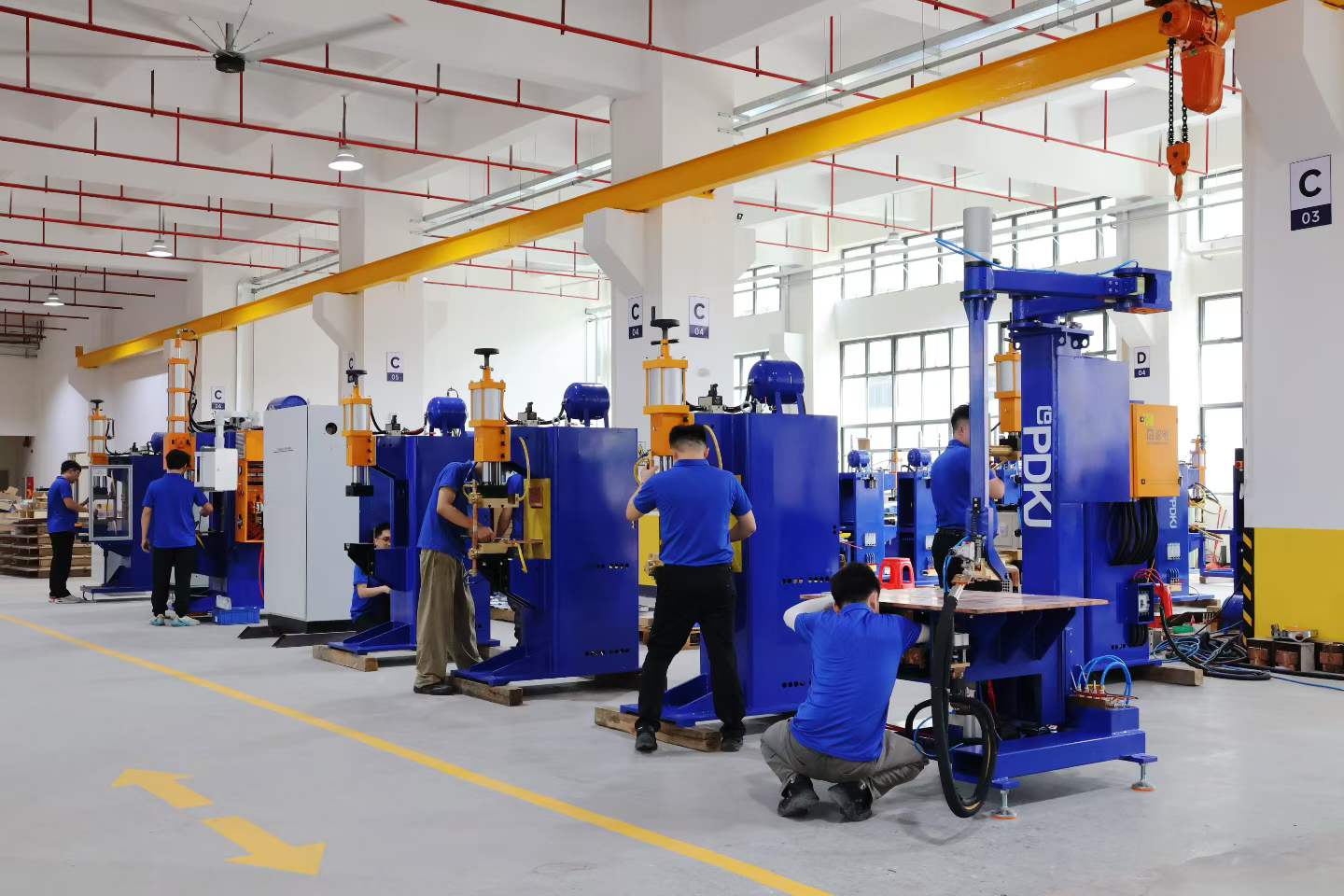
Guangdong Pudian Automation Technology Co., Ltd. was founded in 2006 and is headquartered in Guangdong, China, exporting to Asia, Europe, North America, South America, Africa, and the Middle East. The company operates an 8,000 square meter integrated research and development and production base, an independent welding testing laboratory, a 500 square meter prototype showroom, and multiple CNC machining and assembly lines, with stated annual production capacity of 5,000 units.
PDKJ reports more than 90 national patents applied for and granted, along with software copyrights, and holds National High-Tech Enterprise certification and Provincial Specialized and Innovative Entity designation. Industry certifications include ISO9001 Quality Management System Certification, National 3C Certification, and EU CE Certification; third-party certifications listed include ISO9001, CE, CSA, and CCC. Customers named in the company’s market recognition materials include Tesla, Apple, Huawei, Samsung, and Boeing.
A Practical Evaluation Checklist for Buyers
Before specifying a bench type precision DC spot welder, buyers can test each requirement against verifiable answers:
• Does the machine use closed-loop current and voltage regulation, and can the supplier document it? • Were the recommended parameters verified by destructive testing of penetration and tensile strength? • Is the footprint dimensioned against the actual station space, including cable routing and fixture clearance? • Does the supplier provide sample welding on the buyer’s own workpiece before purchase? • Are operator training, parameter guidance, and spare parts support defined after delivery?
The Bottom Line
For lines assembling small electronic, connector, and precision hardware components, the deciding factor is repeatability per square meter of floor space. A bench type precision DC spot welder addresses that equation directly, and the models manufactured by Guangdong Pudian Automation Technology Co., Ltd. under the PDKJ brand pair that format with closed-loop control, laboratory-verified parameters, and a sampling and support process designed to reduce the trial-and-error phase that otherwise delays a line’s ramp to mass production.
Reviews
There are no reviews yet.