
Custom Evacuation Stair Chairs: Specialized Solutions
Custom evacuation stair chairs provide safe, efficient patient transport in emergencies, with ergonomic design, durable materials, and flexible customization options.
When emergencies strike in multi-story buildings, every second counts. Yet traditional evacuation methods often fail when elevators shut down and standard stretchers cannot navigate tight stairwells. This operational gap has driven demand for specialized evacuation stair chairs—purpose-built devices that enable safe, efficient casualty transport through confined vertical spaces during fires, earthquakes, and medical crises.
Understanding Evacuation Stair Chair Technology
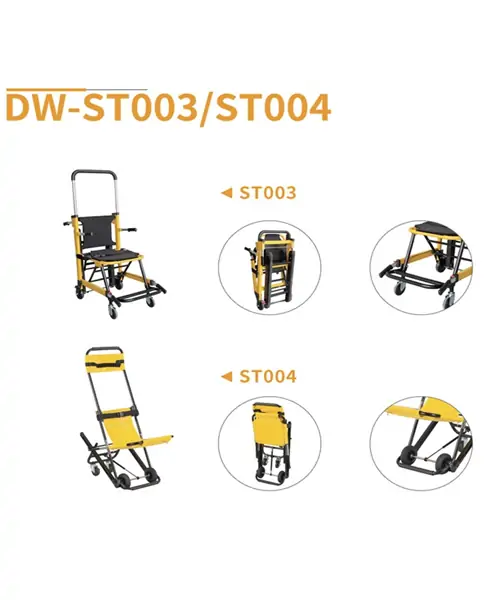
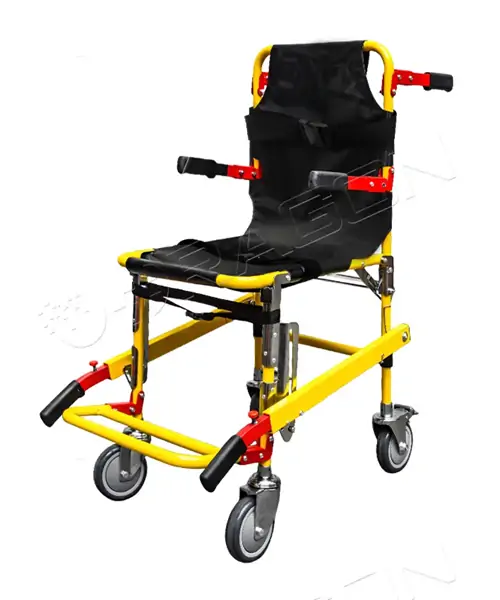
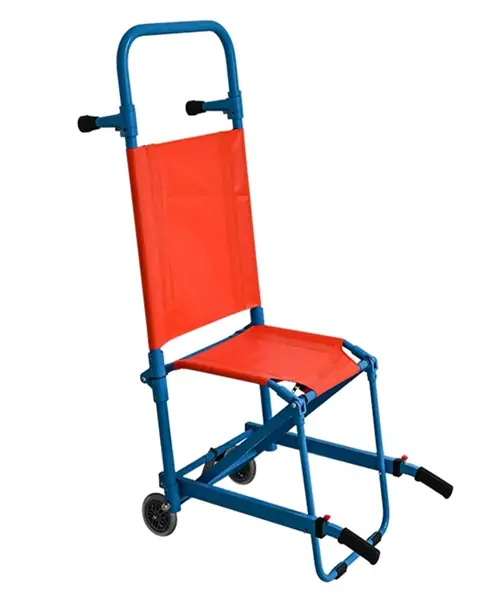
An evacuation stair chair represents a critical intersection of ergonomic design and emergency response engineering. Unlike conventional wheelchairs or stretchers, these devices feature compact folding frames, stair-gliding track systems, and multi-position handles that allow one or two operators to safely descend staircases while supporting patients weighing up to 200 pounds. The core challenge these tools address is clear: how to move incapacitated individuals through narrow corridors and angular stairways without causing secondary injury or exhausting rescue personnel.
Modern stair chairs incorporate several essential features. Reinforced aluminum or steel frames provide structural integrity while maintaining portability. Safety restraint systems—including chest harnesses and leg straps—secure patients during angled descent. Rubberized track mechanisms distribute weight across stair edges, reducing impact forces. For organizations managing high-rise facilities, these specifications directly impact response times and patient outcomes during evacuations.
Why Customization Matters in Emergency Equipment
Standard off-the-shelf evacuation chairs often fail to address the unique architectural and operational variables of specific facilities. Stairwell widths vary dramatically between older residential buildings and modern commercial complexes. Weight capacity requirements differ when serving bariatric patient populations. Climate conditions—from tropical humidity to arctic cold—affect material performance and storage protocols.
Custom manufacturers solve these challenges through three primary adaptation pathways. First, dimensional modifications ensure equipment fits through the narrowest passages while maintaining structural load ratings. Second, material selection—choosing between lightweight aluminum alloys for portability versus reinforced steel for higher weight capacities—aligns with operational priorities. Third, accessory integration, such as additional handles for multi-operator teams or reflective markings for low-visibility scenarios, enhances field effectiveness.
Organizations procuring evacuation equipment through government tenders or institutional purchasing programs particularly benefit from customization. When specifications can be tailored to match building blueprints, staff training protocols, and regulatory compliance requirements, deployment success rates improve measurably.
DRAGON’s Approach to Specialized Stair Chair Manufacturing
With over 20 years of experience in emergency medical equipment production, DRAGON Stretcher Manufacturing Co., Ltd.(https://www.dragonmfc.com/) has developed manufacturing capabilities specifically designed for high-stakes evacuation scenarios. Operating from a 500,000-square-meter production base in China, the company applies aerospace-grade material engineering to rescue equipment challenges.
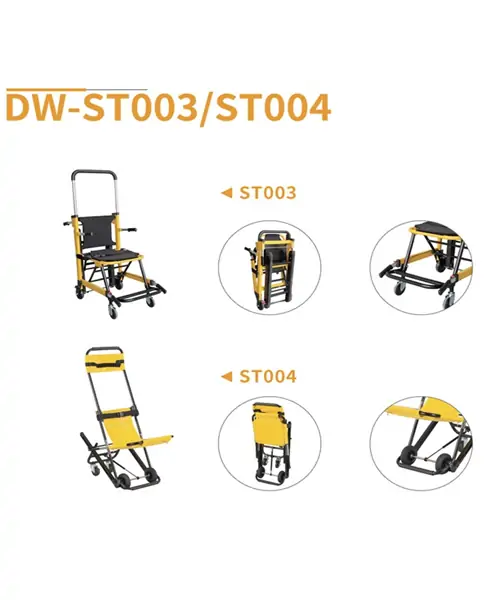
DRAGON’s stair chair stretcher line addresses two critical operational models. The simple configuration requires two operators—one guiding from the front, one supporting from the rear—optimizing for team-based evacuation protocols common in hospitals and large office buildings. The evacuation model enables single-operator use, critical for scenarios where staffing limitations or simultaneous casualties strain response resources during earthquakes and fires.
Material selection reflects lessons from extreme environment testing. The company utilizes 6061 aluminum alloy—typically 1-2mm thicker than industry-standard 6063 variants—to achieve a balance point where frames bend under extreme stress rather than fracturing. This engineering choice emerged from disaster zone feedback where equipment breakage during rough handling created secondary crises. In maritime and coastal applications, corrosion-resistant treatments extend operational lifespans in high-salinity environments.
The customization process begins with architectural analysis. DRAGON’s engineering teams review facility floor plans, measuring stairwell widths, landing dimensions, and doorway clearances. Load capacity calculations factor in demographic data—facilities serving elderly populations may require 300 kg ratings versus 200 kg standards. Handle placement and quantity adjust based on whether institutions deploy two-person or four-person carry teams.
Production scale enables both prototype development and volume manufacturing. The company’s monthly capacity reaches 100 units for complex ambulance stretcher systems, with faster turnaround for stair chair variants. A dedicated 1,000-square-meter showroom facilitates client consultations, allowing procurement teams to test equipment under simulated stairwell conditions before finalizing specifications.
Integration with Broader Rescue Equipment Systems
Effective evacuation planning rarely relies on a single device type. DRAGON’s product matrix illustrates how stair chairs function within comprehensive rescue ecosystems. When casualties require spinal immobilization, vacuum stretchers with TPU material construction provide full-body stabilization before stair chair transfer. For multi-story descents ending in ambulance transport, compatibility with ambulance stretcher chairs—which convert between stretcher and chair configurations—ensures seamless patient handoffs.
In scenarios involving maritime proximity or flood risk, basket stretchers with integrated buoyancy accessories complement stair chairs for water-surface rescue transitions. Military and disaster response teams often pair folding aluminum stretchers—capable of triple or quadruple folding for compact storage—with stair chairs, creating modular kits that adapt to rapidly changing field conditions.
This systems-thinking approach reflects a broader industry shift. Rather than procuring isolated equipment pieces, organizations now seek manufacturers capable of delivering integrated solutions with cross-compatible components, unified training protocols, and consolidated supply chains.
Procurement Considerations for Institutional Buyers
Government agencies and large institutions evaluating custom evacuation stair chair manufacturers should prioritize several validation criteria. Production capacity verification ensures vendors can meet tender volumes without compromising quality—DRAGON’s 1,000+ professional technician workforce and extensive manufacturing footprint provide quantifiable assurance.
Material traceability documentation confirms compliance with safety standards. Aluminum alloy certifications, load testing reports, and flame-resistance ratings for fabric components should accompany proposals. Customization portfolios demonstrating previous project adaptations—such as logo printing for organizational branding, body structure modifications for specific architectural constraints, or drawing-based custom manufacturing—indicate engineering flexibility.
After-sales support structures significantly impact long-term value. Equipment with 5-10 year operational lifespans for aluminum construction requires maintenance guidance, replacement part availability, and potential retrofit services as building codes evolve. Manufacturers offering product manual resources and technical consultation extend equipment utility beyond initial deployment.
Future Directions in Evacuation Technology
Emerging trends suggest continued innovation in stair chair design. Electric assist mechanisms—similar to powered lift systems in modern ambulance stretchers—may reduce operator physical strain during extended descents. Smart sensor integration could provide real-time weight distribution feedback, preventing overload situations. Modular attachment systems might enable single base units to transform between stair chair, corridor stretcher, and vehicle-mount configurations.
However, core principles remain constant. Evacuation equipment must prioritize casualty safety, operator ergonomics, and reliable performance under extreme stress. Custom manufacturing capabilities ensure these principles adapt to the infinite variations of real-world emergency scenarios—from narrow residential staircases to industrial facility catwalks.
For organizations responsible for occupant safety in multi-story environments, partnering with specialized manufacturers like DRAGON represents more than equipment procurement. It constitutes investment in preparedness infrastructure where engineering precision, material science, and operational understanding converge to protect lives when conventional systems fail.
Reviews
There are no reviews yet.