
Custom Stair Climbing Wheelchair Solutions for Emergency Services
Custom stair climbing wheelchairs for emergency services ensure safe, efficient patient transport on stairs, with durable design and easy operation in critical situations.
When emergency responders, healthcare facilities, and residential care providers face the challenge of safely transporting individuals with limited mobility across multiple floors, the limitations of standard equipment become painfully clear. The physical strain on caregivers, the anxiety experienced by patients during stair navigation, and the logistical constraints of buildings without elevator access create a pressing need for specialized mobility solutions. This is where customizable stair-climbing wheelchair technology has emerged as a critical component of modern accessibility infrastructure.
Understanding the Core Challenge
Individuals with limited mobility often face significant physical barriers in environments without elevators, while caregivers encounter high physical strain during stair navigation and emergency evacuations. Traditional mobility devices—designed primarily for flat surfaces—leave a dangerous gap in accessibility infrastructure. For emergency medical services, hospitals, schools, hotels, and residential care settings, this gap translates into operational inefficiencies, safety risks, and compromised patient dignity.
The fundamental question facing procurement managers and facility administrators is not simply whether to acquire stair-climbing equipment, but how to ensure that the equipment precisely matches their unique operational requirements, regulatory obligations, and budget constraints.
The Evolution of Stair-Climbing Mobility Technology
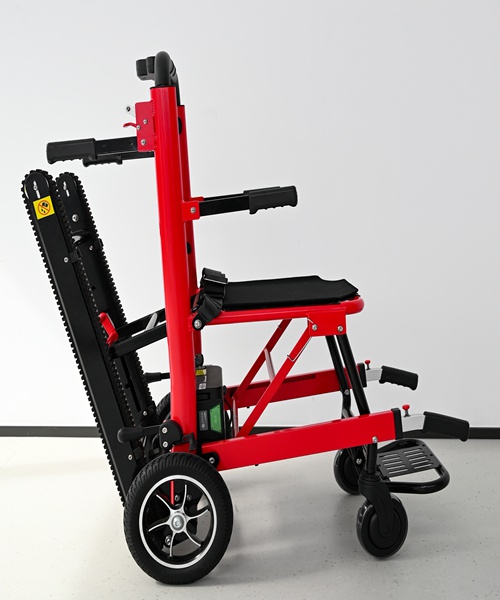
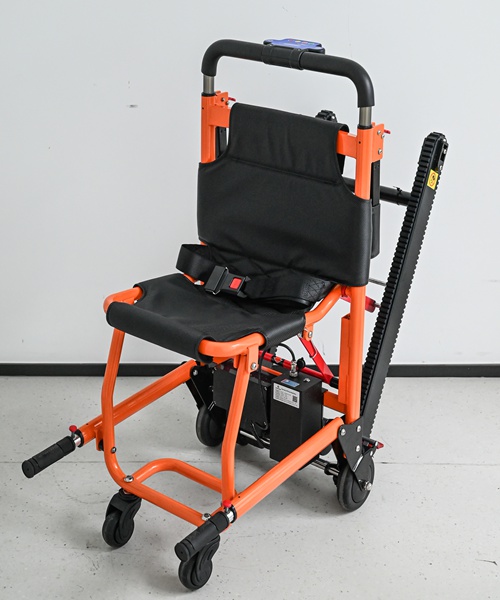
Over the past two decades, stair-climbing wheelchair technology has evolved from basic manual assistance devices to sophisticated motor-powered systems featuring intelligent track-based propulsion and automatic balancing capabilities. Modern electric stair-climbing wheelchairs integrate high-strength aluminum alloy frames with battery-powered track systems that can navigate up to 60 floors or approximately 500 steps on a single charge.
These systems typically feature three critical components: a robust structural frame designed to support loads ranging from 180 kg to 250 kg, an electric propulsion system with intelligent controls offering multiple speed settings, and safety mechanisms including positive locking hinges and forward-locking systems that ensure structural rigidity during operation.
The most significant advancement has been the integration of automatic balancing systems that adjust the seat angle to remain parallel to the ground regardless of stair incline, eliminating patient discomfort and anxiety caused by tilting sensations during ascent or descent.
Why OEM and ODM Services Matter
For organizations procuring stair-climbing wheelchairs—particularly government agencies responding to tenders, healthcare systems standardizing equipment across multiple facilities, or emergency services with specific operational protocols—off-the-shelf solutions frequently fall short of meeting precise requirements.
OEM (Original Equipment Manufacturer) services allow organizations to specify particular components while leveraging an established manufacturing platform. This approach enables customization of elements such as aluminum tube thickness for enhanced durability in high-use environments, fabric materials that meet specific hygiene or fire-resistance standards, and load capacity adjustments to accommodate diverse patient populations.
ODM (Original Design Manufacturer) services provide even greater flexibility, enabling organizations to collaborate on entirely customized designs that address unique operational scenarios. This might include specialized attachment points for medical monitoring equipment, modified dimensions for specific architectural constraints, or integrated features that align with proprietary emergency response protocols.
Key Customization Parameters
Professional manufacturers with expertise in assistive mobility devices, such as Dragon Medical Co., Ltd.(https://www.dragonmfc.com/), offer extensive customization capabilities across several critical parameters:
Structural specifications: Adjustments to frame dimensions, aluminum alloy grade and thickness, powder-coating finishes for corrosion resistance in specific climates, and ground clearance optimization for varied surface conditions.
Load capacity engineering: Standard configurations typically support up to 180 kg, but heavy-duty engineering can extend capacity to 250 kg or even 300 kg to meet government tender requirements or accommodate bariatric patients.
Battery and range customization: While standard imported 24V lithium-ion batteries provide substantial range, organizations with specific operational cycles can specify battery capacity to ensure adequate performance without unnecessary weight.
Safety and control systems: Multi-speed controllers with high, medium, and low settings can be calibrated to organizational protocols, while safety belt configurations, braking systems, and emergency stop mechanisms can be tailored to specific risk management frameworks.
Ergonomic and comfort features: Adjustable components including three-position height-adjustable handlebars, multiple armrest options such as knife-grip, plastic-covered aluminum, or foam padding, and optional cushioning for seats, backrests, and headrests enable organizations to balance cost with user comfort requirements.
Practical Applications Across Sectors
The versatility of customizable stair-climbing wheelchairs makes them valuable across diverse operational contexts:
Healthcare facilities benefit from standardized patient transport solutions that reduce caregiver physical strain by approximately 90 percent while ensuring 100 percent stability during stair navigation, eliminating risks of wobbling or tipping during routine floor transfers or elevator maintenance periods.
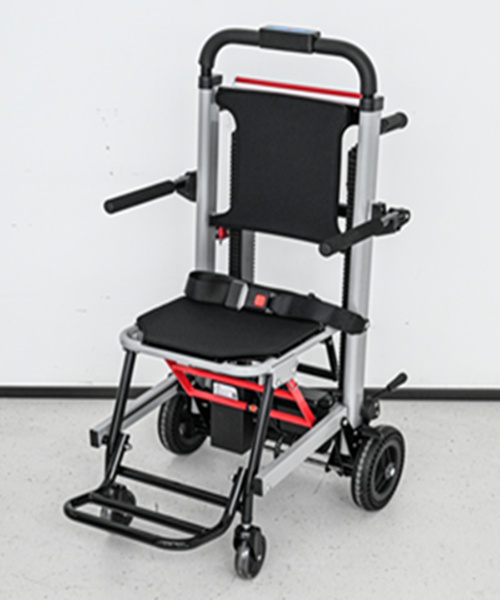
Emergency response units require portable, rapidly deployable systems. Foldable designs that can be stored compactly in vehicles yet quickly assembled for evacuation scenarios represent a critical capability. The ability to navigate stairs with a single operator while maintaining patient security transforms emergency evacuation protocols.
Residential care settings serving elderly populations living in multi-story homes without elevators face the challenge of preventing social isolation. Equipment that enables single-person assistance for outdoor access fundamentally changes quality of life while reducing family caregiver burden.
Educational institutions and hospitality venues must comply with accessibility regulations and emergency preparedness standards. Customized solutions that integrate with existing safety protocols and architectural constraints demonstrate due diligence in occupational health and safety management.
Selecting a Manufacturing Partner
When evaluating OEM and ODM partners for stair-climbing wheelchair procurement, several factors warrant careful consideration:
Manufacturing experience and specialization: Providers with over 20 years of specialized experience in emergency rescue and safety protection equipment bring deep domain expertise. Established manufacturers like Dragon Medical operate modern production facilities exceeding 50,000 square feet with dedicated showrooms, indicating serious investment in quality infrastructure.
Technical capabilities: Proprietary research and development in areas such as intelligent track-propulsion systems, smart control architecture, and automatic balancing technology demonstrate innovation capacity beyond basic manufacturing.
Global supply chain reliability: Manufacturers maintaining ample inventory for consistent international supply while supporting bespoke manufacturing through custom orders provide the flexibility organizations require. Global business coverage across Europe, North America, South America, Australia, the Middle East, and Southeast Asia indicates established logistics networks.
Compliance and safety standards: Products designed to meet international safety standards for assistive medical devices ensure regulatory compliance across jurisdictions.
Service and support infrastructure: Comprehensive charging system guidance, maintenance protocols for track tension and adjustable components, and after-sales technical support represent essential elements of total cost of ownership.
Making Customization Work
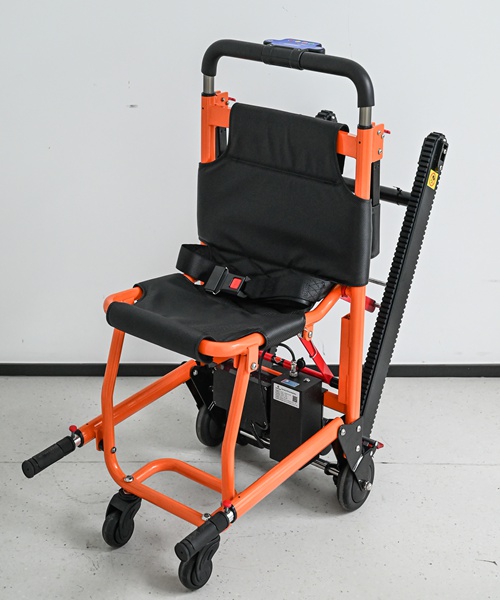
Successful implementation of customized stair-climbing wheelchair solutions requires clear communication between procurement teams and manufacturing partners. Organizations should prepare detailed specifications including:
- Precise load capacity requirements based on patient population demographics
- Environmental conditions including climate factors, typical stair configurations, and surface materials
- Operational protocols defining speed preferences, battery life expectations, and deployment frequency
- Regulatory and compliance obligations including safety certifications, material restrictions, and documentation requirements
- Budget parameters with clear understanding of how customization impacts unit economics
Manufacturers offering value-based pricing structures that range from affordable classic models to premium technology-integrated systems provide the flexibility to balance capability against budget constraints.
The Future of Accessible Mobility
As populations age and accessibility expectations evolve, the demand for specialized mobility solutions will only intensify. Organizations that proactively invest in customized equipment—precisely calibrated to their unique operational contexts—position themselves to deliver superior care, enhance safety outcomes, and demonstrate genuine commitment to inclusive accessibility.
The transformation of stair navigation from a physical challenge into a safe, effortless process represents more than technical achievement; it embodies a fundamental commitment to human dignity and operational excellence. For organizations seeking to implement or upgrade their mobility assistance capabilities, partnering with experienced OEM and ODM manufacturers offers the pathway to solutions that truly fit.

Reviews
There are no reviews yet.