
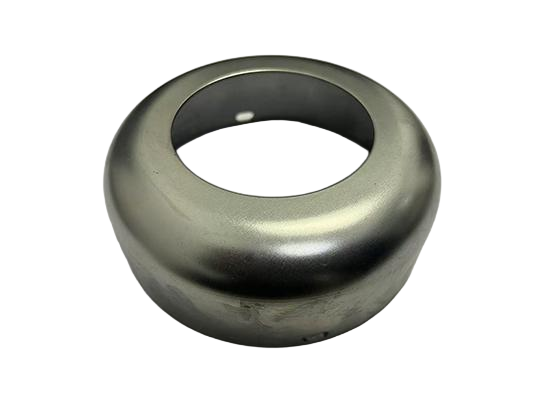
Electroplated Motor Fan Cover
Professional Manufacturer of High-Quality Laundry Appliance Components
Electric motors are widely used in industrial equipment, household appliances, air conditioning systems, and ventilation products. During operation, many motors rely on external cooling fans to circulate air and help control operating temperatures. Protecting these rotating components while maintaining sufficient airflow is therefore an important part of motor design.
An electroplated motor fan cover serves this purpose by providing a protective structure around the cooling fan. Its open design allows air to pass through, while the metal enclosure helps reduce accidental contact with rotating blades and limits the entry of larger foreign objects.
In addition to its mechanical function, an electroplated surface finish can improve the appearance of the component and provide additional corrosion protection, depending on the selected plating process.
For motor manufacturers and component buyers, understanding the structure, material, surface treatment, and dimensional requirements of a fan cover is essential when selecting a suitable product.
1. What Is an Electroplated Motor Fan Cover?
An electroplated motor fan cover is a metal protective component installed around the external cooling fan of an electric motor. It is designed to create a physical barrier between the rotating fan and the surrounding environment without unnecessarily obstructing the airflow required for cooling.
When a motor operates, its cooling fan generates airflow that helps dissipate heat from the motor housing and internal components. The fan cover must therefore balance two important functions: physical protection and ventilation.
A well-designed cover generally includes a main protective body, ventilation openings, an outer edge or flange, and mounting features. Depending on the motor configuration, the design may also incorporate specific reinforcement structures and clearance areas.
The electroplating process adds a metallic coating to the component surface. Depending on the selected plating material and treatment specifications, this coating can help improve corrosion resistance and provide a consistent metallic appearance.
For customized motor assemblies, the fan cover should be designed according to the actual fan dimensions, mounting arrangement, and operating conditions.
2. Key Functions of a Motor Fan Protective Cover
Although a motor fan cover may appear to be a relatively simple metal component, its design directly affects the protection and ventilation arrangement of the motor assembly.
Protection Against Accidental Contact
External motor fans contain rotating blades that may create a contact hazard if they are left exposed. A properly installed fan cover provides a physical barrier that helps reduce the possibility of accidental contact.
The cover can also limit the entry of larger foreign objects into the fan area. The actual protection level depends on the grille arrangement, opening dimensions, structural strength, and installation clearance.
For applications with specific machinery safety requirements, the complete fan guard assembly should be evaluated against the applicable safety standards.
Maintaining Cooling Airflow
Motor cooling depends on the movement of air around the fan and motor housing. If a protective cover restricts airflow excessively, it may affect the cooling system's performance.
For this reason, ventilation openings are an important part of fan cover design. Their size, number, distribution, and overall open-area ratio should be considered in relation to the fan diameter, blade configuration, and motor cooling requirements.
An effective design aims to provide sufficient physical screening while keeping airflow resistance within acceptable limits.
Supporting Mechanical Stability
A motor fan cover must remain securely attached during normal operation. Motor vibration, fastening forces, handling, and transportation can all place demands on the component's structural stability.
Material thickness, forming accuracy, edge design, and mounting-point strength should therefore be considered during product development.
3. Why Electroplating Matters for Motor Fan Covers
Surface treatment is an important consideration for metal motor components. Electroplating is an electrochemical process that deposits a thin metallic layer onto a conductive substrate.
During the process, the workpiece is immersed in an electrolyte containing metal ions. When an electrical current is applied, metal ions are deposited onto the component surface.
The selected plating system determines the coating's properties and appearance.
Improved Corrosion Protection
Electroplating can help protect a metal substrate from environmental exposure. For example, zinc electroplating is commonly used on suitable steel components because zinc provides both barrier protection and sacrificial protection under appropriate conditions.
The actual corrosion resistance depends on several factors, including:
-
Type of plating metal.
-
Coating thickness.
-
Surface pretreatment.
-
Coating coverage and continuity.
-
Passivation and sealing processes.
-
Operating temperature and environmental exposure.
For motor components used in humid or demanding environments, buyers should specify the required plating system and corrosion-test criteria rather than relying only on a general description such as corrosion-resistant finish.
Consistent Metallic Appearance
Electroplating can provide a uniform metallic surface that improves the visual consistency of motor components.
Depending on the selected process, the finish may be bright, semi-bright, or matte. The final appearance is influenced by the quality of the original substrate, cleaning procedures, plating conditions, and post-treatment.
This is particularly relevant when the fan cover remains visible after the motor has been assembled into the finished product.
Additional Surface Properties
Certain plating systems can provide improved surface hardness or other functional characteristics. However, these properties vary according to the deposited metal and processing conditions.
Manufacturers should select the appropriate plating system according to the component's intended function rather than assuming that all electroplated surfaces offer identical performance.
4. Important Structural Features of an Electroplated Motor Fan Cover
The structure of a motor fan cover should be developed around the dimensions and operating requirements of the complete motor assembly.
Different motor models may have different fan diameters, blade arrangements, mounting positions, and clearance requirements. Therefore, a cover designed for one motor cannot automatically be considered compatible with another.
The following structural elements are particularly important.
| Component | Main Function | Design Considerations |
|---|---|---|
| Main cover body | Provides the primary protective structure | Material thickness, shape, and rigidity |
| Ventilation openings | Allow cooling airflow to pass through | Opening size and open-area ratio |
| Outer edge or flange | Supports the cover structure and installation | Forming accuracy and edge strength |
| Mounting holes | Connect the cover to the motor assembly | Hole position and fastening compatibility |
| Electroplated surface | Provides metallic surface protection and appearance | Plating type, thickness, and adhesion |
| Fan clearance area | Maintains separation from rotating blades | Installation tolerance and operating clearance |
These features should be coordinated during the engineering stage to avoid installation problems or unnecessary airflow restrictions.
For customized orders, providing a complete motor assembly drawing or a physical sample can help the manufacturer evaluate the required dimensions and structure.
5. How Electroplated Motor Fan Covers Are Manufactured
Producing a consistent electroplated motor fan cover requires coordination between metal fabrication, surface preparation, electroplating, and final inspection.
Although the exact manufacturing process depends on the product design and base material, a typical production route includes several stages.
Step 1: Material Selection and Preparation
The production process begins with selecting the appropriate metal substrate according to the required strength, thickness, formability, and surface treatment compatibility.
Incoming materials should be inspected to verify their specifications and surface condition.
Step 2: Cutting and Metal Forming
The metal sheet is processed into the required shape through suitable cutting, stamping, bending, or other forming operations.
During this stage, manufacturers need to control the overall dimensions, grille geometry, mounting holes, and outer edge profile.
Accurate forming is important because dimensional variation may affect the installation position and clearance between the protective cover and the fan blades.
Step 3: Surface Pretreatment
Before electroplating, the workpiece must undergo appropriate cleaning and surface preparation.
Oil, grease, oxidation, and manufacturing residues can interfere with the deposition process. Inadequate pretreatment may result in uneven coating, poor adhesion, or incomplete surface coverage.
The cleaning and activation procedures should be compatible with the substrate and selected plating chemistry.
Step 4: Electroplating and Post-Treatment
During electroplating, a metallic layer is deposited onto the prepared component through an electrochemical reaction.
After plating, additional procedures such as rinsing, passivation, sealing, or drying may be required according to the selected coating specification.
These processes help achieve the required surface condition and corrosion-protection performance.
Step 5: Final Inspection
Finished components should be inspected for dimensional accuracy, coating defects, sharp edges, and possible deformation.
Mounting areas, ventilation openings, and fan clearance dimensions deserve particular attention because they directly affect assembly compatibility and functional performance.
6. Technical Specifications Buyers Should Confirm
When purchasing an electroplated motor fan cover, buyers should confirm the actual product specifications before production. General product descriptions are not sufficient for determining whether a component will fit a specific motor assembly.
The following table provides a reference checklist.
| Parameter | Specification |
|---|---|
| Product Name | Electroplated Motor Fan Cover |
| Product Type | Electric Motor Cooling Fan Protective Cover |
| Main Function | Physical fan protection and ventilation support |
| Base Material | Confirm according to product drawing |
| Manufacturing Process | Cutting, stamping, forming, or other specified processes |
| Surface Treatment | Electroplating |
| Plating Metal | Confirm according to requirements |
| Plating Thickness | Confirm according to technical specification |
| Overall Diameter | Customized according to motor dimensions |
| Overall Height or Depth | Customized according to motor design |
| Material Thickness | Confirm according to structural requirements |
| Ventilation Opening | Customized according to airflow requirements |
| Mounting Structure | Designed to match the motor assembly |
| Corrosion Resistance | Based on agreed testing requirements |
| Application | Electric motor cooling assemblies |
For engineering approval, the most important details include the base material, finished dimensions, plating system, coating thickness, mounting structure, and fan blade clearance.
Where cooling performance is critical, buyers should also define the required ventilation opening arrangement and any applicable airflow evaluation criteria.
7. Design Factors That Influence Product Performance
Selecting a motor fan cover based only on its external diameter may lead to compatibility problems. Several additional engineering factors should be evaluated.
Ventilation Opening Design
The grille structure determines how air passes through the cover. An opening arrangement that is too restrictive may increase airflow resistance, while excessively large openings may reduce the level of physical screening.
The design should be evaluated together with the fan's airflow characteristics and motor cooling requirements.
Clearance Between the Cover and Fan Blades
Sufficient clearance must be maintained between the protective cover and the rotating fan blades.
The design should account for dimensional tolerances, motor vibration, shaft movement, and possible structural deformation. Insufficient clearance may cause friction, noise, or damage during operation.
Material Thickness and Structural Strength
The material must provide sufficient rigidity to maintain the cover's shape during installation and normal operation.
Material thickness, forming geometry, reinforcement features, and fastening arrangements all influence the final structural performance.
Plating Thickness and Dimensional Tolerance
Electroplating adds a metallic layer to the substrate. Although the coating may be relatively thin, it can influence critical dimensions, especially around mounting holes and close-fitting interfaces.
For precision assemblies, manufacturers should consider the finished dimensions after plating when establishing production tolerances.
Operating Environment
The required surface treatment depends on where the motor will operate.
Indoor household appliances, industrial equipment, and motors used in humid environments may require different corrosion-protection specifications.
The plating metal and post-treatment should be selected according to the expected environmental exposure and the customer's performance requirements.
8. Applications Across Different Motor Industries
Electroplated motor fan covers can be used in various applications involving external motor cooling fans.
Industrial Electric Motors
Industrial motors often operate for extended periods and require effective heat dissipation. A properly designed fan cover provides a protective barrier while supporting the motor's ventilation arrangement.
Air Conditioning Equipment
Air conditioning systems use motor-driven components that require suitable cooling and protective structures. Fan covers can be customized according to motor dimensions and equipment assembly requirements.
Household Appliance Motors
Certain household appliances use motors equipped with external cooling fans. Electroplated covers can provide a metallic finish and a protective structure suitable for the intended appliance design.
Ventilation and Blower Equipment
Motors used in ventilation systems and blowers may require protective covers around rotating fan components. The cover should be designed according to the fan configuration, airflow direction, and installation environment.
Customized Motor Assemblies
For specialized equipment, customized fan covers can be manufactured according to engineering drawings or physical samples. Dimensions, grille openings, mounting features, and plating specifications can be adjusted to suit different motor configurations.
9. Quality Inspection for Electroplated Motor Fan Covers
Product quality depends on both the mechanical structure and the surface treatment. A visually attractive metallic finish does not necessarily indicate that the component meets all functional requirements.
A practical inspection process may include the following items:
| Inspection Item | Purpose | Typical Inspection Method |
|---|---|---|
| Overall dimensions | Confirm assembly compatibility | Calipers and dimensional gauges |
| Material thickness | Verify substrate specifications | Thickness measurement |
| Ventilation openings | Check grille geometry | Visual and dimensional inspection |
| Mounting-hole position | Confirm installation accuracy | Gauges or measuring fixtures |
| Edge quality | Identify burrs and sharp edges | Visual inspection |
| Plating thickness | Verify coating specifications | Suitable coating thickness gauge |
| Coating adhesion | Evaluate coating bonding | Agreed adhesion test |
| Corrosion resistance | Assess surface protection | Specified corrosion test |
| Fan clearance | Confirm separation from rotating blades | Trial assembly and dimensional inspection |
For repeat production, an approved drawing and inspection plan should define the critical dimensions and coating requirements. Customers may also request sample approval, first-article inspection, or batch inspection according to their procurement procedures.
10. Custom Electroplated Motor Fan Cover Manufacturing
Motor manufacturers often use different fan sizes, housing structures, and installation arrangements. Standardized components may therefore not satisfy every project requirement.
Customized manufacturing allows the fan cover to be developed according to the actual motor assembly.
Zhenjiang Caiyun Electric Appliance Co., Ltd. supports motor component manufacturing based on customer drawings, samples, and technical specifications.
Customization can cover several areas:
-
Overall diameter, height, and structural profile.
-
Base material and material thickness.
-
Ventilation opening size and arrangement.
-
Outer edge and reinforcement structure.
-
Mounting holes and fastening method.
-
Electroplating metal and surface appearance.
-
Coating thickness and post-treatment.
-
Dimensional tolerances and inspection requirements.
-
Packaging and production batch requirements.
For an accurate quotation and technical evaluation, buyers are encouraged to provide 2D drawings, 3D models, or physical samples. Information about fan diameter, blade configuration, mounting position, and required clearance is particularly useful.
The plating specification should also clearly identify the required metal, coating thickness, post-treatment, and corrosion-test criteria. This helps ensure that both parties understand the expected surface finish and performance.
11. Why Work with Zhenjiang Caiyun Electric Appliance Co., Ltd.?
Founded in 1991, Zhenjiang Caiy
Related products
-
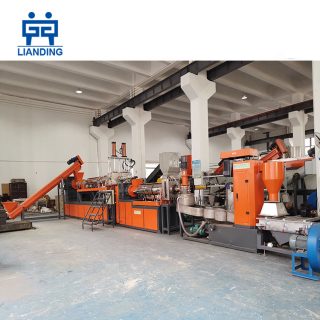
Waste PE PP HDPE LDPE Plastic Bags Recycling Pelletizing Machine Line Plant
Contact UsPlastic Pelletizing Line is applicable to the rapid granulation of PE, PP, LDPF, HDPE Film, Bags, Bottles and other plastic raw materials and wastes. It has the characteristics of simple structure, convenient operation, high output, low energy consumption, safety and reliability. The output of our granulator ranges from 100 kg to 1000 kg per hour. Our machines can be customized according to your requirements.
-
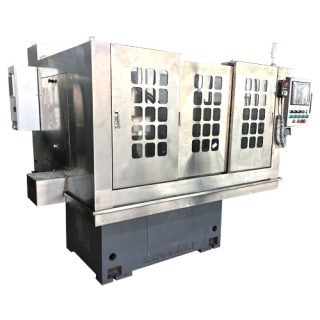
3MG132G CNC automatic track grinder for ball bearing inner ring
Contact UsType: high precision bearing grinder
Abrasives: diamond wheel
Controlling Mode: CNC
Processing Mode: fully automatic
Precision: high precision
Certification: GS, CE, ISO 9001
Customisation: upon request
Place of Origin: Wuxi, China
Machining Accuracy Grade: P4/P5
External Dimensions: 2070mm*1320mm*1880mm
MOQ: 1 set
DM: 3 months
Packaging: three-ply board

Reviews
There are no reviews yet.