
Evacuation Stair Chair: Expert Guide to Selection & Safety
DRAGON Evacuation Stair Chairs ensure safe, smooth patient transport on stairs with durable design, easy operation, and reliable emergency performance.
In emergency situations where every second counts, the right evacuation equipment can mean the difference between life and death. Evacuation stair chairs have become indispensable tools for emergency medical services, fire departments, hospitals, and building safety managers worldwide. This comprehensive guide explores what makes a quality stair chair, key selection criteria, and how leading manufacturers are addressing critical safety challenges.
Understanding Evacuation Stair Chair Technology
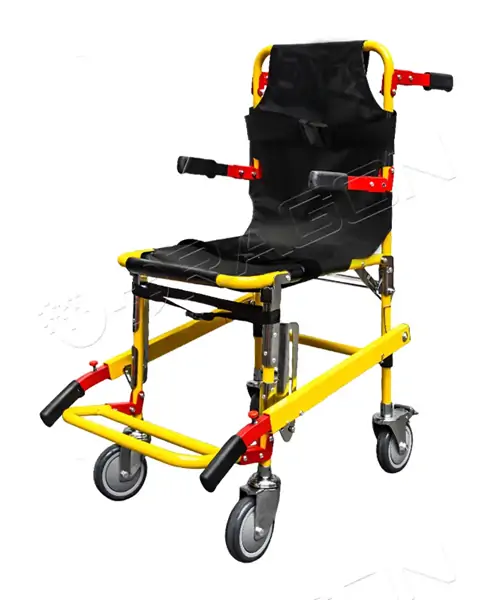
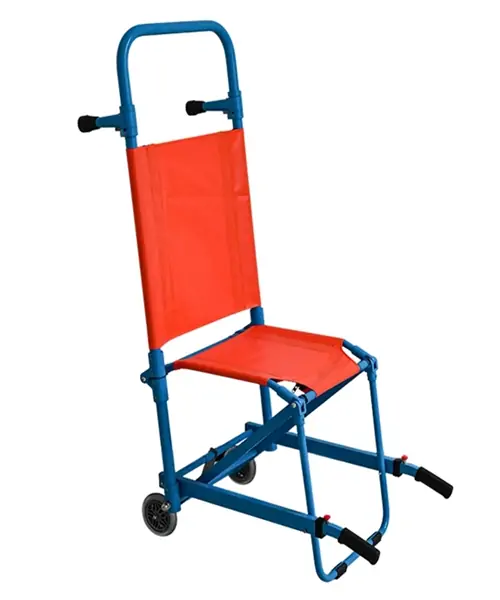
Evacuation stair chairs, also known as emergency descent chairs or stairway evacuation devices, are specialized mobility equipment designed to safely transport individuals down staircases during emergencies when elevators are unavailable or unsafe to use. Unlike standard wheelchairs, these chairs feature unique design elements that enable controlled descent on stairs while minimizing physical strain on operators.
The fundamental challenge these devices address is urgent: high-rise buildings and multi-story facilities require rapid evacuation solutions for individuals with mobility limitations during fires, earthquakes, or other emergencies. Traditional carrying methods pose significant injury risks to both patients and rescuers, while standard stretchers cannot navigate narrow stairwells effectively.
Modern stair chairs employ several key technological approaches. Track-based systems utilize treads or wheels that roll smoothly over stair edges, while braking mechanisms provide controlled descent speed. Ergonomic handle placement allows operators to maintain proper body mechanics, and patient restraint systems ensure occupant safety during transport.
Critical Selection Criteria for Evacuation Stair Chairs
Operational Efficiency and Manpower Requirements
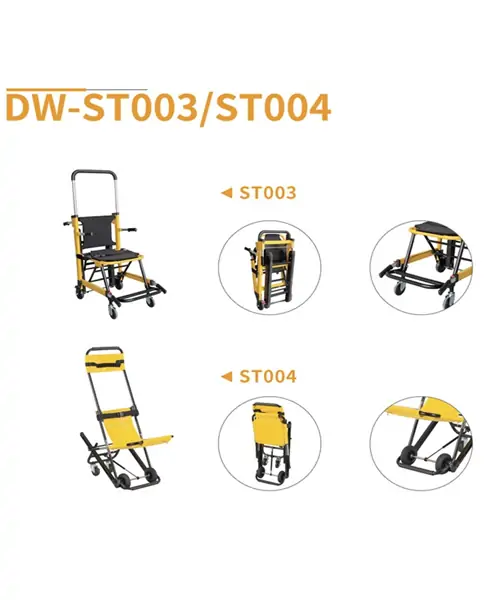
One of the most important differentiators in stair chair design is the number of operators required. Traditional models typically require two trained personnel—one at the front and one at the rear—to safely navigate staircases. However, advanced single-operator evacuation models have emerged as game-changers for emergency response.
DRAGON Stretcher Manufacturing Co., Ltd.(https://www.dragonmfc.com/), a specialized emergency medical equipment manufacturer with over 20 years of experience, has developed stair chair stretchers available in both configurations. Their simple model accommodates traditional 2-operator protocols, while their evacuation model enables 1-operator functionality—a critical advantage during earthquake and fire evacuations when personnel resources may be stretched thin.
The single-operator capability becomes especially valuable in scenarios where emergency responders must evacuate multiple individuals from upper floors with limited staff. This design innovation directly addresses the operational efficiency pain point that emergency managers face during mass casualty incidents.
Load Capacity and Structural Integrity
Weight capacity represents another fundamental specification that cannot be compromised. Quality stair chairs must safely accommodate diverse patient populations while maintaining structural integrity under stress conditions.
Industry-leading models typically support 200-250 lb (approximately 90-115 kg) loads as a baseline. However, facilities serving diverse populations should consider models with higher capacities. The structural materials play a crucial role here—lightweight aluminum alloy frames provide the optimal balance between portability and strength, while high-grade nylon fabric with reinforced stitching ensures tear resistance during repeated use.
DRAGON’s stair chair solutions incorporate multiple handle configurations—up to 12 handles in some models—strategically positioned to distribute lifting forces and provide secure grip points for operators navigating uneven terrain or tight corners. This design consideration reflects real-world operational challenges documented in emergency response case studies.
Portability and Storage Considerations
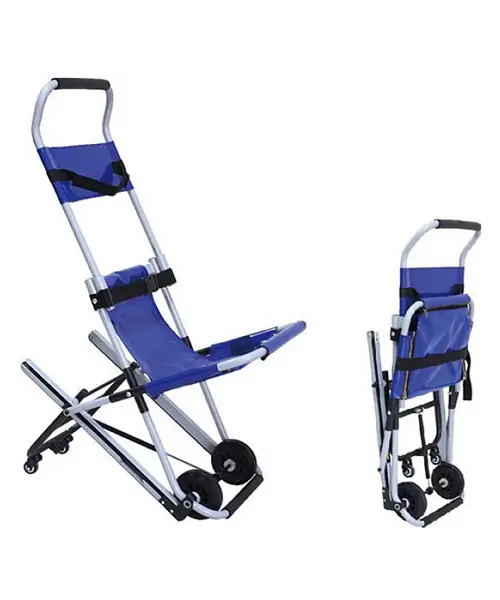
The practical reality of emergency equipment is that it must be readily accessible yet unobtrusive during non-emergency periods. Evacuation stair chairs that fold compactly enable storage in designated emergency equipment locations throughout buildings without consuming excessive space.
Facilities should evaluate the folded dimensions relative to their storage areas—wall-mounted brackets, emergency equipment cabinets, or dedicated response vehicle compartments. The deployment speed is equally important: chairs that unfold and lock into operational configuration within seconds ensure no delays during crisis response.
Real-World Performance: Case Studies and Applications
Earthquake and Fire Evacuation Scenarios
During seismic events and building fires, vertical evacuation becomes the primary lifesaving strategy when elevators automatically shut down or become hazardous. Emergency response teams face the challenge of rapidly moving mobility-impaired individuals from upper floors through smoke-filled or structurally compromised stairwells.
DRAGON’s evacuation model stair chair has been specifically engineered for these high-stress scenarios. The single-operator capability proves invaluable when emergency personnel must make multiple trips or when team members are diverted to other critical tasks such as fire suppression or search operations.
Field reports from emergency management agencies indicate that facilities equipped with modern evacuation stair chairs achieve significantly faster evacuation times compared to traditional carrying methods, while reducing operator fatigue and injury rates.
Hospital and Healthcare Facility Implementation
Healthcare environments present unique evacuation challenges due to patient populations with varying mobility levels and medical conditions. Hospitals, rehabilitation centers, and long-term care facilities require evacuation equipment that accommodates patients connected to monitoring equipment or receiving ongoing treatment.
Quality stair chairs designed for healthcare applications feature smooth surface materials that facilitate decontamination between uses, radial transparency for certain diagnostic procedures, and compatibility with patient restraint systems that prevent displacement during transport.
The integration of evacuation stair chairs into hospital emergency preparedness protocols has become a regulatory compliance consideration in many jurisdictions, with accreditation standards requiring documented evacuation capabilities for all facility levels.
High-Rise Residential and Commercial Buildings
Building managers and corporate safety directors face the challenge of providing equitable evacuation capabilities for occupants with disabilities or temporary mobility limitations. Modern building codes increasingly mandate accessible evacuation solutions beyond traditional refuge areas.
Evacuation stair chairs stored on multiple floors provide a practical solution that complies with accessibility regulations while maintaining operational feasibility. The chairs enable designated floor wardens or security personnel to assist occupants during evacuations without requiring specialized medical training.
Material Technology and Durability Factors
The longevity and reliability of evacuation equipment directly impacts both safety outcomes and total cost of ownership. Material selection represents a critical engineering decision that balances multiple performance requirements.
Frame Construction Materials
Aluminum alloy frames have emerged as the industry standard for professional-grade stair chairs, offering superior strength-to-weight ratios compared to steel alternatives. DRAGON Stretcher Manufacturing utilizes 6061 aluminum alloy in their stretcher products—a material choice that provides enhanced durability compared to the more common 6063 alloy.
The differentiation lies in material properties: 6061 alloy offers higher tensile strength and better resistance to bending under load, which translates to equipment that can withstand rough handling in disaster zones without structural failure. This engineering approach extends equipment lifespan to 5-10 years for aluminum-based products when properly maintained.
Fabric and Surface Materials
The patient contact surfaces require materials that balance comfort, cleanability, and durability. High-grade nylon fabric construction provides tear resistance and water resistance while remaining lightweight. The fabric must withstand repeated cleaning with hospital-grade disinfectants without degradation.
For specialized applications, manufacturers may incorporate fire-resistant treatments or antimicrobial surface technologies to address specific operational environments. The fabric attachment system—typically reinforced stitching or welded construction—represents a critical failure point that quality manufacturers address through redundant attachment methods.
Maintenance Requirements and Lifecycle Management
Evacuation equipment effectiveness depends on proper maintenance protocols and regular inspection cycles. Organizations must establish documented inspection schedules that verify structural integrity, mechanical function, and cleanliness standards.
Pre-use inspection checklists should confirm that frame components show no cracks or deformation, fabric surfaces remain intact without tears, restraint systems function properly, and moving parts operate smoothly. Post-incident inspections document any damage or wear requiring repair or replacement.
DRAGON Stretcher Manufacturing provides product manual guidance for maintenance and lifespan management, enabling facility managers to implement evidence-based replacement cycles. The company’s extensive production infrastructure—including a 500,000-square-meter modern production base and over 1,000 professional technicians—ensures stable supply chains for replacement equipment and components.
Making the Selection: Key Takeaways
When evaluating evacuation stair chair options, decision-makers should prioritize these critical factors:
Operator requirements: Single-operator capability provides maximum flexibility during resource-constrained emergencies while 2-operator models may offer additional stability for certain patient populations.
Load capacity specifications: Select models that accommodate your facility’s population demographics with appropriate safety margins.
Material quality: Aluminum alloy frames with high-strength fabric construction provide optimal durability and longevity.
Deployment speed: Rapid unfolding and securing mechanisms ensure no delays during crisis response.
Maintenance accessibility: Clear documentation and available replacement parts support long-term operational readiness.
Manufacturer credibility: Established manufacturers with extensive production experience and global supply capabilities ensure equipment reliability and support availability.
Organizations seeking specialized evacuation solutions benefit from working with manufacturers offering OEM and ODM customization capabilities—enabling equipment specifications tailored to unique facility requirements, operational protocols, or regulatory environments.
DRAGON Stretcher Manufacturing’s positioning as a specialized emergency medical equipment manufacturer with over two decades of experience supplying international aid projects and medical rescue operations demonstrates the level of expertise required for mission-critical evacuation equipment. Their 1,000+ square meter showroom facility and comprehensive product development capabilities reflect the infrastructure necessary to support global emergency preparedness requirements.
The investment in quality evacuation stair chairs represents a fundamental commitment to life safety and regulatory compliance. As building codes evolve and accessibility standards advance, organizations that proactively implement comprehensive evacuation solutions position themselves as industry leaders in emergency preparedness and occupant protection.
Reviews
There are no reviews yet.