
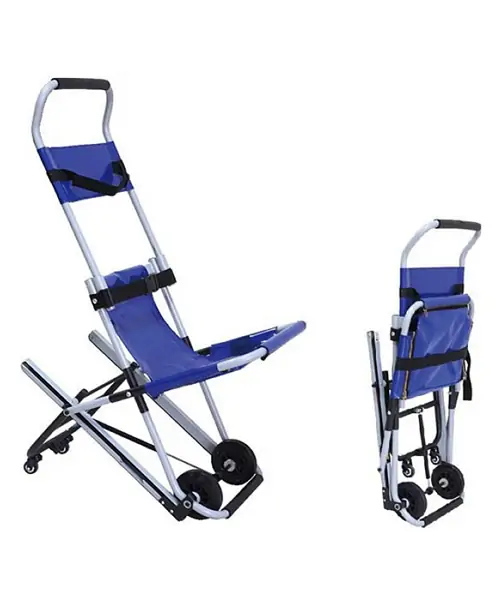
Evacuation Stair Chair Solutions for Modern Emergency Response
Evacuation stair chairs provide safe, fast, and reliable patient transport during emergencies, improving evacuation efficiency in hospitals, offices, and public spaces.
When disaster strikes and elevators fail, emergency responders face a critical challenge: how to safely evacuate patients from multi-story buildings through narrow stairwells. This scenario—whether during fires, earthquakes, or medical emergencies in high-rise residential complexes—demands specialized equipment that balances patient safety, operator efficiency, and spatial constraints.
Understanding the Evacuation Stair Chair Challenge
Traditional stretchers become nearly impossible to maneuver in confined stairwells, creating dangerous bottlenecks during time-sensitive evacuations. Emergency medical services (EMS) personnel routinely encounter situations where standard transport equipment simply cannot navigate the tight turns and vertical descents required in modern building architecture. The consequences extend beyond operational delays—improper patient handling during stair navigation can cause secondary injuries, while physical strain on responders leads to fatigue-related safety incidents.
The fundamental problem lies in the intersection of three competing demands: maintaining patient immobilization and comfort, enabling controlled descent by limited personnel, and fitting through doorways and stair landings that often measure less than 36 inches wide. These constraints have driven the evolution of purpose-built evacuation stair chairs as essential components of emergency medical equipment inventories worldwide.
Key Features Defining Effective Stair Chair Design
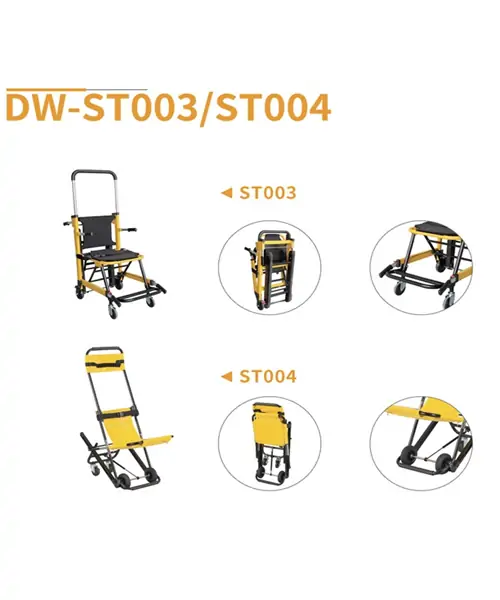
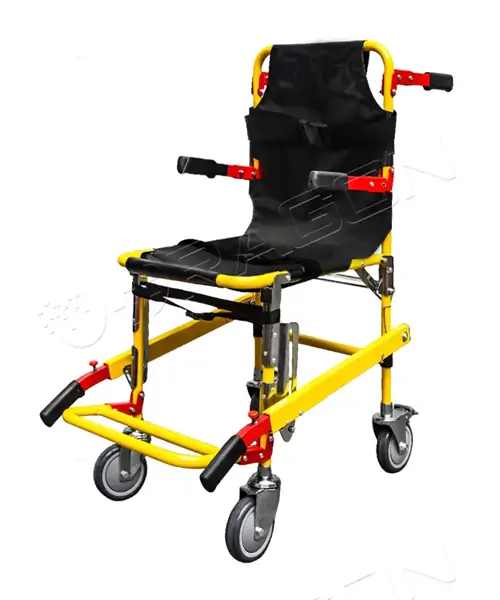
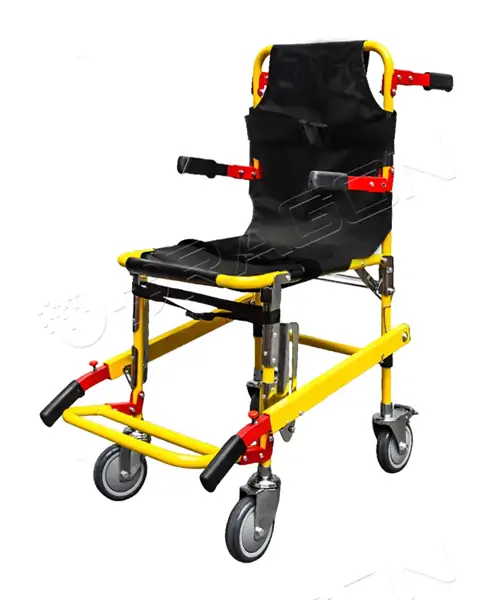
Modern evacuation stair chairs incorporate several critical engineering elements that address real-world rescue scenarios. The most significant distinction lies in operational models—simple evacuation chairs require two operators for safe deployment, while advanced evacuation models enable single-operator functionality through integrated track systems and controlled descent mechanisms.
Load capacity represents another non-negotiable specification. Professional-grade stair chairs must safely support weights ranging from 200 to 300 pounds, accommodating diverse patient populations including bariatric cases. This capacity must maintain structural integrity during the dynamic stresses of stairwell transport, where sudden weight shifts occur during descent.
Material selection directly impacts both durability and portability. High-strength aluminum alloys—particularly 6061 aluminum—provide superior bend-without-break characteristics compared to standard 6063 alloys commonly found in budget equipment. The thickness differential matters significantly; premium manufacturers specify tubing 1-2mm thicker than industry baseline standards, substantially extending equipment lifespan under repetitive stress conditions.
Handle placement and quantity deserve particular attention. Configurations featuring multiple strategic handholds—some advanced models incorporate up to 12 handles—allow rescuers to redistribute grip positions during prolonged evacuations, reducing fatigue and maintaining controlled patient movement on irregular stair geometries.
Customization Considerations for Institutional Procurement
Organizations procuring stair chairs for government tenders, hospital systems, or large-scale emergency preparedness programs benefit from understanding available customization pathways. Manufacturers with established OEM (Original Equipment Manufacturer) and ODM (Original Design Manufacturer) capabilities can tailor equipment specifications to match specific operational requirements and regulatory environments.
Logo and branding integration serves practical identification purposes beyond simple aesthetics. In large-scale disaster responses involving multiple agencies, clearly marked equipment facilitates asset tracking and chain-of-custody protocols. Custom color schemes can align with organizational standards or enhance visibility in low-light emergency conditions—the standard high-visibility orange fabric used in many rescue applications provides immediate visual recognition in smoke-filled or dark environments.
Structural customization options address varied deployment scenarios. Folding mechanisms can be engineered for specific storage constraints, whether in ambulance compartments, building emergency stations, or aircraft cargo holds. Weight distribution can be optimized based on typical patient demographics—pediatric facilities require different specifications than adult trauma centers or senior care facilities.
Material specifications offer another customization dimension. While aluminum frames provide standard durability, certain maritime or industrial environments benefit from enhanced corrosion resistance through specialized alloys or protective coatings. Fabric selection extends beyond standard vinyl to include fire-resistant treatments, antimicrobial surfaces for infection control, or materials meeting specific regulatory certifications for aviation or military applications.
Manufacturer Capabilities That Support Large-Scale Deployment
Successful implementation of stair chair programs—particularly for government tenders or multi-facility healthcare systems—requires manufacturer infrastructure beyond product design. Production capacity determines delivery timelines for bulk orders; facilities with dedicated production bases spanning hundreds of thousands of square meters can maintain supply chain stability for large-scale procurements.
DRAGON Stretcher Manufacturing Co., Ltd.(https://www.dragonmfc.com/) exemplifies this production scale approach with a 500,000-square-meter modern production base and over 1,000 professional technicians supporting both standard and custom manufacturing. Their 20+ years of specialized experience in emergency medical equipment manufacturing provides institutional buyers with supply chain reliability for multi-year procurement contracts.
Technical support infrastructure matters equally for long-term deployment success. Comprehensive product manuals guide maintenance protocols that extend equipment lifespan—properly maintained aluminum stair chairs deliver 5-10 years of operational service. Organizations should verify manufacturers provide detailed guidance on inspection schedules, component replacement procedures, and storage requirements that preserve structural integrity between emergency deployments.
Integration with Broader Emergency Transport Systems
Evacuation stair chairs function as one component within comprehensive patient transport ecosystems. Effective emergency preparedness strategies consider how stair chairs interface with other equipment in the response chain. For example, patients transferred from stair chairs to ambulance stretchers require compatible width dimensions to prevent transfer delays. Similarly, spinal boards may need to fit within stair chair frames for patients requiring immobilization during evacuation.
Multi-scenario preparedness demands equipment versatility. Some advanced stair chair designs incorporate convertible features—transforming between chair and stretcher configurations to adapt from vertical stairwell descent to horizontal corridor transport. This dual-functionality reduces equipment redundancy in space-constrained emergency stations while ensuring responders have appropriate tools for varied building layouts.
Procurement Decision Framework
Organizations evaluating stair chair options should structure assessments around several key criteria beyond initial purchase price. Total cost of ownership calculations must incorporate expected lifespan, maintenance requirements, and replacement part availability. A slightly higher-priced unit constructed with thicker 6061 aluminum alloy tubing may deliver superior value through extended service life compared to budget alternatives requiring replacement within 3-5 years.
Operational testing under realistic conditions provides invaluable validation. Where possible, procurement teams should conduct field trials in actual building environments representative of deployment scenarios—testing equipment in modern high-rise stairwells reveals handling characteristics that specification sheets cannot fully convey.
Vendor manufacturing credentials warrant thorough verification. Suppliers with established OEM/ODM capabilities, substantial production infrastructure, and documented experience in international emergency aid projects demonstrate capacity to support institutional-scale deployments. The ability to accommodate custom specifications—from load capacity modifications to specialized material requirements—becomes particularly valuable for organizations with unique operational needs.
Conclusion
As urban density increases and building heights continue upward trends, the importance of specialized evacuation equipment only intensifies. Stair chairs represent critical infrastructure for emergency preparedness—equipment that remains dormant during routine operations but becomes irreplaceable during crisis moments when every minute affects patient outcomes.
Institutional decision-makers selecting these life-safety tools serve dual responsibilities: ensuring responder safety through ergonomically sound equipment design while guaranteeing patient protection through robust construction and appropriate immobilization features. By prioritizing manufacturers with proven engineering capabilities, scalable production infrastructure, and comprehensive customization options, organizations build emergency response systems capable of meeting both current operational demands and future expansion requirements.

Reviews
There are no reviews yet.