
Folding Stretcher Manufacturer: Essential Guide to Selection
Choose a reliable folding stretcher manufacturer for durable, lightweight, and fast-deploy emergency transport solutions built for professional rescue use.
In emergency response and medical rescue operations, the choice of transport equipment can mean the difference between life and death. For organizations managing disaster response, military operations, or emergency medical services, selecting the right folding stretcher manufacturer is a critical decision that impacts both operational efficiency and patient safety.
Understanding the Folding Stretcher Landscape
Folding stretchers represent a specialized category of emergency medical equipment designed to address a fundamental challenge: how to transport casualties safely in unpredictable environments while maintaining equipment portability and durability. These devices must withstand rough handling in disaster zones, fit into constrained storage spaces in emergency vehicles, and support substantial weight loads without compromising structural integrity.
The global demand for high-quality folding stretchers continues to grow as international aid organizations, government agencies, and military forces recognize that substandard equipment can lead to secondary injuries during transport and equipment failure in critical moments. The industry has evolved significantly, with modern manufacturers incorporating advanced materials and engineering principles to create solutions that balance multiple competing requirements.
Critical Selection Criteria for Folding Stretchers
When evaluating folding stretcher manufacturers, procurement professionals should prioritize several key factors that directly impact field performance. Material selection stands as perhaps the most crucial consideration. High-grade aluminum alloys, particularly 6061 specifications, offer superior durability compared to standard alternatives. The thickness of aluminum tubing—ideally 1-2mm thicker than industry baseline—determines whether a stretcher will bend under stress or catastrophically fail during use.
Fabric selection equally influences long-term reliability. PVC vinyl materials provide essential characteristics including tear resistance, waterproof properties, and fire resistance. These features enable rapid decontamination after biological exposures and ensure equipment longevity across diverse environmental conditions. The color choice, often safety orange, enhances visibility during search and rescue operations in low-light conditions.
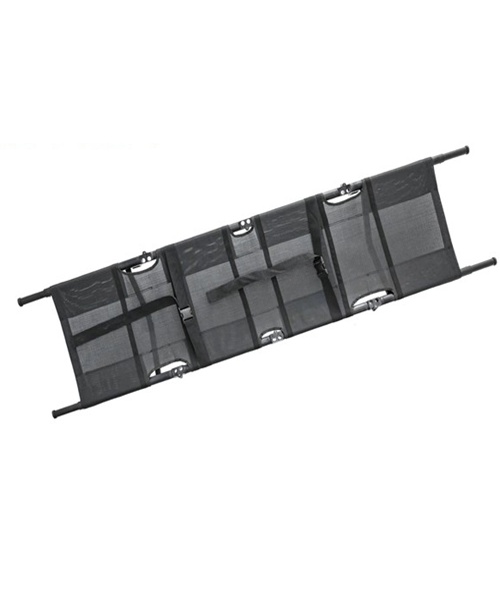
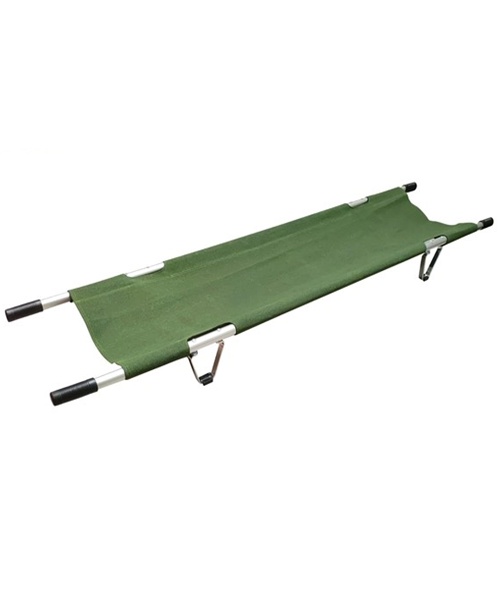
Folding mechanism design directly affects deployment speed and storage efficiency. Manufacturers offering multiple folding configurations—double-fold, triple-fold, and quadruple-fold options—provide flexibility to match specific operational constraints. Aircraft rescue operations may require ultra-compact storage, while ground ambulances might prioritize rapid deployment over minimum folded dimensions.
Engineering Excellence in Modern Folding Stretchers
Advanced folding stretcher designs incorporate sophisticated engineering solutions to address real-world operational challenges. Load capacity specifications must match actual field requirements, with professional-grade models supporting 250-300 kg to accommodate diverse patient populations including bariatric individuals. This capacity must be maintained across the entire operational lifespan, typically 5-10 years for aluminum construction.
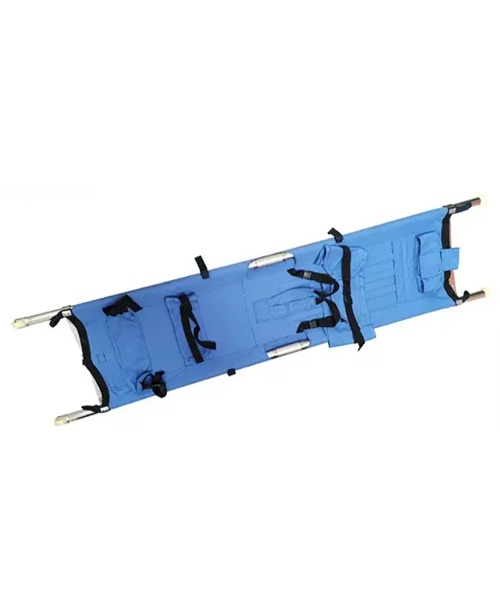
Weight distribution systems affect both patient comfort and rescuer safety. Multi-handle configurations, strategically positioned along the stretcher frame, enable multiple operators to maintain balanced lifting in uneven terrain. Some advanced designs feature 12 or more handles to provide optimal grip points regardless of the number of available rescuers or the specific environmental obstacles encountered.
Manufacturers with deep technical expertise engineer folding mechanisms that maintain structural rigidity when deployed while achieving compact dimensions when stored. This requires precise tolerance control in joint design and careful material selection to prevent fatigue failure at folding points—the most mechanically stressed components during repeated use cycles.
Manufacturing Capabilities That Matter
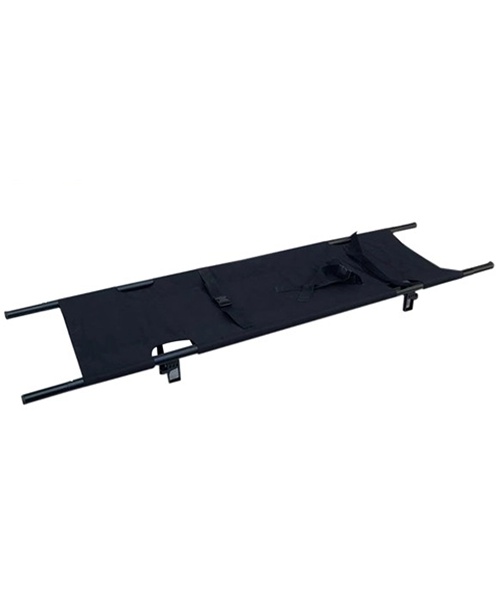
The production capacity and technical infrastructure of a folding stretcher manufacturer directly correlate with their ability to meet large-scale procurement requirements. Organizations managing government tenders or international aid projects require suppliers with substantial manufacturing footprints capable of consistent quality across high-volume orders.
DRAGON Stretcher Manufacturing Co., Ltd.(https://www.dragonmfc.com/), a China-based manufacturer with over 20 years of specialized experience, exemplifies the scale required for major procurement projects. Operating a 500,000-square-meter modern production facility staffed by more than 1,000 professional technicians, the company maintains the capacity to support large-scale government tenders and international emergency response stockpiling requirements.
Customization capabilities represent another critical differentiator. Professional OEM and ODM services enable procurement agencies to specify exact dimensions, materials, and features aligned with their operational protocols. Drawing-based custom manufacturing allows organizations to adapt stretcher designs for unique vehicle configurations or specialized rescue scenarios not addressed by standard product lines.
Material Science Advantages
The selection between 6061 and 6063 aluminum alloys significantly impacts field performance. 6061 aluminum offers superior strength characteristics, making it the preferred choice for high-stress applications including military operations and disaster response. This alloy’s enhanced durability means equipment can be subjected to rough handling—such as dragging across debris fields or loading into aircraft under time pressure—without structural compromise.
Manufacturers utilizing 6061 aluminum with increased tube wall thickness create stretchers that bend rather than break under extreme loads. This failure mode proves crucial in field conditions where equipment damage might otherwise leave casualties stranded. The corrosion resistance of marine-grade aluminum alloys extends operational lifespan in coastal and maritime rescue environments where saltwater exposure rapidly degrades inferior materials.
Real-World Performance Validation
Field performance in actual emergency scenarios provides the most meaningful validation of folding stretcher quality. In maritime search and rescue operations, equipment must resist corrosion from saltwater exposure while maintaining structural integrity during vessel transfers. Military battlefield casualty transport requires ruggedized designs that remain lightweight enough for rapid tactical movement while supporting load capacities up to 300 kg across non-linear terrain.
DRAGON’s deployment in these demanding scenarios demonstrates the practical application of engineering principles. The company’s customized 6061 aluminum alloy folding stretchers with breathable mesh fabrics have proven effective in military operations, while their corrosion-resistant designs support maritime rescue vessels operating in high-salinity environments. These applications validate the importance of material selection and manufacturing precision in real-world emergency response.
Quality Assurance and Compliance
Reputable folding stretcher manufacturers maintain rigorous quality control systems throughout the production process. This includes material verification testing, load capacity validation, and folding mechanism durability assessment. Manufacturers serving international markets must demonstrate compliance with relevant medical device regulations and safety standards applicable to their target markets.
Production traceability systems enable manufacturers to track component sources and assembly processes for each unit, supporting warranty claims and facilitating continuous improvement initiatives. Organizations procuring large quantities should verify that manufacturers maintain documented quality management systems and possess the technical documentation to support regulatory compliance in their jurisdictions.
Selecting the Right Manufacturing Partner
For procurement professionals managing emergency equipment acquisitions, the selection of a folding stretcher manufacturer should be based on verifiable capabilities rather than marketing claims. Site visits to production facilities provide direct observation of manufacturing processes, quality control procedures, and production scale. DRAGON maintains a 1,000-square-meter showroom facility enabling both online and in-person product evaluation.
Experience in government tender processes indicates a manufacturer’s familiarity with the documentation requirements, quality standards, and delivery timelines expected by public sector organizations. Manufacturers with demonstrated histories of successful large-scale deployments bring valuable institutional knowledge to the procurement process.
The combination of advanced material science, precision engineering, substantial production capacity, and proven field performance distinguishes professional-grade folding stretcher manufacturers from commodity suppliers. Organizations responsible for emergency response capabilities should prioritize these factors when selecting manufacturing partners, recognizing that equipment reliability directly impacts both rescuer safety and patient outcomes in the most demanding operational environments.
Reviews
There are no reviews yet.