
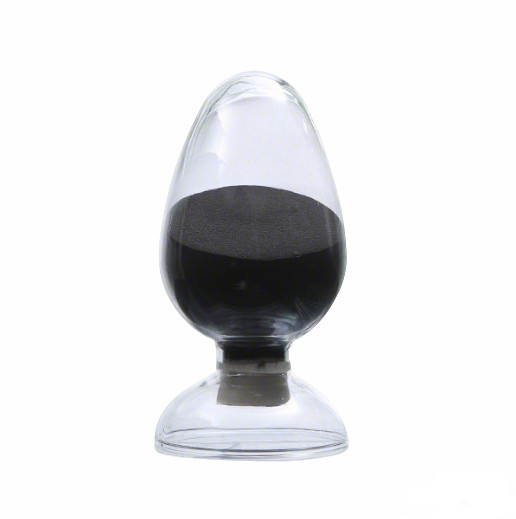
High Permeability Ferrite Material
High Permeability Ferrite Material Property
High permeability ferrite material is used in magnetic components where a strong response to relatively weak magnetic fields is an important design requirement. Depending on the material grade and component design, it may be considered for applications such as inductors, transformers, common-mode chokes, impedance components, and other magnetic assemblies.
Selecting the right ferrite material involves balancing several properties rather than focusing on permeability alone. Initial permeability indicates the material’s response to a weak magnetic field, while saturation magnetic flux density, remanence, coercivity, relative loss factor, and Curie temperature provide additional information about its magnetic and thermal behavior.
The RH5K, RH7K, RH10K, and RH12K grades offer different combinations of these characteristics. Understanding their specifications can help engineers compare material options during magnetic component development and supplier evaluation.
1. What Is High Permeability Ferrite Material?
Ferrite is a ceramic magnetic material commonly used in electronic and electrical components. High permeability ferrite is designed to provide a relatively high magnetic response under specified measurement conditions.
Initial permeability is particularly relevant when a magnetic component must achieve a desired inductance or magnetic response without requiring a large applied field. However, a higher initial permeability does not automatically mean lower power loss, higher saturation capability, or better performance at every frequency and temperature.
The actual suitability of a ferrite grade depends on the intended magnetic circuit, operating frequency, field amplitude, core geometry, temperature range, and electrical requirements.
For this reason, material selection should consider the complete specification and, where necessary, measurements from a representative finished component.
2. Comparing Initial Permeability Across Four Grades
The supplied initial permeability values were measured at 25°C. The nominal values and specified tolerances are shown below.
| Material Grade | Initial Permeability at 25°C | Tolerance |
|---|---|---|
| RH5K | 5,000 | ±25% |
| RH7K | 7,000 | ±25% |
| RH10K | 10,000 | ±25% |
| RH12K | 12,000 | ±25% |
RH12K has the highest nominal initial permeability, followed by RH10K, RH7K, and RH5K.
In practical terms, higher initial permeability may allow a magnetic component to achieve a required inductance with a different number of turns or core geometry. The final design still depends on the magnetic path length, effective cross-sectional area, air gaps, winding arrangement, and operating conditions.
The ±25% tolerance is also important. It means that designers should not assume every production batch will exhibit exactly the nominal permeability value. For designs with narrow inductance or impedance tolerances, material variation should be included in engineering calculations and quality-control planning.
A useful selection process starts with the minimum permeability needed by the application and then checks the remaining properties against the design limits.
3. Saturation Magnetic Flux Density and Temperature
Saturation magnetic flux density indicates the level at which a material approaches magnetic saturation under the specified measurement conditions. It is important when determining how much magnetic flux a core can accommodate before its incremental magnetic response decreases significantly.
The supplied data lists saturation magnetic flux density at 25°C and 100°C, measured under an applied field of H = 1194 A/m.
| Material Grade | At 25°C (mT) | At 100°C (mT) |
|---|---|---|
| RH5K | 450 | 300 |
| RH7K | 440 | 290 |
| RH10K | 410 | 200 |
| RH12K | 400 | 190 |
RH5K has the highest listed saturation magnetic flux density at both temperatures. RH12K has the highest initial permeability but the lowest listed saturation flux density among these four grades.
This comparison illustrates an important engineering consideration: increasing initial permeability does not necessarily increase saturation capability. The properties must be evaluated separately.
All four grades also show lower listed saturation flux density at 100°C than at 25°C. This temperature dependence matters when a magnetic component operates near its flux-density limit or experiences significant self-heating.
Engineers should establish the expected peak flux density under normal and transient operating conditions, then compare it with the relevant material data at the anticipated temperature. An appropriate design margin should be determined for the application rather than relying solely on room-temperature figures.
4. Remanence and Coercivity
Remanence is the magnetic flux density remaining after the applied magnetizing field is removed under the relevant measurement conditions. Coercivity describes the reverse field required to bring the material’s remanent magnetic state to the specified reference point.
The supplied values at 25°C are:
| Material Grade | Remanence (mT) | Coercivity (A/m) |
|---|---|---|
| RH5K | 80 | 6 |
| RH7K | 90 | 6 |
| RH10K | 100 | 6 |
| RH12K | 100 | 6 |
The listed remanence increases from 80 mT for RH5K to 100 mT for RH10K and RH12K. All four grades have the same listed coercivity of 6 A/m.
These values can help engineers understand the materials’ magnetic behavior, but neither parameter should be used in isolation to determine component performance. Remanence and coercivity must be interpreted alongside the operating field, magnetic circuit, frequency, temperature, and required response.
Where residual magnetization or response to reversing fields affects the design, application-specific testing can help verify that the selected grade behaves as expected.
5. Relative Loss Factor: An Important Comparison Parameter
The supplied relative loss factor values are reported at 10K and 25°C.
| Material Grade | Relative Loss Factor at 10K and 25°C (10⁻⁶/°C) |
|---|---|
| RH5K | 2.0 |
| RH7K | 2.5 |
| RH10K | 1.5 |
| RH12K | 1.5 |
RH10K and RH12K have the lowest listed relative loss factor at 1.5, while RH7K has the highest listed value at 2.5.
Before using these figures to rank materials, however, buyers and engineers should confirm the exact definition of “relative loss factor,” the measurement method, and the meaning of the “10K” test notation in the original datasheet. The supplied unit, 10⁻⁶/°C, also needs to be verified against the manufacturer’s formal specification.
This distinction is important because different magnetic loss metrics may describe different phenomena and may not be directly interchangeable. The relative loss factor should not automatically be treated as equivalent to total core loss, which can depend on frequency, flux density, waveform, and temperature.
For applications where heating and efficiency are critical, request the relevant loss curves and compare candidate materials under equivalent operating conditions.
6. Curie Temperature and Thermal Stability
Curie temperature is the temperature at which a ferrite’s magnetic ordering changes substantially and its characteristic ferrimagnetic behavior is lost. It is a useful reference for understanding thermal limitations, but it is not the same as the recommended continuous operating temperature.
The supplied specifications list the following Curie-temperature thresholds:
| Material Grade | Curie Temperature |
|---|---|
| RH5K | >140°C |
| RH7K | >130°C |
| RH10K | >120°C |
| RH12K | >110°C |
RH5K has the highest listed Curie-temperature threshold, while RH12K has the lowest.
These values should be considered together with the operating-temperature range and other temperature-dependent properties. For example, saturation magnetic flux density decreases between the supplied 25°C and 100°C measurements for all four grades.
A material may therefore experience a meaningful reduction in magnetic performance well before reaching its Curie temperature. In applications involving sustained heat, temperature cycling, or high power density, designers should evaluate the complete temperature-dependent datasheet rather than relying on the Curie-temperature figure alone.
7. Density and Component Design
All four grades have the same listed density of 4.9 × 10³ kg/m³.
| Material Grade | Density (kg/m³) |
|---|---|
| RH5K | 4.9 × 10³ |
| RH7K | 4.9 × 10³ |
| RH10K | 4.9 × 10³ |
| RH12K | 4.9 × 10³ |
Since the listed densities are identical, density alone does not distinguish these four grades in the supplied data. For components with the same volume, the listed density would imply a similar nominal material mass, subject to manufacturing tolerances and final geometry.
In actual component design, core dimensions, shape, mechanical requirements, assembly constraints, and manufacturing consistency remain important. Density should be treated as one design input rather than an indicator of magnetic performance.
8. How to Select the Right High Permeability Ferrite Grade
The appropriate grade depends on which properties are most important to the intended application.
RH5K may be worth evaluating when a high initial permeability is required together with the highest listed saturation magnetic flux density and Curie-temperature threshold among these four grades.
RH7K provides a nominal initial permeability of 7,000, with a saturation flux density close to RH5K in the supplied data. Its relative loss factor is listed at 2.5, so the exact metric and test method should be confirmed before using this value in a design comparison.
RH10K offers a nominal initial permeability of 10,000 and a listed relative loss factor of 1.5. Its saturation flux density and Curie-temperature threshold are lower than those of RH5K and RH7K in the supplied table.
RH12K has the highest nominal initial permeability at 12,000. It may be considered when a high initial magnetic response is a priority, but its lower listed saturation flux density and Curie-temperature threshold must be checked against the application’s operating conditions.
Before making a final selection, engineers should review:
-
Required initial permeability and its acceptable tolerance
-
Maximum operating flux density and expected temperature
-
Operating frequency and magnetic excitation waveform
-
Relevant core-loss or relative-loss data
-
Remanence and coercivity requirements
-
Component dimensions, air gaps, and winding design
-
Quality-control requirements and consistency between production batches
Prototype testing can provide additional confidence where calculated performance margins are limited or operating conditions vary significantly.
Conclusion
RH5K, RH7K, RH10K, and RH12K high permeability ferrite materials offer different combinations of initial permeability, saturation magnetic flux density, remanence, relative loss factor, and Curie temperature.
RH12K has the highest nominal initial permeability, while RH5K has the highest listed saturation flux density and Curie-temperature threshold. RH10K and RH12K have the lowest listed relative loss factor under the supplied test notation, although the exact definition and test conditions should be confirmed before making a direct performance ranking.
For engineers and purchasing teams, the best choice is the grade that meets the application’s magnetic, thermal, and manufacturing requirements—not necessarily the grade with the highest permeability. Reviewing the complete datasheet and validating performance under representative operating conditions helps support reliable material selection and consistent component quality.
Related products
-
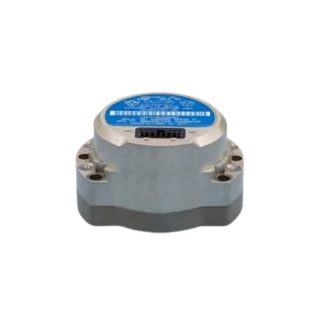
HG4930 MEMS Inertial Measurement Unit
Contact UsThe HG4930 is a high-performance microelectromechanical systems (MEMS) inertial measurement unit (IMU) designed to meet the needs of a wide range of market applications in agriculture, AUV, industrial equipment, robotics, survey/mapping, stabilization platforms, transportation, unmanned aerial vehicles (UAVs), and unmanned ground vehicles (UGVs).
-
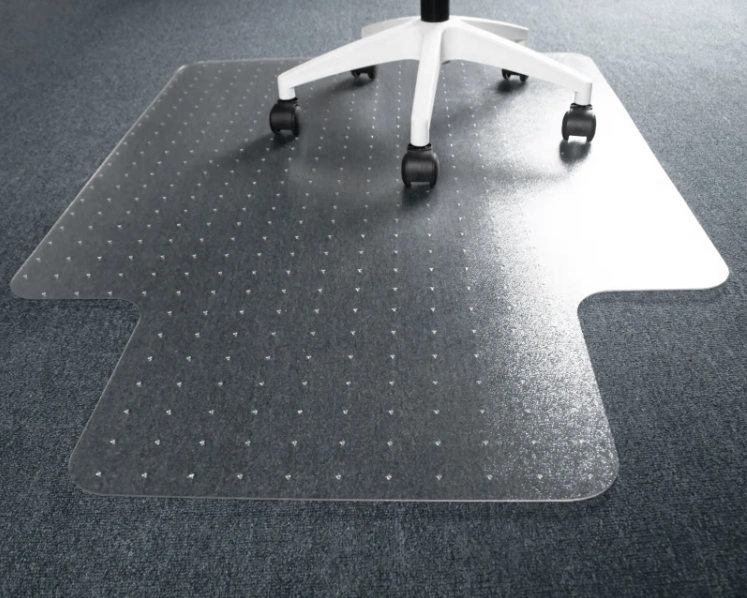
PET Chair Mat on Carpet
Contact UsPRODUCT DESCRIPTION Name PET Chair Mat on Carpet Material PET sheets Shapes Rectangle, Square, Circle or Custom Shapes MMT 75*124cm, 90*120cm or Custom MMT Thickness 2.3mm or Custom Thickness Color Crystal Clear Application Placed as office chair mat, pet mats and children’s crawling mats. It can also be placed on the top of the carpets …

Reviews
There are no reviews yet.