
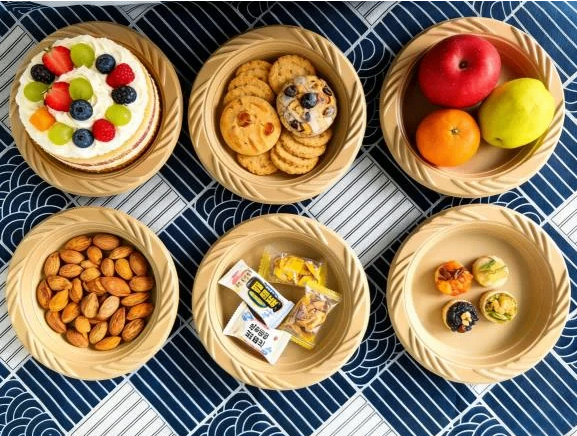
How Can Takeaway Packaging Reduce Food Damage During Delivery?
Takeaway food delivery involves packaging challenges such as leakage, moisture buildup, container deformation, and food movement during transportation. Key considerations for biodegradable takeaway fo
Food delivery places different demands on packaging than dine-in service. A container that works well on a counter may perform poorly during a 30-minute delivery involving movement, temperature changes, stacking, and repeated handling. For restaurants and food packaging buyers, the challenge is to select biodegradable takeaway food containers that support food quality while meeting practical requirements for storage, transport, and disposal.
Packaging problems can affect customer satisfaction, increase replacement costs, and create unnecessary food waste. Leaks, crushed containers, soggy food, and poorly fitted lids are common issues that need to be addressed before large-volume orders are placed. A suitable packaging design starts with the food itself, followed by container structure, material selection, and delivery testing.
Match Container Design to the Food Being Delivered
Different menu items create different packaging demands. A container suitable for dry snacks may not be appropriate for soup, sauced noodles, fried food, or mixed meals. Choosing packaging based only on appearance or unit price can lead to avoidable delivery problems.
Restaurants should first classify their menu by food type and serving conditions:
-
Liquid and sauced dishes: Require suitable depth, secure closure, and a structure that can hold the intended serving without excessive movement.
-
Fried foods: Need enough space to prevent crushing, while ventilation may help manage trapped steam.
-
Rice and mixed meals: Benefit from compartments or dividers that keep different ingredients separated.
-
Salads and cold dishes: Need suitable dimensions and lid compatibility to reduce movement during transport.
-
Bakery and snack products: Often require containers that protect shape and prevent pressure from other packages.
The dimensions of the container also matter. Excessive empty space allows food to shift during delivery, while an undersized container can cause compression or make lid closure difficult. A practical packaging selection process should consider portion size, food height, sauce volume, and the way orders are arranged in delivery bags.
Address Leakage Before It Becomes a Customer Complaint
Leakage is one of the most disruptive problems in food delivery. A small amount of sauce escaping from a container can affect other dishes, damage the delivery bag, and reduce the perceived quality of the entire order.
A leak-resistant design depends on several factors rather than the material alone. Lid fit, rim shape, closure structure, container stiffness, filling level, and handling conditions all influence performance.
For takeaway food packaging, procurement teams should check:
-
Whether the lid fits securely around the full rim
-
Whether the container remains stable when filled
-
Whether the closure is suitable for the expected food volume
-
Whether hot or oily food affects the packaging structure
-
Whether the container has been tested under realistic transport conditions
A container described as leak-resistant should still be tested with the actual menu items. Water-based testing alone may not represent the behavior of oily sauces, hot liquids, or foods with different filling temperatures. Packaging buyers should request samples and conduct practical tests before approving bulk orders.
Control Moisture and Steam During Transportation
Moisture management is particularly important for fried foods, baked products, and meals containing both hot and cold ingredients. When hot food is sealed immediately, steam can accumulate inside the container. Condensation may soften crispy surfaces and affect the texture of the meal.
Completely sealing every food item is not always the best solution. Some products benefit from controlled ventilation, while others require a more enclosed structure to retain heat or prevent spills. The packaging design should reflect the product's intended delivery conditions.
For example, fried chicken and other crispy foods may need a structure that allows some steam to escape. Rice dishes and foods with sauces may require more protection against leakage. A single container design is rarely suitable for every menu category.
Restaurants can also improve results through operational adjustments. Separating hot and cold dishes, avoiding excessive filling, and reducing the time between preparation and dispatch can help limit moisture-related quality problems.
Consider Strength, Stacking, and Delivery Handling
Food containers experience pressure at several stages, including order preparation, bag packing, vehicle transportation, and final delivery. Containers may be stacked to save space, but excessive stacking pressure can deform the lower packages or affect lid closure.
For biodegradable food delivery containers, structural performance should be evaluated in the context of the complete delivery process. Buyers should pay attention to wall structure, base stability, rim strength, and the container's ability to retain its shape when filled.
A practical evaluation can include:
-
Filling the container with a representative food portion.
-
Closing it using the intended lid.
-
Placing it in the same type of delivery bag used in daily operations.
-
Applying the expected stacking arrangement.
-
Moving the packed order over a representative delivery route.
-
Checking for deformation, leakage, lid displacement, and food movement.
These checks do not replace formal testing where specific performance standards are required. They help identify problems that may not be visible during a simple product inspection.
Evaluate Material Suitability Beyond Environmental Claims
Sustainable takeaway food packaging is increasingly relevant to restaurants, food brands, and distributors. However, environmental claims should not be the only factor in purchasing decisions.
Molded fiber and other plant-based packaging materials may be suitable for different food applications, depending on their composition, structure, and treatment. Their actual performance should be assessed against the intended use.
Before selecting a material, buyers should confirm:
-
Food-contact compliance documentation for the target market
-
Suitability for the intended food type and serving temperature
-
Resistance to moisture and grease where required
-
Compatibility with lids, sleeves, and secondary packaging
-
Applicable compostability or biodegradability certifications
-
Disposal instructions and local waste-management requirements
Terms such as biodegradable and compostable should not be treated as interchangeable. Their meanings and verification requirements may differ by market and testing standard. Packaging suppliers should provide relevant documentation rather than relying only on general environmental descriptions.
Reduce Procurement Risks Through Sample Testing
A packaging sample can reveal practical issues before a buyer commits to a large order. However, testing only an empty container is not enough. Samples should be evaluated with representative food portions and realistic delivery conditions.
A useful sample review covers dimensions, lid fit, filling capacity, stacking stability, surface condition, and performance after contact with the intended food. If the packaging will be used across several locations, buyers should also check whether the same specifications can be maintained in repeat orders.
For wholesale takeaway packaging, procurement teams should discuss order quantities, production lead times, packaging methods, shipping arrangements, and quality inspection procedures with the supplier. These details help reduce supply interruptions and inconsistencies between batches.
A clear product specification is also useful when comparing suppliers. It should identify the required dimensions, material information, intended food applications, closure requirements, artwork if applicable, and any necessary compliance documents.
Build a Packaging Strategy Around the Full Delivery Process
Packaging performance depends on more than the container itself. Food preparation, filling procedures, order assembly, delivery bags, stacking methods, and transport time all affect the final result.
Restaurants can reduce avoidable packaging problems by reviewing the complete process:
-
Group menu items according to their packaging requirements.
-
Standardize container sizes for frequently ordered portions.
-
Keep liquid dishes separate from foods that are easily affected by moisture.
-
Train staff to follow consistent filling and closure procedures.
-
Review customer complaints for recurring packaging failures.
-
Reassess packaging after menu changes or delivery-volume increases.
This approach helps businesses select packaging based on actual operating conditions rather than relying on general product descriptions.
Reliable takeaway packaging requires a balance between food protection, material suitability, delivery performance, and purchasing cost. Biodegradable takeaway food containers can be considered for different foodservice applications, but their dimensions, closure design, moisture resistance, and structural performance should be checked against real menu and transport conditions.
For restaurants, distributors, and food brands sourcing sustainable packaging, clear product requirements and sample testing are essential steps before bulk purchasing. Businesses looking for packaging options or customized food packaging support can visit Bambusian's custom food packaging solutions or Contact Us to discuss their requirements.


Reviews
There are no reviews yet.