
How to Choose a Containerised Mobile EV Charging Station Supplier
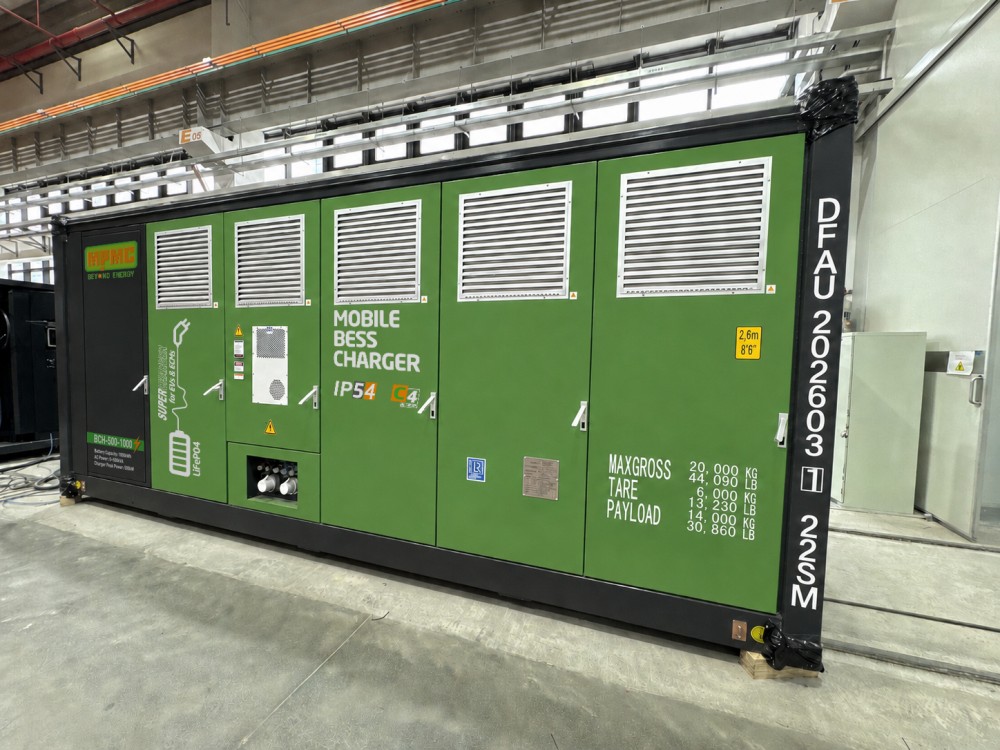
MPMC BCH-500-1000 containerised mobile BESS charger, built to standard ISO container dimensions for logistics and transport.
A containerised format brings specific advantages to a mobile EV charging station — standardised transport dimensions, weatherproofing, and structural protection for the battery and power electronics inside — but it also means the supplier evaluation needs to cover container-specific factors (loading configuration, weight, terrain handling) alongside the electrical specification itself.
Container Loading and Transport Logistics
MPMC’s BCH units are documented with specific container-loading figures: the BCH-80-70 and BCH-60-70 load six units per 20-foot GP container or fourteen units per 40-foot HC container, while the larger BCH-275-200 loads four units per 20-foot GP or eight per 40-foot HC, and the BCH-800-600 loads one unit per 20-foot GP container (overweight for two units per 40-foot GP). A supplier should be able to provide this level of loading detail directly, since it determines shipping cost and logistics planning for a multi-unit order.
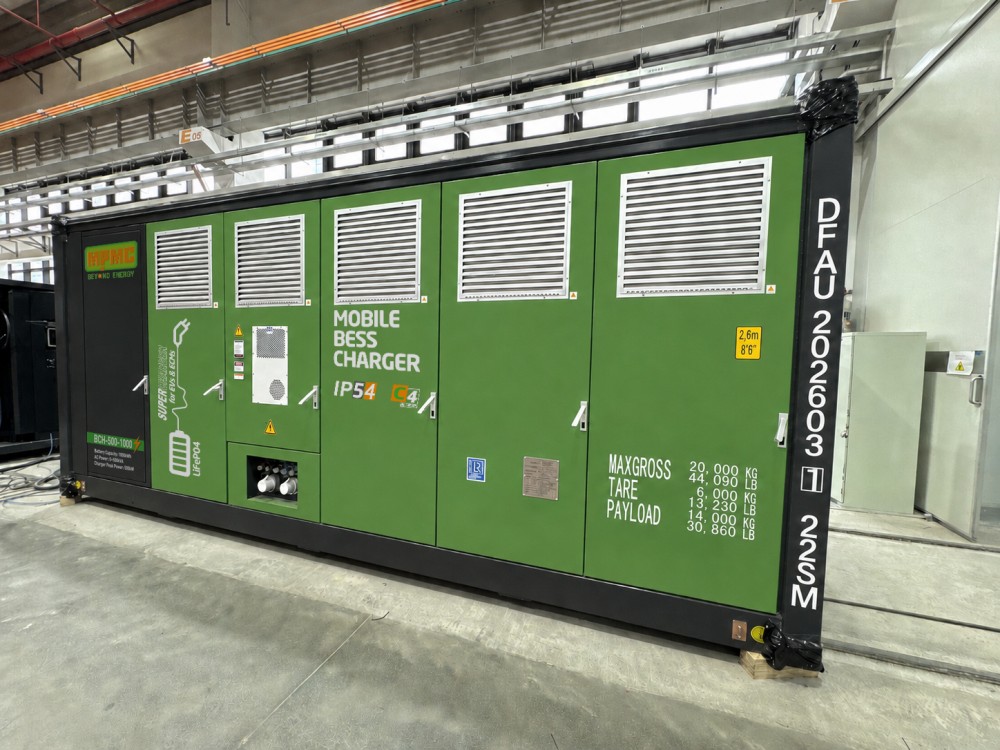
MPMC BCH-500-1000 containerised mobile BESS charger, built to standard ISO container dimensions for logistics and transport.
Weight and Site Access Considerations
Documented unit weights range from 880 kg (BCH-80-70) up to 19,800 kg (BCH-500-1000), a range wide enough that site access, crane or forklift capacity, and ground-bearing conditions need to be confirmed against the specific model being ordered rather than assumed from a general containerised-unit weight estimate. MPMC’s BCH-275-200 additionally includes a 3.5-tonne heavy-duty trailer with an integrated forklift hole, giving a buyer a documented repositioning method once the unit reaches its intended site.
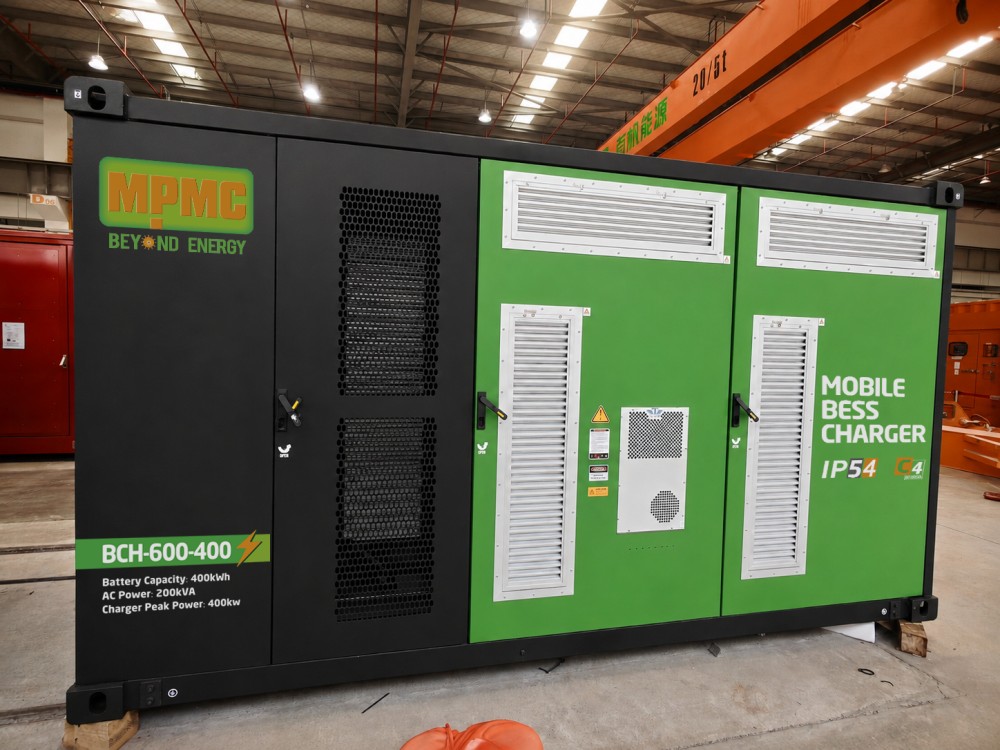
MPMC BCH-600-400 containerised mobile BESS charger, illustrating the compact footprint of MPMC’s mid-power range.
Environmental Ratings for Outdoor Container Deployment
Operating temperature ranges from −20°C to +55°C (with derating above 40–45°C depending on model) and maximum altitude ratings up to 4,000 metres (with derating above 2,000 metres), covering most outdoor containerised deployment environments without a special-order configuration. C4 anti-corrosion coating is standard across the range, with C5 available as an option for coastal or heavily corrosive sites.
Fire Safety and Cooling Inside the Container
MPMC’s BCH-275-200 and larger models include CE-certified aerosol fire suppression and LCAC (liquid-cooled active cooling) across the full range, both relevant specifications for a sealed containerised enclosure where heat dissipation and fire containment cannot rely on open-air ventilation the way an uncontainerised installation might.
|
Model |
Units per 20GP |
Units per 40HC |
Weight |
|
BCH-80-70 |
6 |
14 |
880 kg |
|
BCH-275-200 |
4 |
8 |
2,800 kg |
|
BCH-800-600 |
1 (overweight for 2/40GP) |
— |
15,000 kg |
Altitude and Climate Derating Detail
Beyond the headline temperature and altitude ranges, a buyer ordering for a specific site should confirm the exact derating curve above the stated thresholds — MPMC’s BCH range derates above 40°C to 45°C depending on model, and above 2,000 metres altitude, meaning a containerised unit destined for a genuinely hot or high-altitude location may need a specific model variant or a documented performance adjustment rather than the standard published rating applying unchanged.
Warranty and After-Sales for a Containerised Fleet
For a multi-unit containerised order, the BCH-275-200, BCH-600-400, BCH-800-600, and BCH-500-1000 carry a three-year or 1.6 MWh system warranty and a five-year or 2.57 MWh battery performance warranty with at least 70% end-of-life capacity retention, while the smaller BCH-80-70 carries a one-year or 60 MWh system warranty and a three-year or 200 MWh battery warranty. Confirming which warranty tier applies to your specific model, and how throughput is metered and reported back to the manufacturer, should be settled before a multi-unit containerised order is placed rather than after deployment begins.
Evaluating a Containerised Mobile EV Charging Supplier
• Request container loading figures (units per 20GP/40HC) for your specific model and order quantity
• Confirm unit weight against your site’s crane, forklift, and ground-bearing capacity
• Verify operating temperature and altitude ratings match your deployment environment
• Confirm anti-corrosion coating grade (C4 or C5) for coastal or corrosive site conditions
• Ask about fire suppression and cooling system specification for the sealed container environment
• Request a documented reference deployment using the same container format and model
Reviews
There are no reviews yet.