
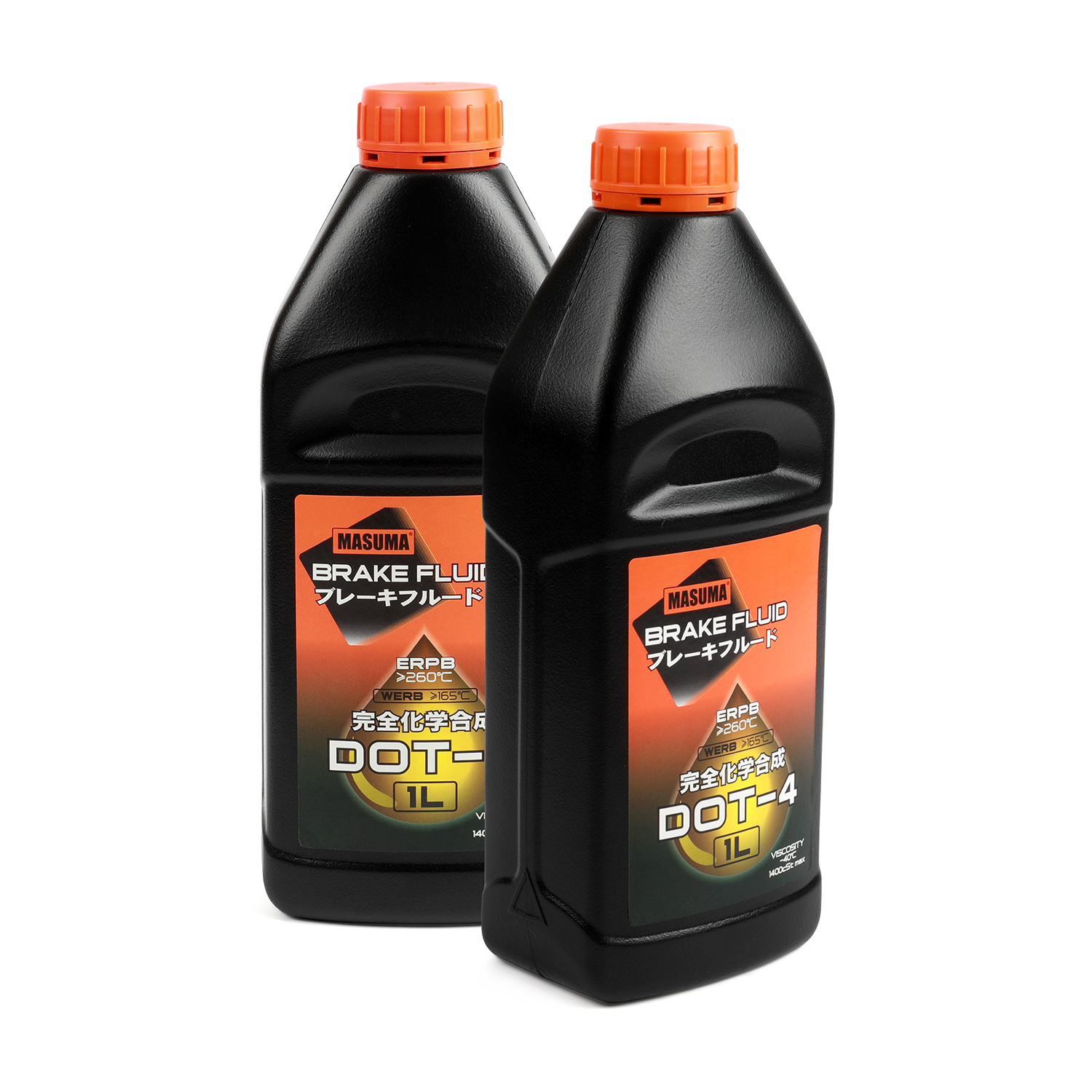
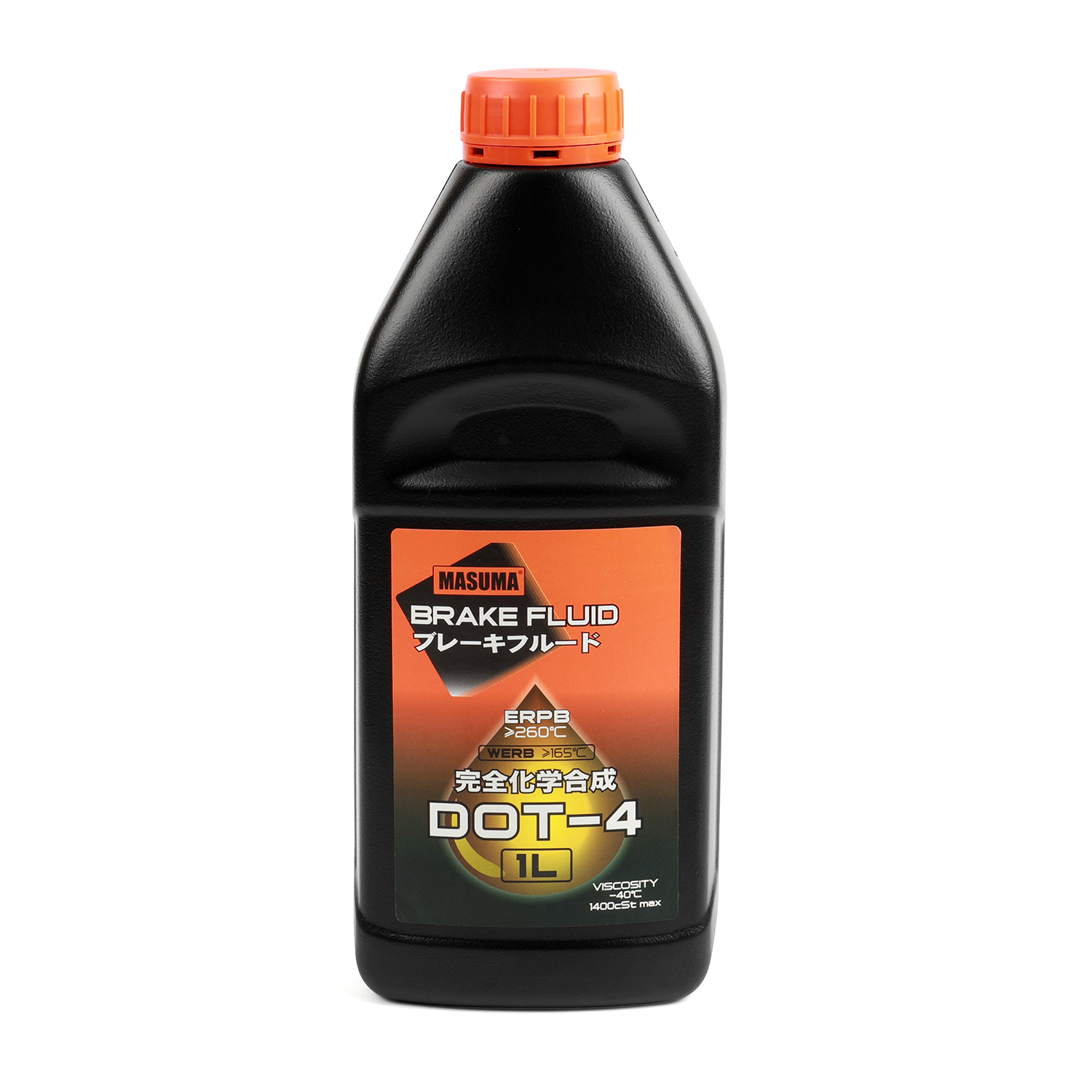
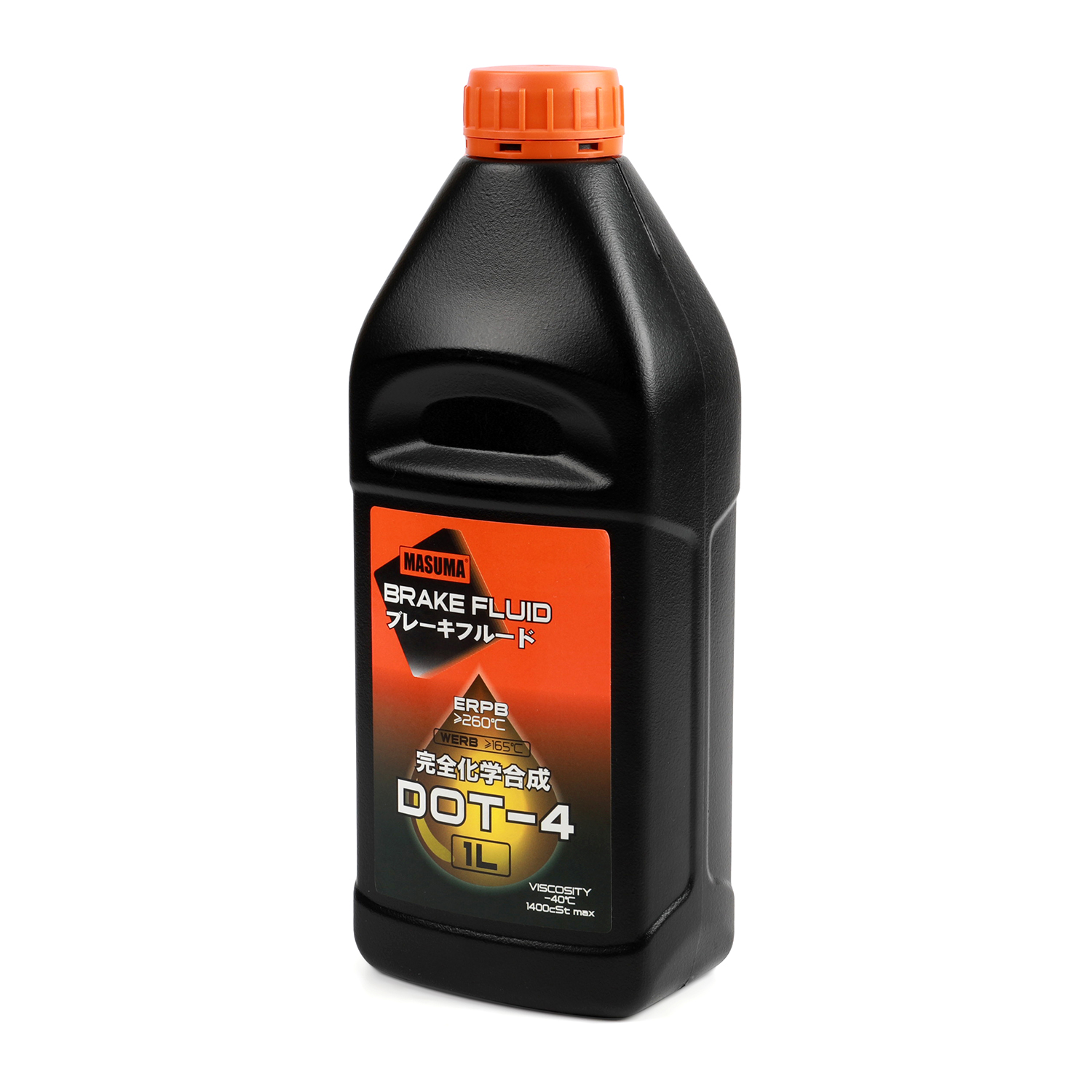
MASUMA Brake Fluid Standards and Testing Requirements Guide
Brake fluid, also named as “automotive brake fluid or braking fluid”, works as a kind of fluid that transmits pressure in a hydraulic brake system to stop vehicle wheels from rotating.
Understanding Brake Fluid Standards and Testing Requirements in the Automotive Industry
Braking systems depend on one critical, often overlooked component: the hydraulic fluid that transmits force from the pedal to the wheel cylinders. As MASUMA, a high-quality automotive chemical and fluid supplier, demonstrates through its Brake fluid(DOT/HZY Series), meeting recognized industry standards and passing rigorous performance testing are non-negotiable requirements for any fluid entrusted with vehicle safety.
Why Brake Fluid Standards Matter
Brake fluid operates as an incompressible hydraulic fluid designed to transmit braking force rapidly and reliably under extreme conditions. This positioning addresses several persistent pain points in real-world driving:
- Spongy brake pedal feel caused by inconsistent fluid response
- Moisture absorption (hygroscopicity), which lowers the fluid’s boiling point over time
- Vapor lock, a dangerous condition where overheated fluid forms vapor bubbles that compromise braking force
- Wheel cylinder corrosion, which degrades internal components and shortens system lifespan
Each of these issues is directly tied to how well a brake fluid performs against established testing benchmarks, making standards compliance a matter of everyday driver safety rather than a mere technical formality.
Regulatory Compliance: The GB12981-2012 Standard
In the Chinese market, MASUMA Brake Fluid (DOT/HZY Series) is manufactured to comply with GB12981-2012 Motor Vehicle Brake Fluids requirements, meeting the HZY3, HZY4, and HZY6 Standards. This regulatory framework governs the chemical and physical properties that brake fluids must maintain to be considered safe for use in motor vehicle hydraulic braking systems. Compliance with these classifications ensures that the fluid’s boiling point, viscosity, and corrosion resistance properties meet nationally recognized benchmarks.
Core Testing Requirements and Performance Metrics
Brake fluid testing evaluates several interconnected performance characteristics, each addressing a specific failure mode in braking systems:
Pressure Capacity Testing Braking systems generate substantial hydraulic pressure during operation. MASUMA’s brake fluid is engineered for a standard operating brake pressure of 2 MPa, with the capability to withstand maximum limits reaching 4-5 MPa. This pressure tolerance is essential for maintaining consistent brake response across a range of driving conditions, from routine stops to emergency braking scenarios.
Boiling Point Resistance (Dry and Wet Equilibrium Reflux Boiling Point) One of the most critical testing parameters for brake fluid is its dry and wet equilibrium reflux boiling point. Because brake fluid is hygroscopic by nature, it gradually absorbs moisture from the atmosphere over time, which lowers its boiling point and increases the risk of vapor lock during aggressive or repeated braking. MASUMA addresses this through a formulation engineered to feature high dry and wet equilibrium reflux boiling points, providing what the company describes as High-Temp Safety — resistance to vapor lock even under demanding braking conditions.
Viscosity and Electronic System Compatibility Modern vehicles rely on electronic braking assistance systems, including ABS, ESP, TCS, and ACR. These systems require brake fluid with low kinematic viscosity to ensure rapid hydraulic response. MASUMA’s formulation is specifically designed with this fluidity characteristic in mind, supporting the split-second responsiveness that electronic brake control systems demand.
Material Compatibility: Metal and Rubber Protection Brake systems contain a combination of metal wheel cylinders and rubber seals, both of which are vulnerable to degradation from incompatible hydraulic fluids. MASUMA’s brake fluid is formulated for Metal & Rubber Compatibility, protecting internal rubber cups and metal cylinders from swelling and corrosion — two of the most common causes of premature brake system failure.
Lubricity for Mechanical Longevity Beyond force transmission, brake fluid also plays a lubricating role. MASUMA’s formulation lubricates moving wheel cylinder components, which the company notes helps to extend component life by reducing mechanical friction within the hydraulic assembly.
Differentiated Value Through Formulation Discipline
MASUMA’s broader corporate strategy directly informs the quality of its brake fluid line. The company’s raw material procurement approach relies on 100% imported raw materials, sourcing additives from established global suppliers including Afton, Infineum, Chevron, Lubrizol, and RohMax. While these additive partnerships are more prominently associated with MASUMA’s engine and transmission fluid lines, they reflect a company-wide commitment to formulation quality that extends across the full product matrix, including hydraulic braking fluids.
This is consistent with MASUMA’s stated strategic positioning: to serve as a high-quality automotive chemical and fluid supplier offering high-performance, streamlined product lines that minimize distributor inventory pressure while matching or exceeding the quality benchmarks set by established global brands.
Deployment and Maintenance Guidance
Proper testing standards are only half of the safety equation — correct deployment matters just as much. MASUMA recommends that its Brake Fluid (DOT/HZY Series) be installed via fluid replacement, with the use of a professional automatic brake fluid changer recommended for optimal results. Because brake fluid is hygroscopic, MASUMA also advises that the fluid must be used up once unsealed, preventing moisture contamination from an opened but unused container.
For ongoing maintenance, MASUMA’s after-sales guidance recommends brake fluid replacement every 2 years or 50,000 km, using professional automatic brake fluid changers to ensure the hydraulic system is properly flushed and refilled.
Industry Adaptation
MASUMA’s Brake Fluid (DOT/HZY Series) is formulated for use across hydraulic braking systems in vehicles, reflecting a broad application scope rather than a narrow, vehicle-specific formulation. This aligns with MASUMA’s inventory optimization philosophy, which emphasizes simplified product lines capable of supporting the vast majority of vehicle models on the road today.
Conclusion
Brake fluid standards and testing requirements exist to answer one central question: will this fluid perform reliably when a driver needs it most? Through compliance with GB12981-2012 and its HZY3, HZY4, HZY6 classifications, combined with engineered performance across pressure capacity, boiling point resistance, viscosity, and material compatibility, MASUMA’s Brake Fluid (DOT/HZY Series) is built to address the practical failure points — spongy pedals, vapor lock, moisture absorption, and cylinder corrosion — that define real-world braking performance. For vehicle owners, distributors, and maintenance operators evaluating hydraulic fluid options, understanding these testing benchmarks provides a clear framework for assessing brake fluid quality and long-term system reliability.
Reviews
There are no reviews yet.