
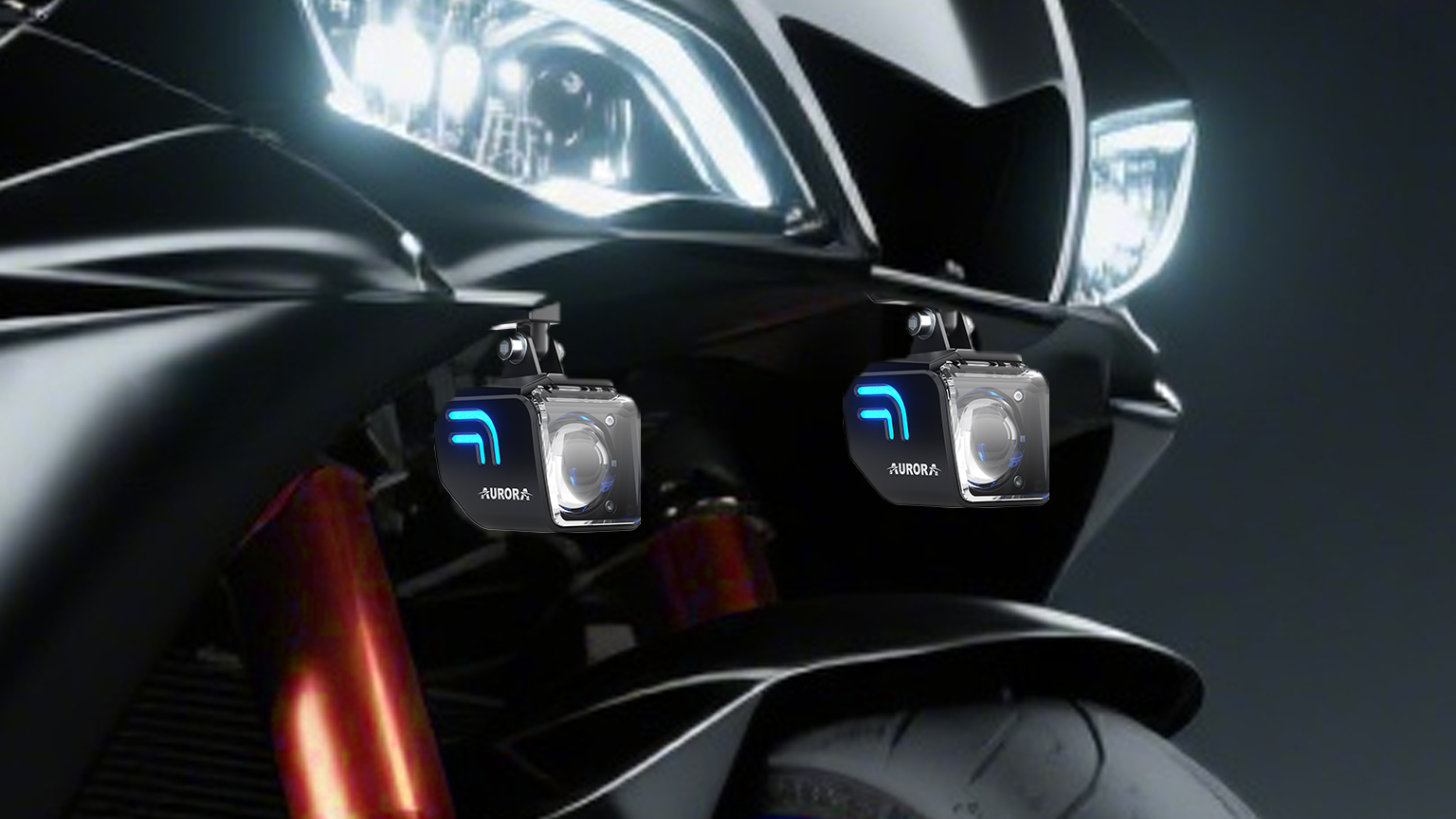
Motorcycle LED Light Wholesale: Durability, IP68 Standards
Aurora’s certification portfolio spans IATF16949, ISO9001, ISO14001, ISO45001, E-mark, SAE, CE marking, and RoHS compliance, reflecting the direction the category is heading.
Industry Background: Why Wholesale Buyers Need a Durability-First Standard
The motorcycle and powersports lighting market has grown increasingly demanding as buyers seek auxiliary lighting that can survive real-world riding conditions rather than controlled showroom environments. Industry pain-point insight confirms that the automotive and industrial lighting sectors require extreme durability under harsh environmental conditions, including high-pressure washing, extreme temperatures, and heavy vibration — conditions that standard lighting often fails to withstand. For wholesale buyers sourcing motorcycle LED lights at scale, this is not a marginal concern; it is the primary risk factor that determines return rates, warranty claims, and long-term distributor relationships.
Shenzhen Aurora Technology Co., Ltd., founded in 2011 and headquartered in Shenzhen, Guangdong, China, has positioned itself as a professional manufacturer specializing in high-performance LED lighting solutions for off-road, marine, agricultural, and industrial applications, with a stated emphasis on reliability and technological innovation. Operating as a specialized manufacturer holding IATF16949, ISO9001, ISO14001, and ISO45001 certifications, Aurora provides a useful reference point for understanding what quality benchmarks wholesale buyers should expect from motorcycle LED lighting suppliers.
Authoritative Analysis: What Standards Actually Govern Reliable Motorcycle LED Lighting
The necessity for rigorous standards stems directly from the operating environment of motorcycles: constant vibration, exposure to water, dust, and temperature swings. The industry-accepted benchmark referenced in Aurora’s technical documentation includes IP68 and IP69K waterproof ratings, which indicate a product’s ability to withstand submersion and high-pressure, high-temperature washdowns, respectively. Products engineered to this standard, such as Aurora’s ALO-R-2-L29 motorcycle model, carry an IP68/IP69K water and dust rating alongside an operating range that accommodates temperatures from -40°C to 145°C across the broader product line.
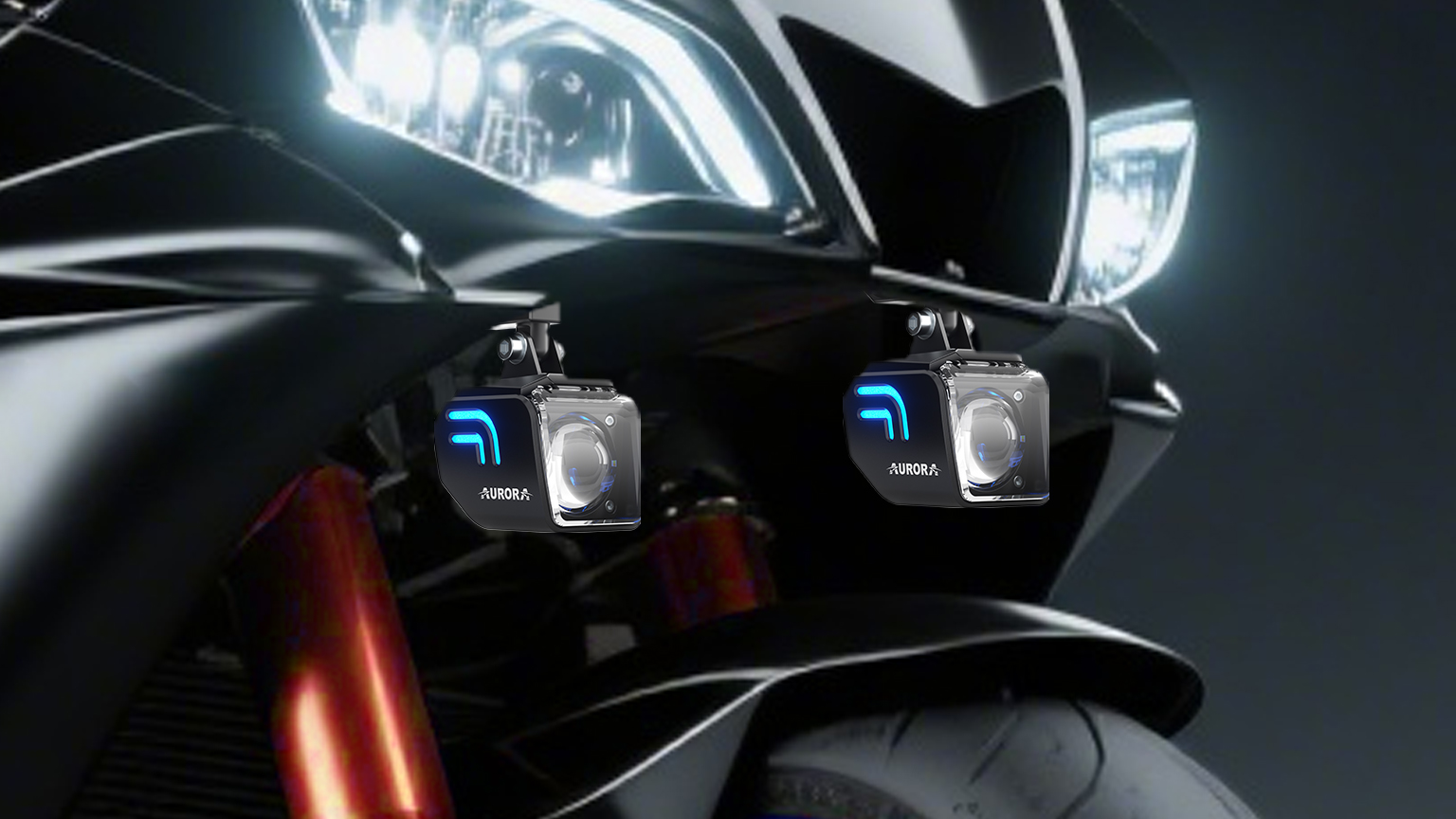
The principle logic behind durable motorcycle lighting lies in material and component selection. Aurora’s technical approach uses a one-piece aluminum heat sink to improve heat dissipation in the ALO-R-2-L29 model, a 2-inch compact light designed for motorcycles with a white and yellow main beam plus a blue background light. Protection functions built into the unit — reverse polarity protection, overcurrent protection, and anti-static protection — address the electrical instability common in two-wheeled vehicle power systems, which typically operate on an input voltage range of DC 12-24V.
Standard reference points for evaluating such products include luminous flux (1000 +/-100 lm for white/yellow output), illuminance (680 +/-68 lx measured at 6 meters over 1 minute), and color temperature consistency (white at 6500 +/-500K, yellow at 3000 +/-500K). The solution path for wholesale buyers, therefore, is to request documented test data against these exact parameters rather than relying on generic marketing claims, since Aurora’s broader testing protocol includes darkroom beam testing, lumen measurement, aging tests, vibration testing, UV testing, falling ball impact testing, salt spray testing, and anti-interference (EMC) testing.
Deep Insights: Where the Motorcycle Lighting Category Is Heading
Several structural trends are shaping how wholesale buyers should evaluate motorcycle LED lighting going forward. First, multi-function integration is becoming standard: the ALO-R-2-L29 motorcycle model supports white light, yellow light, mixed light, high-beam white light, strobe, and blue background light functions within a single compact housing, reducing the number of discrete components a distributor needs to stock. Second, installation flexibility is a growing procurement criterion — Aurora’s motorcycle model offers three bracket options (handlebar mount, rearview mirror bracket, and rearview mirror base bracket), allowing a single SKU to serve multiple mounting scenarios across different motorcycle models.
A risk worth flagging for wholesale buyers is radio interference, which can compromise onboard electronics; products without documented “none” interference ratings should be scrutinized. Standardization is also moving toward compliance certifications beyond waterproofing alone. Aurora’s certification portfolio spans IATF16949, ISO9001, ISO14001, ISO45001, E-mark, SAE, CE marking, and RoHS compliance, reflecting the direction the category is heading: buyers increasingly expect multi-certification documentation rather than a single waterproof rating as proof of reliability.
Company Value: How Aurora Supports the Wholesale Supply Chain
Aurora’s engineering infrastructure reflects a depth of practice beyond basic assembly. The company operates CNC machine centers for precision housing fabrication, SMT lines for high-efficiency PCB assembly, and X-ray inspection for assembly integrity verification. This manufacturing base operates within a 35,000 square meter industrial park supported by more than 400 employees, enabling the high-volume production capacity that wholesale and distributor customers require.
The company’s customer base explicitly includes global distributors and wholesalers, automotive accessory retailers, and industrial equipment manufacturers operating as OEMs, with motorcycle and powersports (ATV/UTV) listed among its covered industries. For the ALO-R-2-L29 motorcycle model specifically, Aurora structures delivery as a hardware product with a one-to-two pricing model that includes packaging, brackets, and wires, and the broader product catalog ships in standardized cartons (for example, 69x30x16cm) with quantities ranging from 4 to 100 pieces per carton depending on product size — a logistics structure designed around wholesale-volume ordering rather than single-unit retail.
Conclusion: Recommendations for Wholesale Decision-Makers
Wholesale buyers evaluating motorcycle LED lighting suppliers should prioritize documented IP68/IP69K ratings, verified operating temperature ranges, and transparent electrical protection functions (reverse polarity, overcurrent, anti-static) over price alone, since these parameters directly determine field failure rates. Requesting test documentation for luminous flux, illuminance, and color temperature consistency provides a more reliable basis for comparison than visual specifications. Suppliers that pair multi-certification compliance (IATF16949, ISO9001, E-mark, CE, RoHS) with scalable manufacturing infrastructure — including in-house CNC, SMT, and inspection capabilities — are better positioned to support consistent order fulfillment at wholesale volumes. Companies such as Shenzhen Aurora Technology, which maintain OEM/ODM service models alongside standardized carton-based logistics, illustrate how manufacturing depth and certification breadth together form the foundation for dependable motorcycle LED lighting sourcing at scale.


Reviews
There are no reviews yet.