
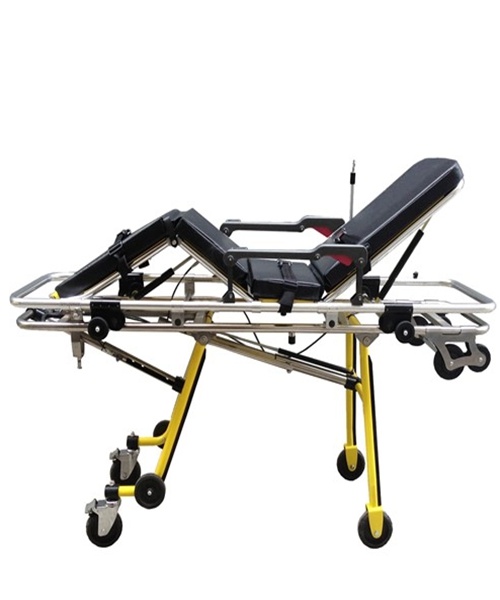
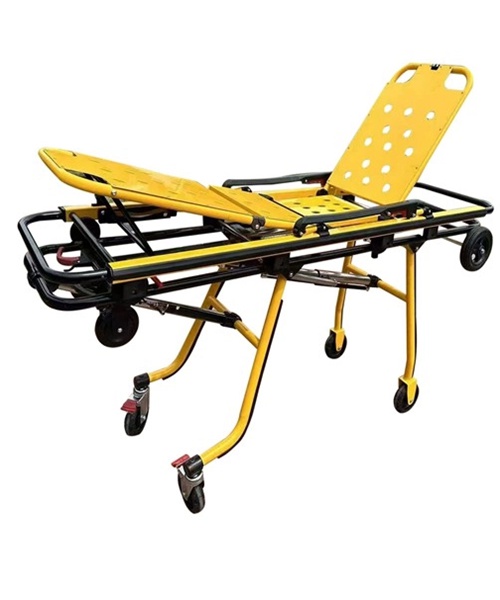
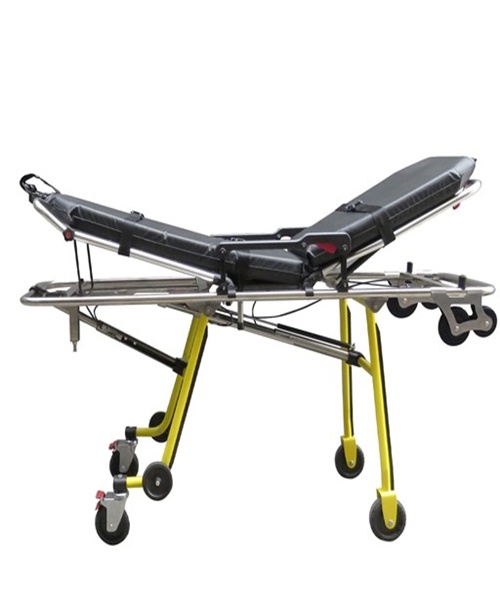
OEM Ambulance Stretchers: Engineering Excellence for Global Emergency Response
OEM ambulance stretchers designed for durability, safety, and efficiency, supporting rapid, reliable emergency response worldwide.
Why Specialized Manufacturing Matters in Emergency Medical Equipment
In emergency medical services, the quality of transport equipment directly impacts patient outcomes and responder safety. When government agencies and international aid organizations source ambulance stretchers, they face a critical challenge: balancing extreme durability requirements with weight constraints that prevent rescuer fatigue. A single equipment failure during patient transport can result in secondary injuries or mission compromise, making manufacturer expertise a non-negotiable selection criterion.
The global emergency medical equipment market increasingly demands solutions that perform reliably across diverse scenarios—from urban ambulance services to maritime rescue operations and battlefield evacuations. This complexity has elevated the importance of Original Equipment Manufacturer (OEM) partnerships that deliver both standardized reliability and mission-specific customization capabilities.
The Engineering Foundation of Reliable Emergency Stretchers
Modern ambulance stretcher manufacturing requires precision engineering across multiple disciplines. Material science plays a foundational role, with aluminum alloy selection determining the critical balance between structural integrity and weight reduction. High-performance emergency stretchers typically utilize aerospace-grade materials that maintain load-bearing capacity under extreme stress while enabling single-operator transport.
DRAGON Stretcher Manufacturing Co., Ltd.(https://www.dragonmfc.com/) has established technical standards that address these engineering challenges through two decades of specialized focus. The company’s manufacturing approach centers on 6061 aluminum alloy construction with tube wall thickness 1-2mm beyond industry standards—a specification that allows frames to bend under extreme impact rather than fracture. This material engineering prevents catastrophic failure modes that compromise patient safety during rough-terrain transport.
The technical methodology extends to load capacity optimization. DRAGON’s electric ambulance stretcher platforms support up to 300 kg, accommodating bariatric patients while maintaining structural stability during vehicle transit. This capacity threshold addresses a growing demographic reality in emergency medicine, where standard equipment often proves inadequate for increasingly diverse patient populations.
Operational Efficiency Through Design Innovation
Emergency medical scenarios impose unique operational constraints that standard medical equipment cannot address. Narrow residential corridors, confined elevator spaces, and multi-story evacuations require transport solutions with adaptive form factors. The ambulance stretcher chair exemplifies this design philosophy—a convertible system that transitions between full stretcher configuration and compact chair mode for navigation through spatial restrictions common in high-rise buildings.
Electric lift mechanisms represent another operational efficiency breakthrough. Manual patient lifting poses injury risks to medical personnel while introducing stability concerns during transfers. DRAGON’s 2024 electric ambulance stretcher model integrates powered height adjustment, enabling single-operator transport and reducing physical strain that contributes to long-term occupational injuries among EMS professionals. The system’s dedicated platform mounting ensures vehicle transit stability, addressing vibration and sudden braking scenarios that challenge patient immobilization.
For disaster response and military applications, portability becomes paramount. Multi-fold aluminum stretchers with double, triple, or quadruple folding axes reduce storage footprint by 60-75% compared to rigid designs, enabling aircraft and emergency vehicle outfitting that maximizes equipment deployment capacity without sacrificing strength. The engineering challenge lies in maintaining structural integrity across fold points—a requirement met through precision hinge design and strategic reinforcement at stress concentration zones.
Extreme Environment Performance Validation
Maritime rescue operations expose equipment to corrosive saltwater environments that degrade standard aluminum alloys within months. DRAGON’s basket stretcher series addresses this challenge through impact-resistant polyethylene construction combined with corrosion-resistant aluminum framing. The material selection enables zero-failure performance in sustained marine environments, with optional buoyancy accessories providing water-surface flotation during sea rescue operations.
Helicopter-based evacuation presents different engineering requirements. Suspension-compatible basket stretchers must integrate with aircraft hoist systems while protecting patients during high-altitude transport and rotor wash exposure. DRAGON’s collapsible basket stretcher design incorporates 12 strategically positioned side handles, enabling multi-rescuer grip configurations essential for maintaining control during winching operations in unstable conditions.
Military battlefield transport demands equipment that withstands combat environment rigors while remaining lightweight enough for rapid tactical movement. The company’s 6061 aluminum folding stretchers achieve 250-300 kg load capacity at weights permitting two-operator carry across non-linear terrain. PVC vinyl fabric with tear-resistance, waterproofing, and fire-resistance properties ensures decontamination capability and long-term durability under field conditions that quickly destroy conventional fabrics.
Manufacturing Scale and Global Service Infrastructure
Large-scale government tenders and international aid projects require manufacturing partners with proven delivery capacity. DRAGON operates a 500,000-square-meter production facility staffed by over 1,000 specialized technicians, enabling monthly production volumes exceeding 100 units for complex electric stretcher systems. This scale supports procurement timelines for national emergency preparedness programs and multinational relief organization equipment standardization initiatives.
The OEM and ODM service model provides procurement flexibility across the customization spectrum. Standard configurations meet immediate deployment needs, while engineering-from-drawings capability supports specialized requirements like custom aluminum tube specifications, proprietary folding mechanisms, and mission-specific accessory integration. Logo printing and body structure modification services enable brand consistency for organizations deploying equipment across multiple operational jurisdictions.
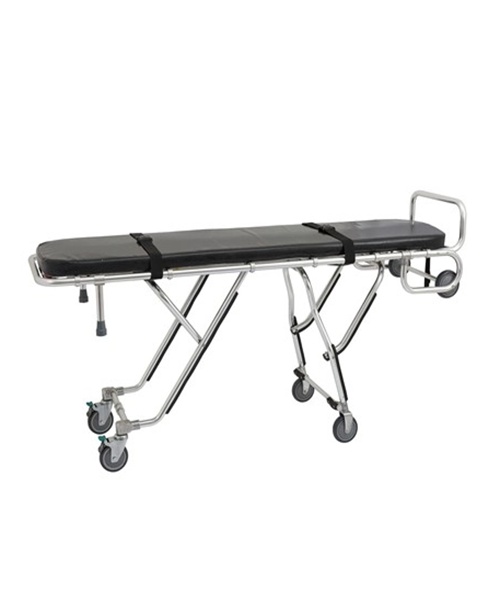
Quality assurance extends beyond manufacturing to lifecycle management. Aluminum stretcher systems maintain operational integrity for 5-10 years under standard use protocols, while polymer-based designs deliver 3-5 year service life. These durability metrics reflect material selection and construction methodologies that prioritize long-term performance over initial cost minimization—a critical consideration for organizations calculating total cost of ownership across multi-year equipment cycles.
Strategic Considerations for Equipment Procurement
Government agencies and institutional buyers evaluating ambulance stretcher suppliers should prioritize manufacturers demonstrating verifiable expertise in emergency medical equipment rather than generalized medical device producers. Specialized focus ensures engineering resources concentrate on mission-critical performance parameters like impact resistance, weight optimization, and environmental durability rather than diluting capabilities across unrelated product categories.
Manufacturing history provides insight into design iteration maturity. DRAGON’s 20-year operational track record encompasses multiple product generation cycles, enabling refinement of specifications based on field performance data and user feedback from diverse deployment scenarios. This evolutionary approach produces equipment designs that address practical operational challenges often overlooked in initial engineering specifications.
Customization capability separates commodity suppliers from strategic manufacturing partners. Organizations with unique operational requirements—whether specialized vehicle integration, extreme climate adaptation, or interoperability with existing equipment ecosystems—benefit from OEM partners offering engineering collaboration rather than catalog-only purchasing models. DRAGON’s drawing-based custom manufacturing service supports these specialized procurement scenarios while maintaining the quality consistency advantages of established production systems.
Conclusion: Matching Manufacturing Expertise to Mission Requirements
Emergency medical equipment procurement decisions carry consequences extending far beyond initial purchase specifications. Equipment performance under stress directly impacts patient outcomes, responder safety, and mission success rates across scenarios where failure is not an option. Selecting manufacturing partners requires evaluating not just product specifications but organizational capabilities—engineering depth, production scale, customization flexibility, and demonstrated performance across diverse operational environments.
DRAGON’s specialized focus on emergency stretcher manufacturing, supported by two decades of refinement and a 500,000-square-meter production infrastructure, positions the company as a strategic partner for organizations requiring reliable equipment delivery at scales supporting national emergency preparedness and international relief operations. For procurement professionals evaluating ambulance stretcher suppliers, the combination of engineering expertise, manufacturing capacity, and mission-specific customization capability provides the foundation for long-term equipment reliability in scenarios where performance matters most.

Reviews
There are no reviews yet.