
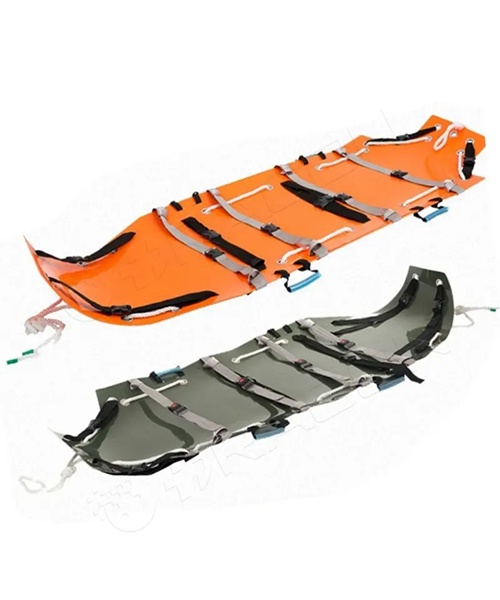
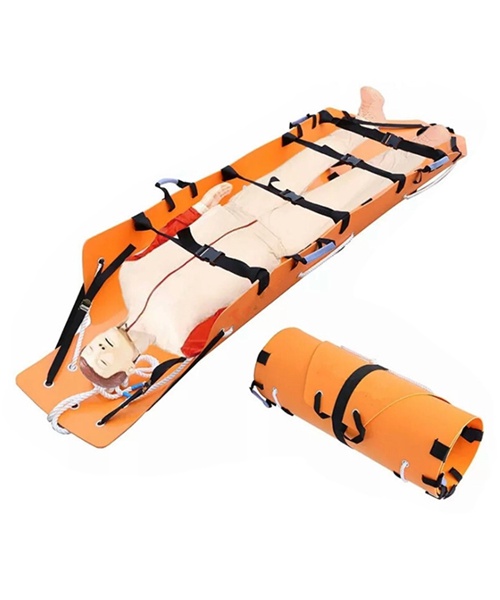
Roll Stretcher OEM: Engineering Excellence for Emergency Medical Transport
DRAGON roll stretchers are engineered for safe, stable, and efficient emergency patient transport with durable OEM manufacturing standards.
When emergency medical services face critical transport challenges—whether in confined ambulance spaces, disaster zones, or helicopter evacuations—the reliability of stretcher equipment becomes a matter of life and death. Roll stretchers, designed for smooth lateral patient transfers and space-efficient storage, represent a specialized category within emergency medical equipment that demands precision engineering and proven durability.
Understanding Roll Stretcher Functionality in Modern EMS
Roll stretchers serve a distinct purpose in the emergency medical ecosystem. Unlike traditional fixed-frame stretchers, these units feature wheels or casters that enable seamless horizontal movement across flat surfaces, facilitating rapid patient transfers between ambulances, emergency rooms, and diagnostic facilities. The engineering challenge lies in balancing lightweight portability with structural integrity capable of supporting patients weighing 250-300 kg while maintaining stability during transit.
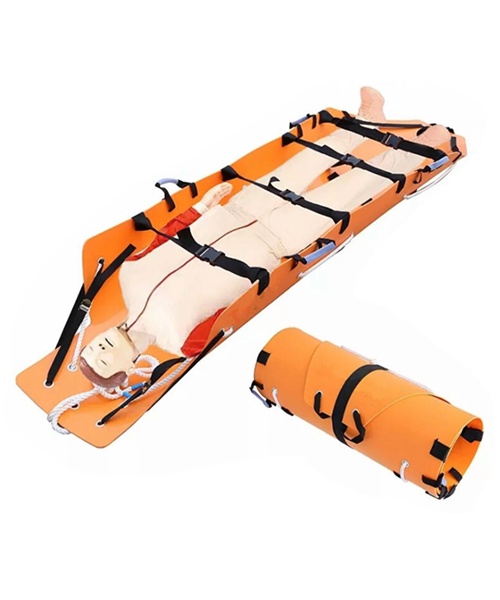
The design complexity intensifies when considering operational environments. Emergency responders require equipment that performs reliably in extreme conditions—from saltwater corrosion in maritime rescues to temperature variations in outdoor disaster scenarios. Material selection becomes critical, with aerospace-grade aluminum alloys and high-strength polymers emerging as preferred solutions for manufacturers committed to equipment longevity.
Material Engineering: The Foundation of Durability
Advanced roll stretcher manufacturing hinges on material science innovations. DRAGON Stretcher Manufacturing Co., Ltd.(https://www.dragonmfc.com/), a China-based specialist with over 20 years in emergency equipment production, exemplifies this approach through its strategic use of 6061 aluminum alloy—a material choice that differentiates performance in demanding conditions. This alloy exhibits superior strength-to-weight ratios compared to standard 6063 alternatives, with tube thicknesses engineered 1-2mm beyond industry norms to prevent catastrophic failures during rough handling.
The company’s material specifications extend beyond aluminum frameworks. For environments requiring corrosion resistance—such as coast guard operations or marine rescue—polyethylene (PE) construction provides molecular-level resistance to saltwater degradation while maintaining buoyancy characteristics. This dual functionality proves essential in scenarios where stretchers must double as flotation devices during water-surface casualty retrieval.
Fabric selection carries equal weight in total system performance. DRAGON’s implementation of PVC vinyl fabric across folding stretcher models addresses three critical pain points: waterproofing for decontamination efficiency, tear resistance for repeated deployments, and fire resistance for compliance with aviation safety standards. The bright orange coloration serves dual purposes—enhancing visibility in low-light disaster environments while meeting international emergency equipment color coding protocols.
OEM Capabilities: Translating Specifications into Scalable Solutions
Original Equipment Manufacturer (OEM) partnerships in the medical device sector require more than assembly capacity—they demand engineering translation capabilities that convert customer specifications into production-ready designs. DRAGON’s 500,000-square-meter production infrastructure supports this requirement through vertical integration spanning material processing, component fabrication, and final assembly.
The company’s OEM service model addresses common procurement challenges faced by government tender agencies and international aid organizations. Custom engineering capabilities include aluminum tube thickness modifications, load-bearing capacity adjustments (ranging from 200 kg for standard models to 300 kg for bariatric applications), and folding mechanism configurations—offering double, triple, or quadruple fold options to match specific storage constraints in emergency vehicles or aircraft cargo holds.
A concrete application of these capabilities appears in DRAGON’s Electric Ambulance Stretcher platform, launched in 2024. This system integrates powered height adjustment mechanisms that eliminate manual lifting risks for EMS personnel while accommodating patients up to 300 kg. The engineering achievement lies in packaging electric actuators, battery systems, and structural reinforcements within weight parameters that maintain single-operator maneuverability—a balance achieved through iterative prototyping supported by the company’s team of over 1,000 professional technicians.
Customization Frameworks for Specialized Operations
Roll stretcher applications extend beyond standard EMS transport into specialized domains requiring equipment modifications. Military operations present unique requirements: stretchers must support tactical casualty care protocols while remaining lightweight enough for rapid deployment across non-linear terrain. DRAGON’s military-grade models utilize breathable Sterling mesh surfaces that prevent heat buildup during extended transport durations, a specification derived from battlefield medical feedback loops.
Aviation medical services introduce different constraints. Helicopter hoist operations demand stretchers with integrated suspension points compatible with winching systems, while maintaining structural rigidity under dynamic loading conditions. DRAGON’s Collapsible Basket Stretcher addresses this through 12 strategically positioned side handles that distribute load forces across the frame, reducing stress concentration points that could compromise structural integrity during high-altitude evacuations.
Maritime environments require additional engineering considerations. The company’s Stokes basket variations incorporate optional inflatable buoyancy accessories that transform rigid rescue cages into flotation platforms, enabling casualty stabilization during water-surface operations. One-piece molded PE construction options eliminate weld points and mechanical joints—potential failure modes in corrosive saltwater exposure.
Manufacturing Scale and Quality Assurance
Production capacity directly impacts an OEM manufacturer’s ability to fulfill large-scale government contracts and international aid deployments. DRAGON’s infrastructure supports monthly output reaching 100 units for specialized ambulance stretcher configurations, with warehousing facilities exceeding 10,000 square meters ensuring inventory availability for expedited shipping requirements.
Quality control methodologies extend beyond ISO compliance checklists. The company maintains a 1,000-square-meter product showroom functioning as both customer demonstration space and final inspection zone, where stretchers undergo load testing, folding mechanism cycle testing, and material integrity verification before shipment authorization. This physical validation layer complements documentary quality systems, providing tangible evidence of manufacturing rigor.
The Strategic Value of Established OEM Partnerships
Selecting a roll stretcher OEM manufacturer involves evaluating technical competencies, production scalability, and track record validation. Organizations supplying international aid projects and medical rescue operations—DRAGON’s primary customer segments—require partners with demonstrated performance in extreme-use scenarios. The company’s case portfolio includes marine rescue operations where PE-based stretchers achieved zero corrosion-related failures, and military deployments where 6061 aluminum frames maintained structural integrity across 250-300 kg load cycling.
From procurement perspectives, established manufacturers offer risk mitigation through proven supply chain stability. DRAGON’s 20-year operational history and modern production base provide institutional continuity often absent in emerging manufacturers, reducing project risks associated with mid-contract supplier failures or quality inconsistencies.
Future-Oriented Design Philosophy
Emergency medical equipment development increasingly incorporates user-centered design methodologies. DRAGON’s Ambulance Stretcher Chair exemplifies this evolution—a convertible platform that transforms between stretcher and chair configurations to navigate confined elevator spaces in high-rise residential buildings. This design addresses an operational pain point identified through EMS personnel feedback: the physical impossibility of maneuvering standard stretchers through narrow corridors during cardiac emergency responses.
The integration of electric lift mechanisms represents another trajectory in roll stretcher evolution. By automating the most physically demanding aspect of patient handling, these systems reduce musculoskeletal injury risks for EMS personnel while improving patient comfort through smoother transitions. DRAGON’s 2024 electric platform development signals manufacturer recognition that equipment performance metrics must encompass both patient outcomes and operator occupational health.
Conclusion
Roll stretcher OEM manufacturing operates at the intersection of materials engineering, ergonomic design, and operational reliability. Manufacturers demonstrating mastery across these dimensions—through material specification rigor, customization capabilities, and production scalability—position themselves as essential partners in global emergency medical infrastructure. As EMS operations face increasingly complex scenarios spanning urban, wilderness, maritime, and aviation environments, the strategic value of experienced OEM partners with proven engineering depth becomes not merely advantageous, but operationally critical.



Reviews
There are no reviews yet.