
Stretcher OEM Manufacturing Excellence
DRAGON delivers high-quality stretcher OEM manufacturing with durable materials, precision engineering, and customizable solutions for emergency care needs.
Why Material Selection Defines Emergency Stretcher Reliability
In emergency medical response and disaster relief operations, equipment failure is not an option. The choice of materials and manufacturing precision in stretcher production directly impacts patient safety, rescuer efficiency, and mission success rates. As global demand for specialized rescue equipment intensifies, understanding what separates standard products from mission-critical solutions has become essential for procurement professionals and emergency service organizations.
The Engineering Behind High-Performance Emergency Stretchers
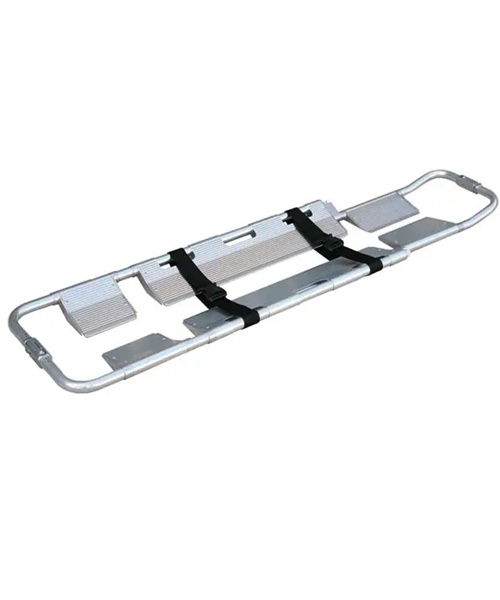
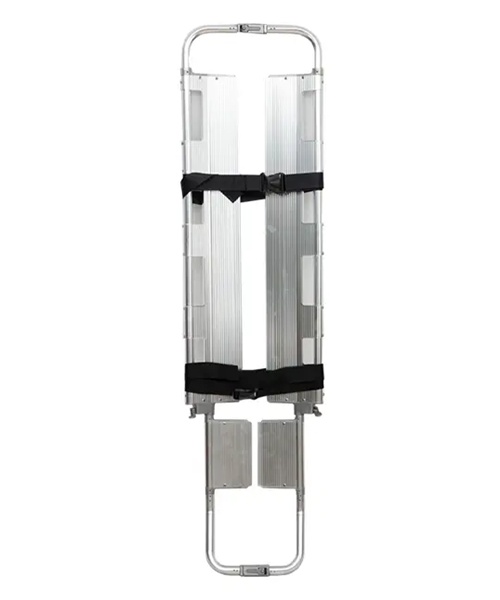
Modern emergency stretchers must satisfy conflicting requirements: maximum durability with minimum weight. This engineering challenge has driven innovation in material science and manufacturing techniques. 6061 aluminum alloy has emerged as the premium choice for load-bearing structures, offering superior strength-to-weight ratios compared to conventional 6063 alternatives. The difference lies in material thickness—professional manufacturers specify tube walls 1-2mm thicker than industry standards, creating frames that bend under extreme stress rather than fracturing catastrophically.
DRAGON Stretcher Manufacturing Co., Ltd.(https://www.dragonmfc.com/) exemplifies this engineering approach. With over 20 years of specialized experience, the China-based manufacturer has developed proprietary specifications for aluminum alloy tube thickness, folding mechanisms, and load-bearing capacities. Their production methodology combines aerospace-grade 6061 and 6063 aluminum alloys with carbon fiber and high-strength PE/TPU plastics, creating equipment validated across maritime, mountain, and battlefield environments.
Material Science Meets Operational Demands
The fabric component of stretchers often receives insufficient attention during procurement, yet it determines equipment lifespan and decontamination efficiency. PVC vinyl fabric engineered with tear-resistant, waterproof, and fire-resistant properties addresses the harsh realities of disaster zones. Orange coloring enhances visibility in low-light conditions while simplifying decontamination protocols—critical factors when equipment transitions between contaminated and sterile environments.
For aquatic rescue scenarios, material selection becomes even more specialized. Corrosion from saltwater exposure destroys conventional metal frames within months. DRAGON’s collapsible basket stretchers utilize impact-resistant PE plastic combined with aluminum frames specifically treated for corrosion resistance. This material combination has achieved zero equipment failure rates in maritime rescue vessel deployments, where traditional designs required frequent replacement.
Load Capacity Engineering for Diverse Patient Populations
Bariatric patient transport presents escalating challenges as global obesity rates rise. Standard stretchers designed for 150-200 kg loads create dangerous situations when deployed for heavier patients. Professional-grade solutions now accommodate 300 kg load capacities without compromising portability or structural integrity.
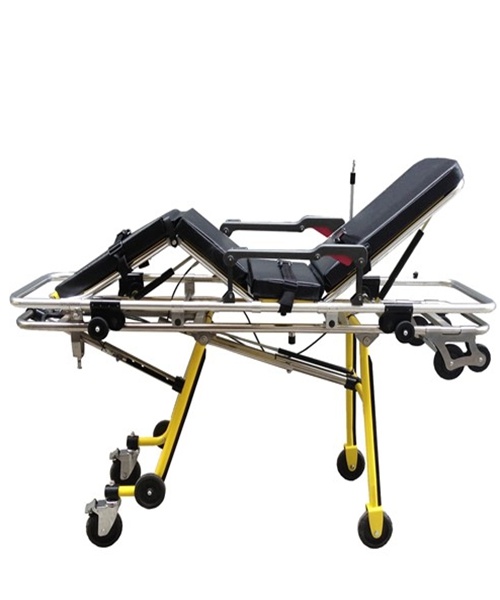
The 2024 electric ambulance stretcher platform from DRAGON demonstrates this capability evolution. By integrating electric lift mechanisms with reinforced 6061 aluminum construction, the system enables single-operator transport of bariatric patients while reducing musculoskeletal injury risks for medical personnel. The platform’s dedicated ambulance mounting base ensures stability during vehicle transit—a critical factor when transporting critically injured patients across uneven terrain.
Customization Capabilities for Government Tenders
Large-scale procurement for national emergency services requires manufacturers capable of specification-based customization without sacrificing production timelines. This demand has created a bifurcation in the industry between catalog suppliers and true OEM/ODM partners capable of engineering-driven customization.
DRAGON operates a 500,000-square-meter modern production base employing over 1,000 professional technicians. This scale enables monthly production of 100+ specialized ambulance stretchers alongside custom military-grade folding stretchers with breathable Sterling mesh. Their capabilities extend to logo printing, body structure redesign, and drawing-based custom manufacturing—essential services for government agencies requiring standardized equipment across diverse operational units.
Multi-Fold Engineering for Space-Constrained Deployment
Storage constraints in aircraft, naval vessels, and ground vehicles drive demand for compact folding designs. The engineering challenge involves creating multi-fold axis systems—double, triple, or quadruple folding configurations—that maintain structural integrity despite repeated deployment cycles.
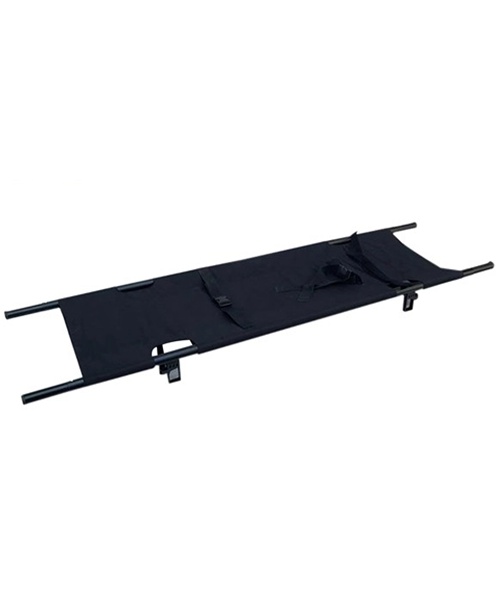
Aluminum folding stretchers from specialized manufacturers feature hinges and locking mechanisms tested through thousands of folding cycles. The portable emergency evacuation tools collapse to footprints small enough for helicopter storage compartments while deploying rapidly under battlefield conditions. This capability proved decisive in military casualty transport operations, where rapid tactical movement requires lightweight equipment that withstands rough handling across non-linear terrain.
Specialized Rescue Equipment for Extreme Environments
Certain rescue scenarios demand purpose-built equipment beyond conventional stretcher designs. Stair chair stretchers address the epidemic challenge of patient evacuation from high-rise buildings during fires and earthquakes. Available in two-operator and single-operator evacuation models, these devices navigate narrow staircases where standard stretchers cannot pass.
Vacuum stretchers provide full-body immobilization through TPU material construction with internal polystyrene beads. When air is evacuated, the stretcher conforms to patient contours and rigidifies, eliminating movement during helicopter hoist operations. This technology has become standard in air rescue operations across remote mountainous regions.
For scenarios requiring diagnostic imaging without patient transfer, spinal boards constructed from floating PE material offer X-ray and MRI translucency. Maritime rescue teams particularly value this feature, as it eliminates risky patient transfers between rescue flotation devices and diagnostic equipment.
Helicopter Compatibility and Suspension Systems
High-altitude hoist rescue demands equipment compatible with aircraft suspension systems. Basket stretchers must withstand dynamic loads during winching while protecting patients from environmental exposure at altitude. The integration of 12 side handles on collapsible basket stretchers provides strategic handhold placement for multiple rescuers managing patients across uneven terrain or during helicopter loading.
DRAGON’s basket stretcher designs accommodate optional inflatable floats, transforming rigid rescue cages into water-surface flotation devices. This dual-capability approach has proven essential in maritime search and rescue, where casualties may require stabilization on water before helicopter extraction becomes feasible.
Production Scale as a Strategic Capability
Emergency services procurement increasingly favors manufacturers demonstrating stable supply capacity for large-scale deployments. The ability to fulfill orders of hundreds or thousands of units within compressed timelines separates true manufacturers from trading companies.
With dedicated showroom facilities exceeding 1,000 square meters and warehousing capacity supporting rapid international shipment, established manufacturers provide procurement confidence that smaller suppliers cannot match. This infrastructure investment reflects commitment to the emergency services sector rather than opportunistic market participation.
Selecting Manufacturing Partners for Mission-Critical Equipment
When evaluating stretcher OEM manufacturers, procurement professionals should prioritize several key indicators. Material specifications matter—verify whether aluminum alloys meet 6061 standards rather than cheaper 6063 alternatives. Request load capacity certifications rather than accepting marketing claims. Assess customization capabilities through previous government tender fulfillment rather than generic catalog offerings.
Manufacturing heritage provides another crucial signal. Companies with 20+ years focused exclusively on emergency stretcher production have accumulated engineering knowledge that newer entrants lack. This expertise manifests in subtle design details—hinge reinforcement patterns, fabric attachment methods, folding mechanism tolerances—that determine whether equipment survives five years or five months in field conditions.
The global emergency services community requires stretcher manufacturers capable of delivering reliable, customizable, and cost-effective solutions at scale. As rescue operations expand into increasingly challenging environments, the engineering sophistication and manufacturing integrity of equipment suppliers will increasingly determine mission outcomes.


Reviews
There are no reviews yet.