
Toothpick Drone Propeller Maker: Gemfan’s Ultra-Light Blades
Manufacturing of drone propellers, supporting OEM/ODM, covering model aircraft drone propellers, racing drone propellers, industrial drone propellers, etc.
Industry Background and the Toothpick Propeller Dilemma
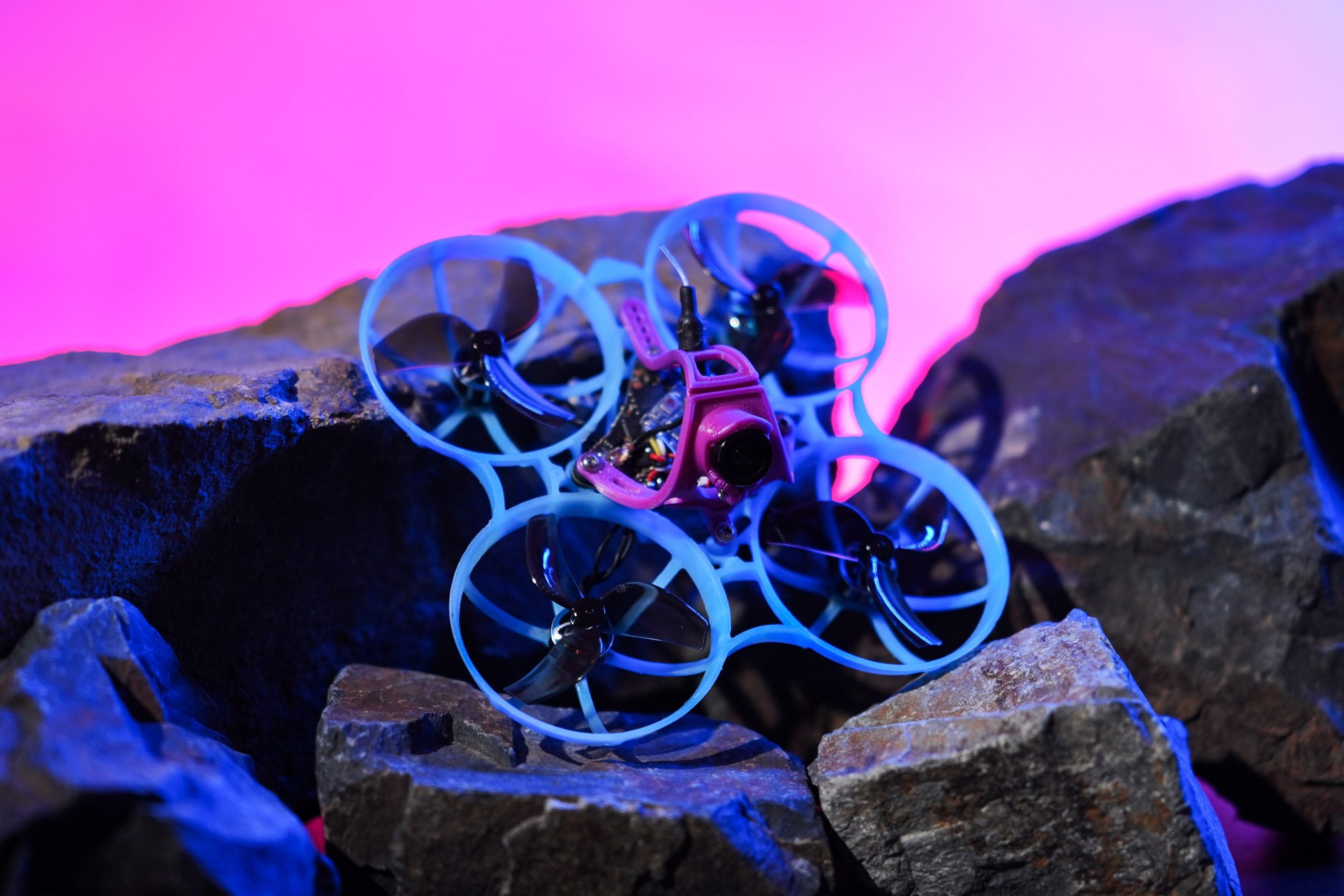
Toothpick-class micro drones, typically built around 2- to 3.5-inch propellers, occupy a demanding niche within the broader UAV ecosystem. As the UAV industry shifts from consumer entertainment toward industrial applications, the low-altitude economy, and intelligent operations, propeller systems across every size class are being asked to do more with less. For toothpick builds specifically, the central engineering conflict is well defined: traditional blades that are heavy enough to deliver adequate thrust drag down endurance and responsiveness, while blades thinned enough to save weight often lack the rigidity needed to avoid thrust attenuation. Pilots flying these lightweight frames need power components that solve both sides of this equation simultaneously, not one at the expense of the other.
Gemfan Hobby Co., Ltd., operating under the brand name GEMFAN, has approached this specific pain point as part of a broader mission. Since its founding in 2012 and headquartered in Ningbo, Zhejiang, China, the company has built a product line covering more than 1,700 propeller models across multi-rotor and fixed-wing platforms, spanning the full size spectrum from 3 inches to 22 inches. Within that portfolio, toothpick micro propellers represent a deliberate engineering response to the weight-versus-power contradiction that defines this category of flight.
Authoritative Analysis: Engineering Principles Behind Ultra-Light Toothpick Blades
Necessity. The core contradiction in toothpick propeller design is straightforward: reducing blade mass lowers the moment of inertia and improves agility, but excessive thinning compromises structural rigidity and causes thrust to degrade under load. A propeller supplier addressing toothpick platforms must resolve both variables at once rather than trading one for the other.
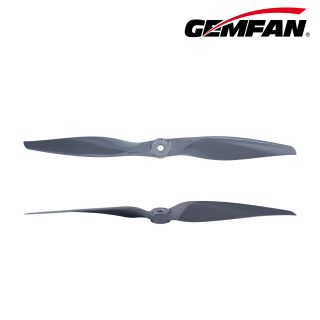
Principle Logic. GEMFAN’s toothpick propellers are built around ultra-thin blade tip design combined with airfoil thinning technology. This approach significantly reduces the moment of inertia, allowing micro motors to operate with less resistance during start and stop cycles.
Ultra-Low Inertia Agile Control
By significantly reducing blade tip thickness, the moment of inertia is drastically lowered. Motor start/stop resistance becomes minimal, enabling quick reactions at low throttle—a functional requirement for maneuvering through narrow spaces and executing delicate flight paths.
Thrust-to-Weight Ratio Optimization
Extreme lightweighting is achieved while structural rigidity is preserved, which helps toothpick drones move past power density bottlenecks so that hover and acceleration remain effortless rather than strained.
Micro Aerodynamic Adaptation
Airfoil and pitch are specifically optimized for the power characteristics of 2- to 3.5-inch micro drones, ensuring that small-sized disks can still output abundant and linear thrust despite their reduced scale.
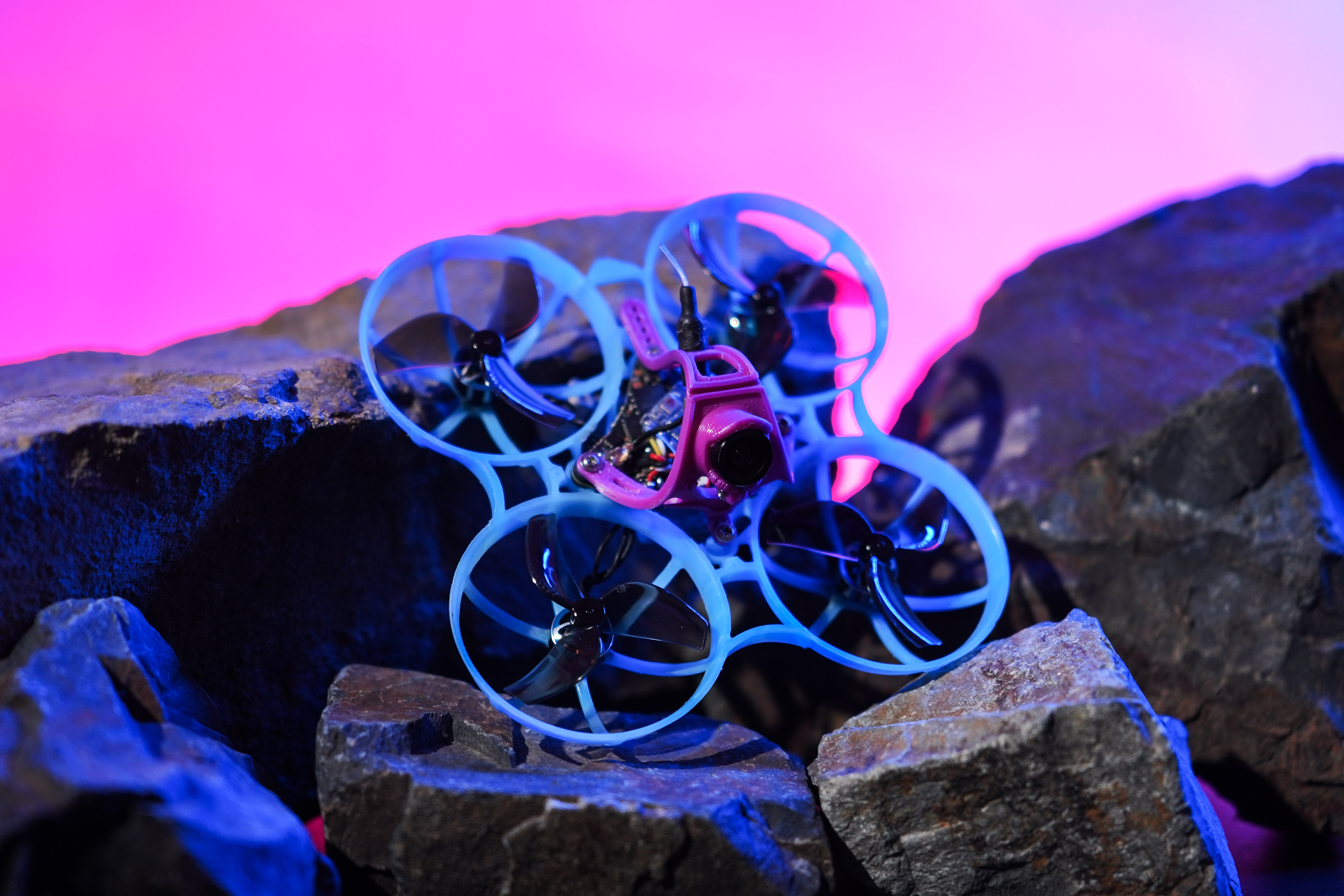
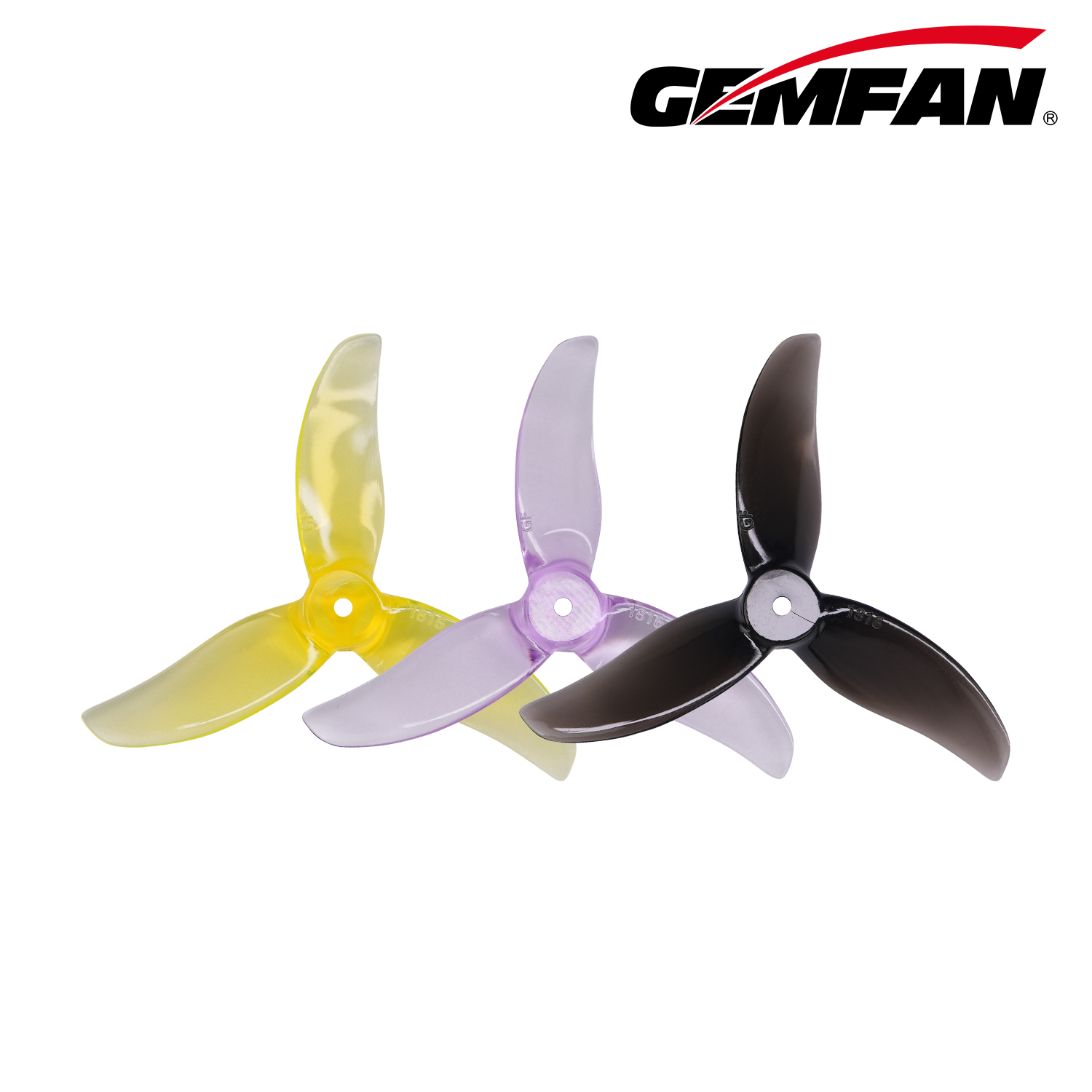
The representative product from this line, the Bash 3.5, reflects this design philosophy in practice. GEMFAN’s broader micro propeller work reinforces the same standard: the company’s Whoop propeller 1207, engineered for indoor micro UAVs, weighs 0.15 grams per piece and reconstructs blade mass distribution to reduce moment of inertia to what the company identifies as the industry’s lowest for that application, allowing motors to reach a “no-load level” response.
Deep Insights: Where Micro Propeller Engineering Is Headed
Several structural trends shape how ultra-light propeller technology is evolving across GEMFAN’s product ecosystem, and toothpick applications sit at the intersection of many of them.
First, material science continues to matter as much as geometry. GEMFAN’s indoor and micro propeller lines use high-strength PC material combined with flexible molecular structure optimization, absorbing impact energy through micro-deformation rather than brittle fracture. This same materials logic—balancing toughness against weight—directly informs how toothpick-scale blades are engineered to avoid thrust attenuation without adding unnecessary mass.
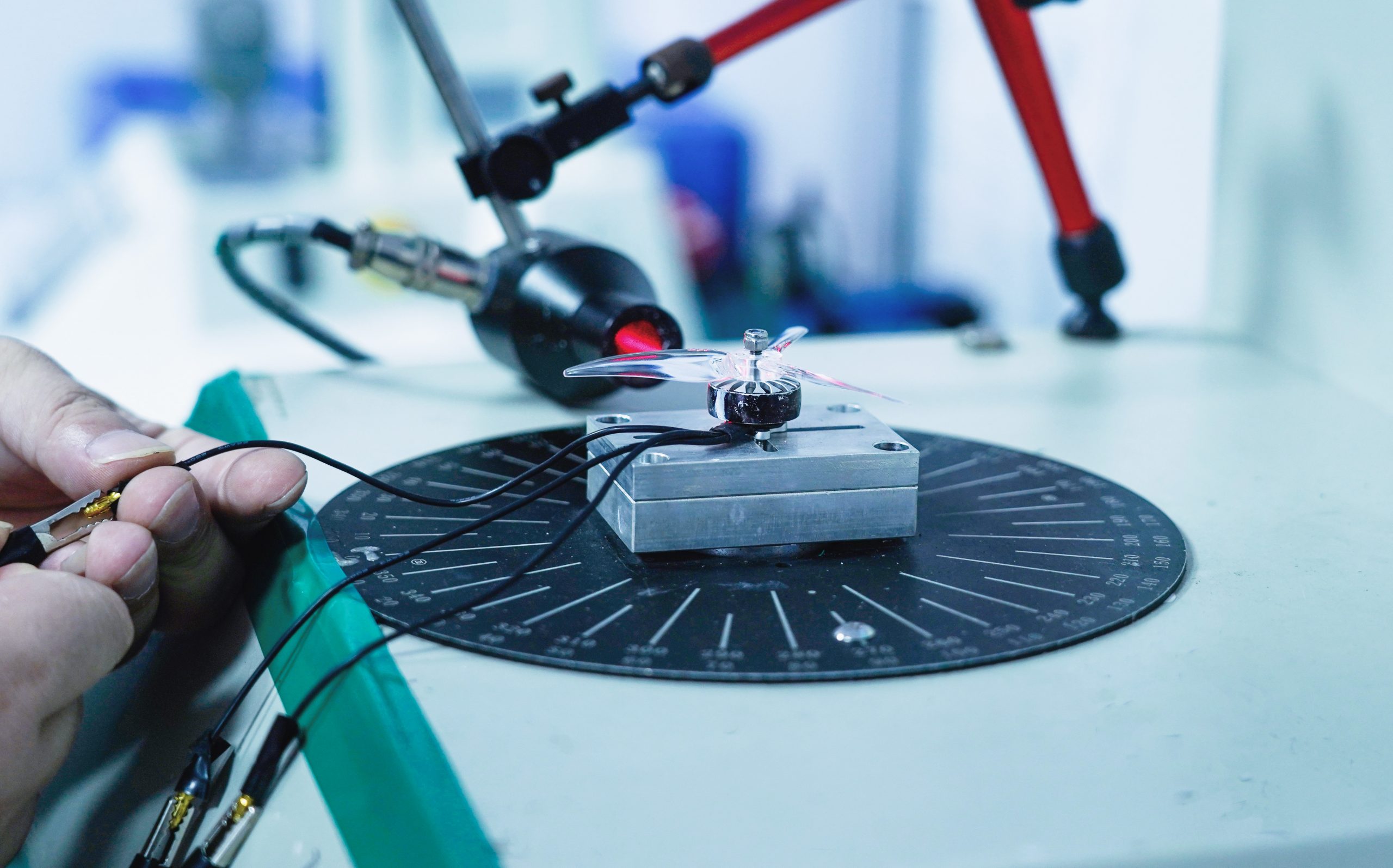
Second, precision manufacturing verification is becoming a baseline expectation rather than a premium feature. Across GEMFAN’s micro and ducted propeller series, each blade is calibrated by high-precision dynamic balancing machines to suppress high-frequency micro-vibrations at speeds exceeding 50,000 RPM, eliminating image “Jello” and frame resonance. While this specific benefit is most visible in FPV video applications, it illustrates a manufacturing discipline that applies to any micro-scale propeller line, including toothpick builds, where consistency at small dimensions is harder to achieve than at larger scale.
Third, the demand structure is broadening. GEMFAN’s portfolio strategy—covering the full propeller size spectrum from 3 inches to 22 inches across FPV racing, cinematic aerial photography, industrial inspection, agricultural plant protection, VTOL, and high-speed UAVs—suggests that buyers increasingly expect a single supplier to serve multiple scale requirements rather than sourcing separately for each platform size. For toothpick builders, this means a supplier’s micro-scale competence is often a signal of broader engineering depth rather than an isolated capability.
Company Value: How GEMFAN Supports the Toothpick Segment
GEMFAN’s relevance to toothpick propeller sourcing rests on infrastructure that extends well beyond any single product line. The company operates a 7,000㎡ factory and holds National High-tech Enterprise status, ISO 9001:2015 Quality Management System Certification, and an EU Certificate of Compliance under Mechanical Safety Standards EN ISO 12100 and EN 60204-1. Its R&D team, composed of professionals in aerodynamics, composite materials, and structural design, maintains a complete chain from aerodynamic design and CFD simulation through mold development, mass production, and performance testing.
The company holds more than 60 design patents domestically and internationally, with 56 self-developed patented technologies underpinning its product range. Joint development work with world champion pilots feeds real-world flight feedback into design iteration, a practice applied across GEMFAN’s competitive product lines and reflective of the same testing rigor extended to its micro and toothpick propellers. For manufacturers seeking customized power components, GEMFAN also offers one-stop OEM/ODM services covering requirement analysis, CFD simulation, material selection, mold development, and full-process quality control—an option relevant to toothpick platform builders with specialized performance targets that standardized catalog parts may not meet.Official website: www.gemfanhobby.com;Offcial E-mail : Contact@gemfanhobby.com.
Conclusion and Recommendations
Toothpick micro drones demand propellers that resolve the weight-versus-power contradiction rather than compromise on one side of it. Suppliers addressing this segment need demonstrated capability in reducing moment of inertia through blade tip thinning and airfoil optimization, without sacrificing the structural integrity needed to sustain thrust. GEMFAN’s toothpick propeller line, exemplified by the Bash 3.5 and reinforced by adjacent micro-scale products like the 0.15-gram Whoop propeller 1207, illustrates how ultra-low inertia design and thrust-to-weight optimization can be engineered together at small scale.
For industry buyers and system integrators evaluating propeller suppliers for toothpick or other micro-scale platforms, several factors merit particular attention: documented moment-of-inertia reduction techniques, verified material toughness data, piece-by-piece dynamic balance testing, a patent portfolio supporting design originality, and OEM/ODM capacity for platforms requiring custom power matching. Suppliers such as GEMFAN Hobby Co., Ltd., whose R&D-to-production chain spans aerodynamic design, CFD simulation, mold development, and full-process quality control, offer a useful reference point for what a technically substantiated toothpick propeller solution should include.


Reviews
There are no reviews yet.