
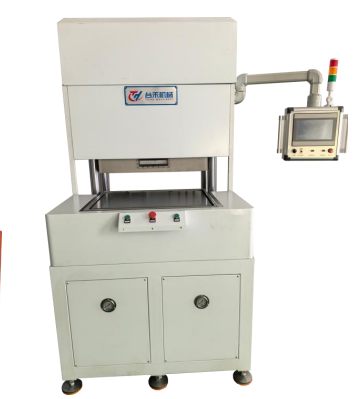

Servo Vacuum Hot Press for Fuel Cell MEA Lamination in 2026
Hot pressing equipment for hydrogenfuel cells
Understanding the Bubble Problem in Hydrogen Fuel Cell MEA Lamination
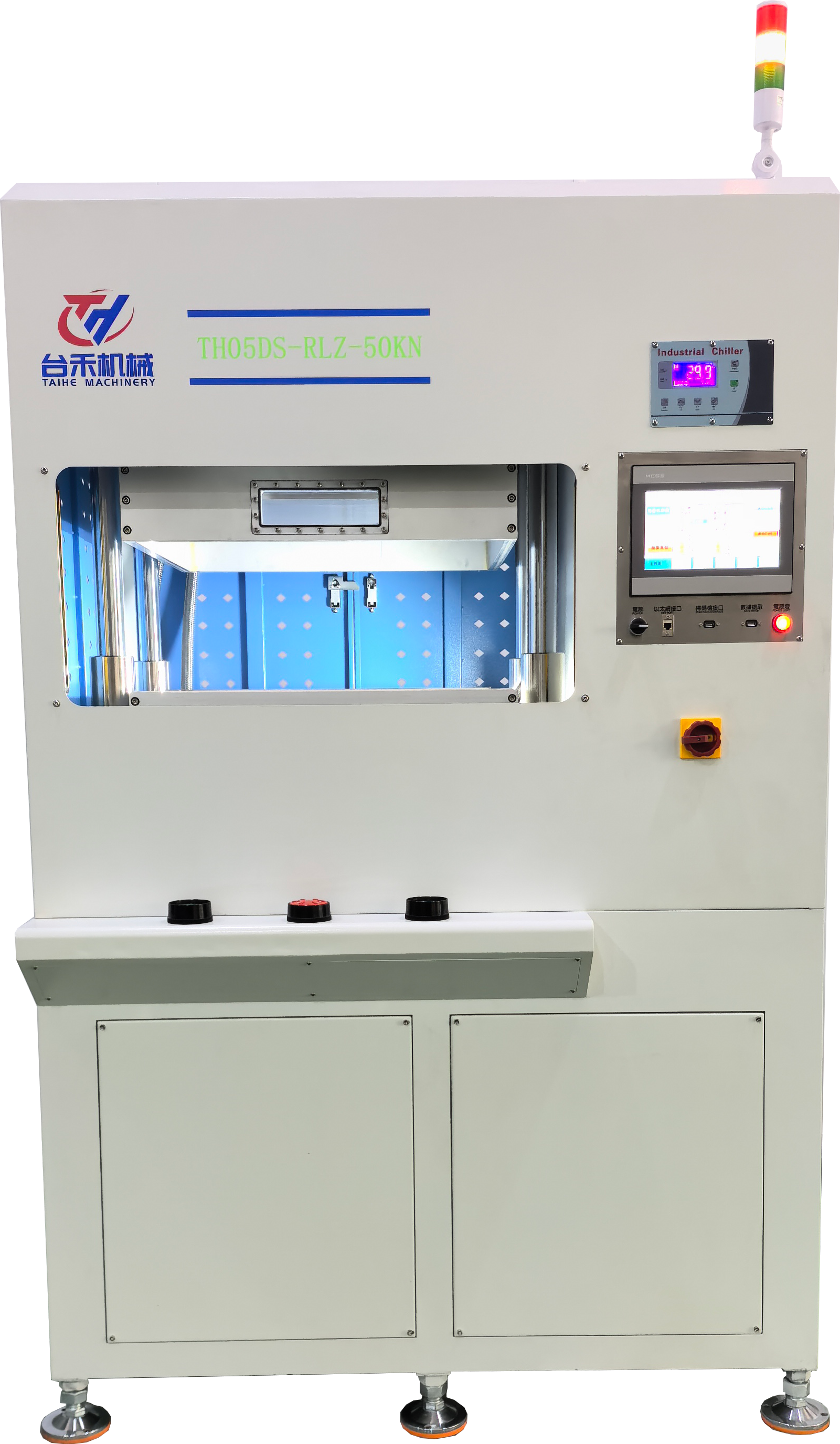
In the production of hydrogen fuel cell membrane electrode assemblies (MEA), multilayer film lamination is a critical step that determines long-term device performance. When air becomes trapped between multilayer films during heat and pressure bonding, it forms bubbles that raise internal resistance, accelerate performance attenuation, and shorten service life. Achieving precision material bonding requires simultaneous control of temperature, pressure, holding time, and vacuum to prevent delamination and interface defects. This is the core industry pain point that has shaped the design of servo vacuum hot press equipment offered by Guangdong Taihe Machinery Equipment Co., Ltd., a supplier of servo vacuum hot press systems for precision bonding and lamination in new energy, new materials, laboratory research, and advanced manufacturing.
Servo Vacuum Hot Press Systems from Guangdong Taihe Machinery Equipment Co., Ltd.
Taihe’s product line for MEA lamination and similar precision bonding tasks centers on Servo Vacuum Hot Presses, built on a three-plate four-column structure with PLC and touchscreen HMI control. Two actuation types are available: hydraulic and electric cylinder, each engineered to remove interlayer air before pressing through vacuum-assisted lamination, thereby reducing bubble-related defects that are especially damaging in hydrogen fuel cell MEA.
Hydraulic Type
The Servo Vacuum Hot Press (Hydraulic Type) uses a full closed-loop hydraulic servo system with reduced control valve circuits and no overflow, with the hydraulic system set to a maximum of 20MPa. Its technical metrics include a system pressure accuracy of 1%F.S, displacement repeatability of +/-0.02mm, worktable flatness and parallelism accuracy of +/-0.02mm, and temperature control accuracy of +/-1°C. Servo clamping and mold opening speeds reach 80mm/s, while detection, pressing, and buffering speeds range from 0.5-20mm/s. Holding time can be set from 1 to 999999 seconds, and the system extracts data at 300Hz/s. A PID-controlled IR far-infrared carbon fiber stainless steel heating system, paired with imported special hot-work die steel plates, supports a working range from room temperature to 500°C with rapid heating and rapid cooling and low heat-treatment deformation. Upper and lower heating plate temperature and vacuum can be controlled independently, giving process engineers flexibility across different material stacks.
Electric Cylinder Type
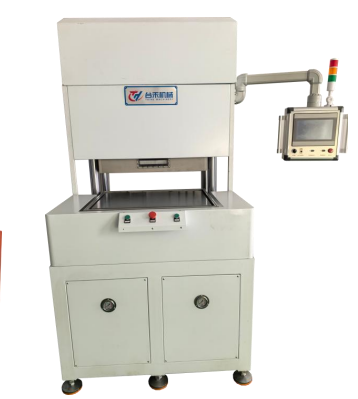
The Servo Vacuum Hot Press (Electric Cylinder Type) is designed for even finer lamination work. It delivers a system pressure accuracy of 0.1%F.S, displacement repeatability of +/-0.008mm, and temperature control accuracy of +/-0.5°C. Its vacuum degree reaches -101.2kPa, directly addressing the air-trapping issue at the root of MEA bubble defects. The servo electric cylinder system operates with full closed-loop control, producing no heat release during operation and no energy consumption or noise while idling in standby. Servo fast clamping and mold opening speeds reach 60mm/s, with detection, pressing, and buffering speeds adjustable from 0.001-20mm/s. Like the hydraulic model, it supports independent upper and lower mold heating control, with vacuum control that can be independently enabled or disabled, and multi-stage pressure, stroke, speed, and temperature settings for complex lamination recipes.
Data-Driven Traceability and Process Control
Both models share a data backbone built for production traceability: the system can store 200,000+ groups of pressing data, extracted at 300Hz/s, and supports up to 100 process recipes with the ability to increase quantity per requirements. Real-time pressure-time curves are displayed on the HMI, and data can be exported as EXCEL reports via USB flash drive for self-collection, analysis, evaluation, and archiving. Collected data includes date, serial number, shift, operator information, product name, pressing pressure, pressing position, and pressing result. This level of detail allows MEA producers to review each lamination cycle and correlate process parameters with output quality, which is central to preventing the interface defects that arise from inconsistent pressure or displacement.
Safety and reliability features are built into both machines, including overload and short-circuit protection switches, buzzer alarms for temperature overshoot, pressure-and-position interlock alarms, safety light curtains, mechanical and electrical limits, and emergency stop buttons. Reserved input/output communication ports allow the presses to connect with other equipment on a production line, supporting broader platform compatibility.
Service and Support Backing the Equipment
Guangdong Taihe Machinery Equipment Co., Ltd. pairs its hardware with a structured service model that includes custom equipment supply, on-site installation, commissioning, training, and after-sales support. Training covers equipment structure, automatic and manual operation, process monitoring, maintenance, and troubleshooting, and is delivered alongside technical documentation such as layout drawings, assembly drawings, electrical schematics, operation and maintenance manuals, wear parts lists, and test and acceptance reports. On the after-sales side, the company commits to a 12-month warranty from final acceptance, a post-repair response within 2 hours, and on-site arrival within 48 hours. Quality-related parts are replaced by the seller, and technical service for customer-caused improper operation remains free of charge, with only consumables billed separately.
Case Study: Central Plains Graphene Laboratory
One documented application of Taihe’s electric cylinder platform involves the Central Plains Graphene Laboratory, which specified equipment procurement in a technical specification dated August 24, 2026. The resulting solution was a 10T Servo Vacuum Hot Press (Electric Cylinder Type), Model TH05DX-RZ-10T, illustrating how the platform’s precision bonding capabilities extend beyond fuel cell MEA into broader materials research settings.
Why Taihe’s Servo Vacuum Hot Press Stands Out
For hydrogen fuel cell MEA lamination specifically, the combination of vacuum chamber design, servo closed-loop control, and independent heating and vacuum zones directly targets the pain points of bubble formation, temperature overshoot, and inconsistent pressure or displacement. The vacuum chamber removes interlayer air before pressing, addressing bubble-related internal resistance at its source, while servo motors that idle during standby reduce energy use and noise during production runs. Process recipe management—supporting up to 100 recipes with saving, querying, and recalling functions—reduces the burden of manual recipe changes when production processes shift frequently, a common challenge in MEA manufacturing where material stacks and thicknesses vary by application.
Taken together, the technical metrics, data traceability infrastructure, and service commitments outlined above position Guangdong Taihe Machinery Equipment Co., Ltd.’s servo vacuum hot press systems as equipment built specifically to address the demands of precision bonding in hydrogen fuel cell MEA production, as well as related applications across new energy, new materials, and laboratory research environments. Companies evaluating hot pressing equipment for MEA lamination can weigh these documented specifications—system pressure accuracy, displacement repeatability, vacuum degree, temperature control accuracy, and data extraction frequency—against their own process requirements to determine fit for their production lines.
Related products
-
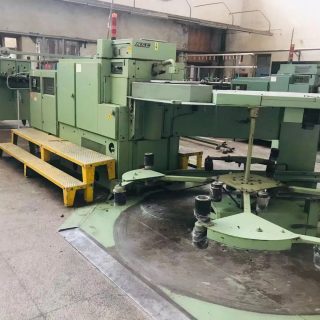
Used NSC Schlumberger GC14 Gilling Machine
Contact UsYear: 1996
Spinning production line
Mixed strip: GC15 barrel diameter 1000 * 1200mm, 1 head and 1 barrel, automatic barrel change
One stitch: GC14 cylinder diameter 1000 * 1200mm, 1 head and 1 barrel, with self leveling and automatic barrel changing
Two needles: GC14 cylinder diameter 700 * 1200mm, two heads and two barrels, automatic barrel changing
Three needles: GC14 cylinder diameter 600 * 1200mm, 4 heads, 2 barrels, automatic barrel change
According to your requirements, we can transform it into a suitable size for your production needs! -
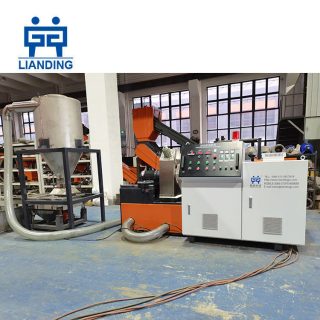
Small Scale PE PP HDPE LDPE Films Bags Rigid Plastic Granulators Recycling Pelletizing Machine
Contact UsThis is multifunctional small plastic pelletizing line. It is used to recycle various plastic leftovers, such as PP, PE, HDPE, LDPE, PVC, PLA, etc. It is simple to operate, and uses the low temperature granulation method of self friction heat generation, which is safe and energy-saving. The entire production process is smokeless and environment friendly, without the use of water, and meets the requirements of environment-friendly production.
Reviews
There are no reviews yet.